
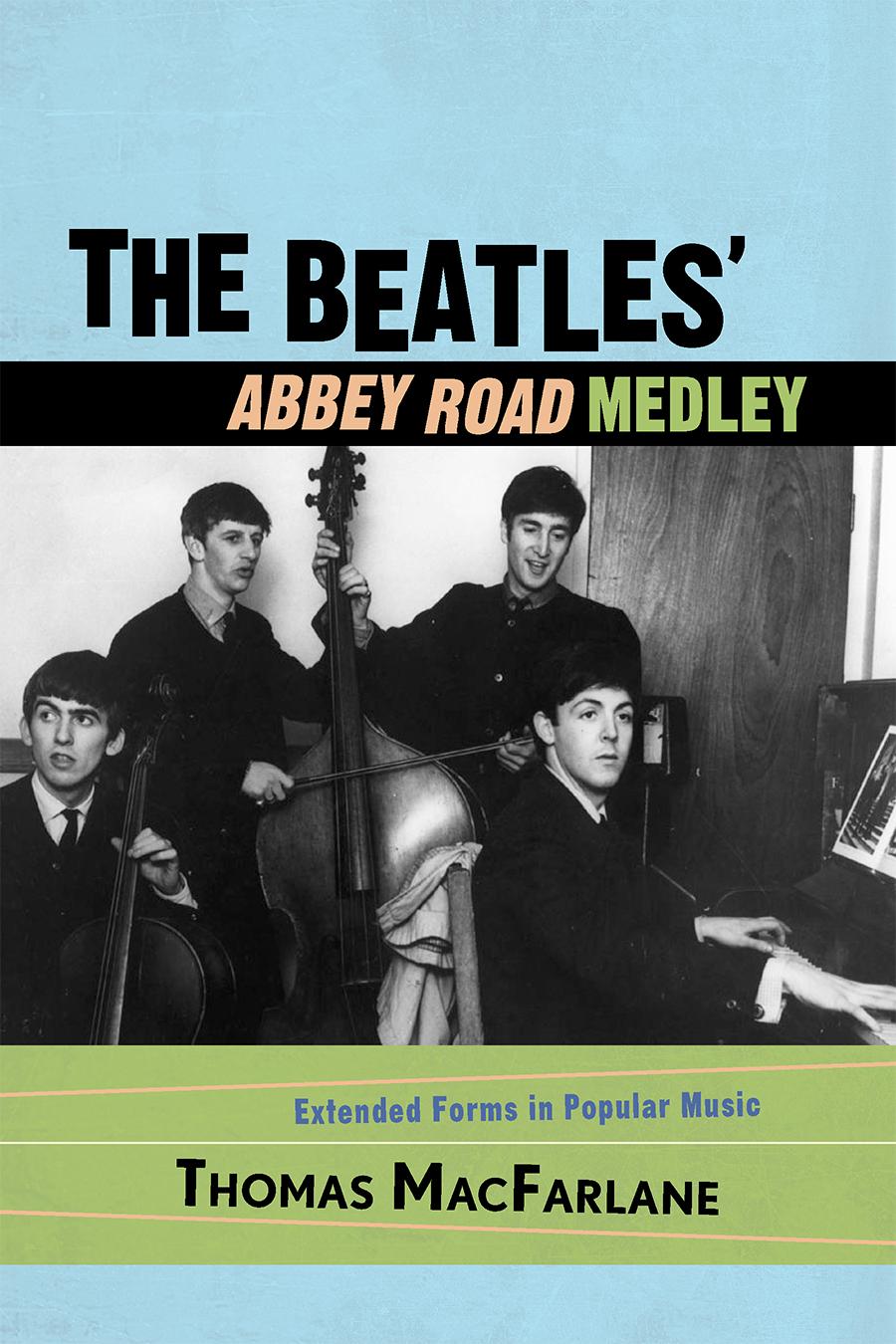
In September 1969, the Beatles released their final recorded work, Abbey Road, using a variety of progressive musical ideas that expressed the group's approach to multi-track recording and offering songs that constituted a highpoint in the Beatles' musical corpus. Of particular interest is the concluding sequence of songs (tracks 8-17): seemingly unrelated fragments woven together into a musical form that has thus far defied attempts at categorization. The Beatles' Abbey Road Medley: Extended Forms in Popular Music offers an analysis of these fragments, commonly known as the Abbey Road Medley, in order to understand and explain the emergent musical form and to clarify the relationships between music recording and music composition.
Thomas MacFarlane provides an overview of the Beatles-their history and their music-within the context of popular music and culture between 1962 and 1970, paying particular attention to the production of the album Abbey Road and the pivotal role of producer George Martin on the Abbey Road Medley. After explaining his method of analysis, MacFarlane applies it to the recording and transcription of the Abbey Road Medley, examining the implications of the work's structure and demonstrating how the Beatles expanded the parameters of the popular music form by incorporating recording technology directly into the compositional process. Drawing conclusions about musical form and practice in the recording process of the 1970s and beyond, MacFarlane also suggests other examples of rock music that were influenced by Abbey Road. An appendix transcribing the author's interview with the Beatles' de facto manager Peter Brown, a selected discography, a bibliography, and a selection of photos conclude the book, which will be of particular interest to musicians and Beatles fans alike.
Thomas MacFarlane provides an overview of the Beatles-their history and their music-within the context of popular music and culture between 1962 and 1970, paying particular attention to the production of the album Abbey Road and the pivotal role of producer George Martin on the Abbey Road Medley. After explaining his method of analysis, MacFarlane applies it to the recording and transcription of the Abbey Road Medley, examining the implications of the work's structure and demonstrating how the Beatles expanded the parameters of the popular music form by incorporating recording technology directly into the compositional process. Drawing conclusions about musical form and practice in the recording process of the 1970s and beyond, MacFarlane also suggests other examples of rock music that were influenced by Abbey Road. An appendix transcribing the author's interview with the Beatles' de facto manager Peter Brown, a selected discography, a bibliography, and a selection of photos conclude the book, which will be of particular interest to musicians and Beatles fans alike.
Betal nemt med kort, Klarna, Apple Pay eller Google Pay. Ikke tilfreds? Du har altid 14 dages fortrydelsesret. Læs mere i vores vilkår. Har du spørgsmål, så send os en mail på hello@memmo.org.
Memmo gør det nemmere at studere – uanset hvor du er i verden. Hos os samler du dine kursusbøger og smarte studieværktøjer ét sted: resuméer, quizzer, podcasts og flashcards. Og så er der Ted, din studieven, der svarer på alt, du undrer dig over. Over 50 000 studerende studerer allerede her – bygget til at hjælpe dig med at lære hurtigere og stresse mindre.