
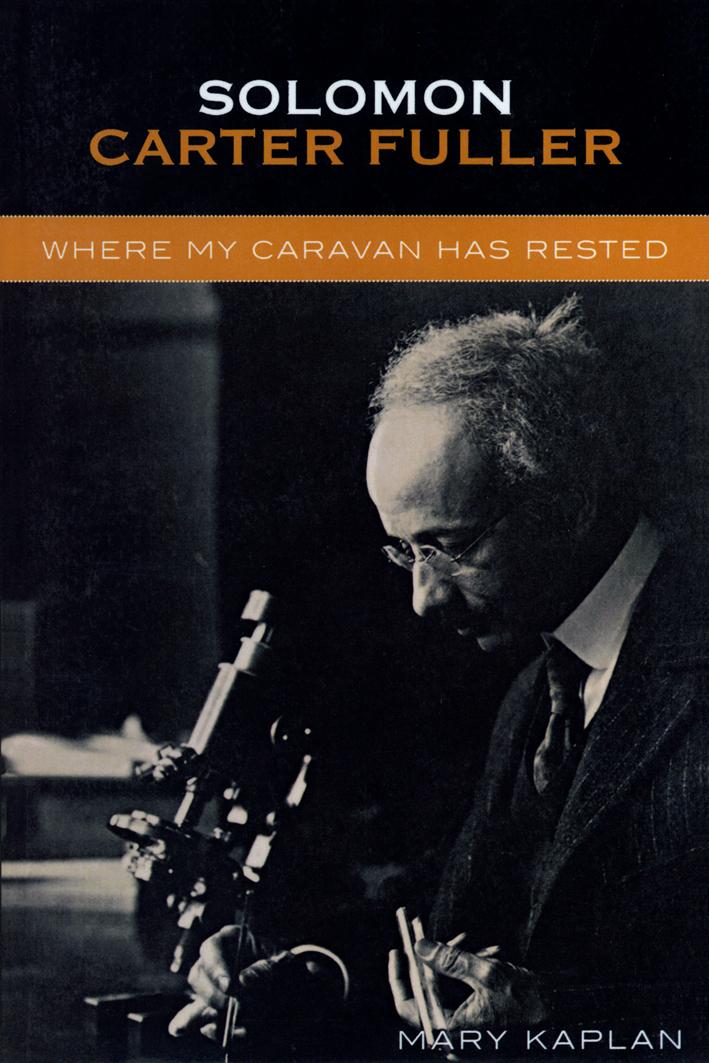
Solomon Carter Fuller: Where My Caravan Has Rested is the documentation of the life and accomplishments of an African American who would not allow racism to quench resolve and commitment to a productive life in medicine and scientific research.
Dr. Fuller was born in Africa in 1872, the grandson of American slaves. He was America's first black psychiatrist and one of the first black physicians to hold faculty rank at an American medical school. He was a widely published neuropathologist and a pioneer in Alzheimer's disease research.
To provide the reader with some insight into the life experiences that influenced and motivated Dr. Fuller, the book traces his family history from the days of slavery to the 1950s, crossing the North American, African, and European continents. Information obtained from his personal notes and interviews with his family provide a glimpse of the racial oppression that Fuller sought to overcome in both his personal and professional lives.
This classic "Horatio Alger" strive and succeed story has important implications for our understanding of American, African, and European culture. Fuller's biography is an important addition to black history and to the history of medicine, not only for its account of a man whose achievements were many, but also for its portrait of what it was like to be black in the days of slavery, during the colonization of Liberia, and as a husband, father, and physician in early 20th century white America.
Dr. Fuller was born in Africa in 1872, the grandson of American slaves. He was America's first black psychiatrist and one of the first black physicians to hold faculty rank at an American medical school. He was a widely published neuropathologist and a pioneer in Alzheimer's disease research.
To provide the reader with some insight into the life experiences that influenced and motivated Dr. Fuller, the book traces his family history from the days of slavery to the 1950s, crossing the North American, African, and European continents. Information obtained from his personal notes and interviews with his family provide a glimpse of the racial oppression that Fuller sought to overcome in both his personal and professional lives.
This classic "Horatio Alger" strive and succeed story has important implications for our understanding of American, African, and European culture. Fuller's biography is an important addition to black history and to the history of medicine, not only for its account of a man whose achievements were many, but also for its portrait of what it was like to be black in the days of slavery, during the colonization of Liberia, and as a husband, father, and physician in early 20th century white America.
Betal nemt med kort, Klarna, Apple Pay eller Google Pay. Ikke tilfreds? Du har altid 14 dages fortrydelsesret. Læs mere i vores vilkår. Har du spørgsmål, så send os en mail på hello@memmo.org.
Memmo gør det nemmere at studere – uanset hvor du er i verden. Hos os samler du dine kursusbøger og smarte studieværktøjer ét sted: resuméer, quizzer, podcasts og flashcards. Og så er der Ted, din studieven, der svarer på alt, du undrer dig over. Over 50 000 studerende studerer allerede her – bygget til at hjælpe dig med at lære hurtigere og stresse mindre.