
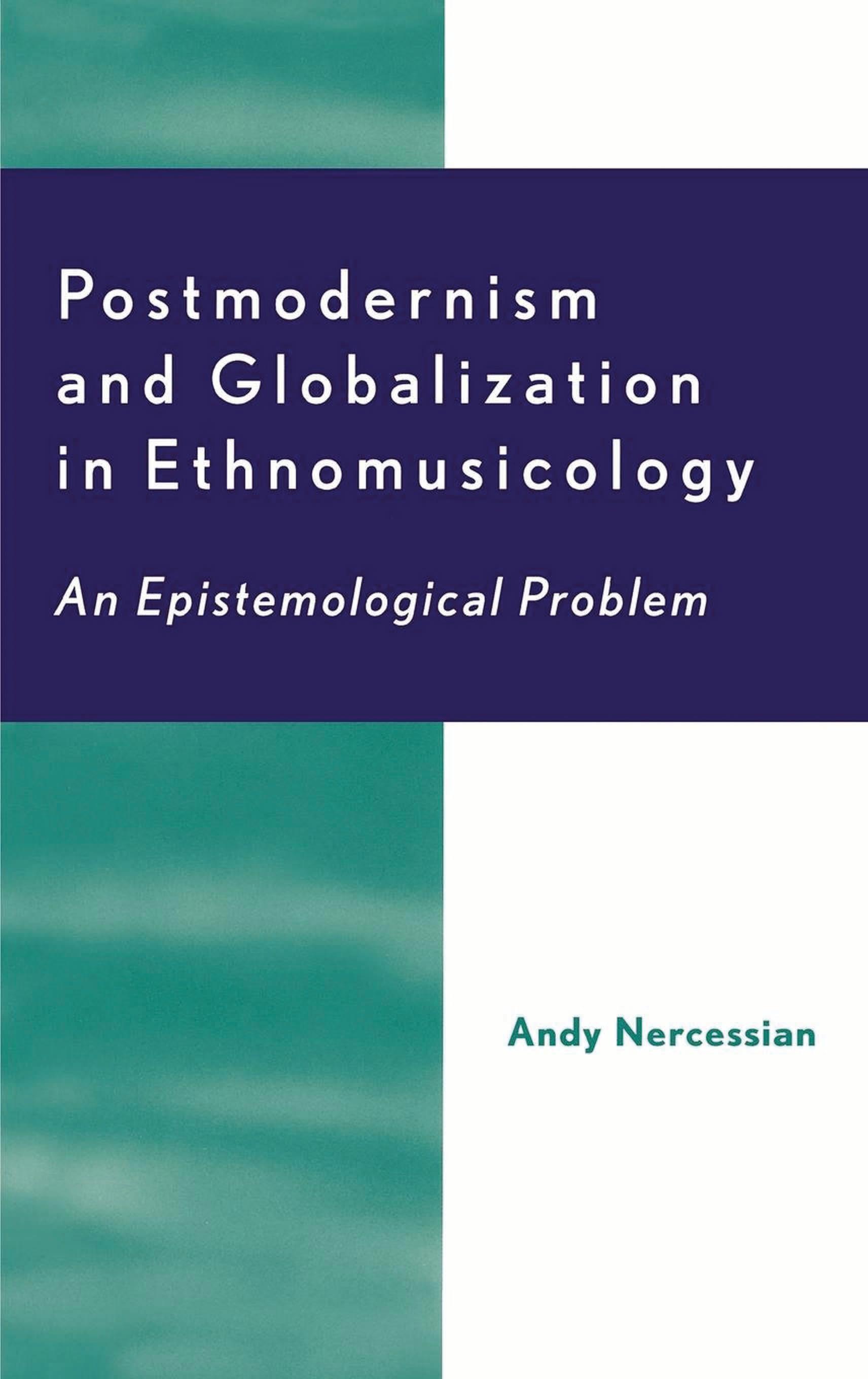
Is the music world clinging to an outdated school of thought in ethnomusicology? Nercessian shows how the theory of cultural relativism continues to detrimentally pervade ethnomusicological thought, and then offers a solution that may better serve musical study in today's more globalized world. At the heart of cultural relativism, which seeks to avoid imposing the standards of an outside culture on a work, is the emic-etic dichotomy, which delineates the perspective of the outsider and that of the culture of origin. Nercessian points out that in our increasingly globalized society, cultures are no longer separate and distinct. A new theory is necessary to account for the cultural overlap.
Borrowing from Derrida, the author offers a new solution that will allow for multiple perspectives, without favoring that of the insider or emic.
Of importance to students and scholars of ethnomusicology, this book also speaks to other fields of study where cultural relativism continues to dominate.
Borrowing from Derrida, the author offers a new solution that will allow for multiple perspectives, without favoring that of the insider or emic.
Of importance to students and scholars of ethnomusicology, this book also speaks to other fields of study where cultural relativism continues to dominate.
Betal nemt med kort, Klarna, Apple Pay eller Google Pay. Ikke tilfreds? Du har altid 14 dages fortrydelsesret. Læs mere i vores vilkår. Har du spørgsmål, så send os en mail på hello@memmo.org.
Memmo gør det nemmere at studere – uanset hvor du er i verden. Hos os samler du dine kursusbøger og smarte studieværktøjer ét sted: resuméer, quizzer, podcasts og flashcards. Og så er der Ted, din studieven, der svarer på alt, du undrer dig over. Over 50 000 studerende studerer allerede her – bygget til at hjælpe dig med at lære hurtigere og stresse mindre.