
Danny Elfman is recognized as one of the most successful, interesting, and innovative figures in recent film music composition. He came to the fore in the late 1980s in connection with his collaboration with Tim Burton on his films including Pee-Wee's Big Adventure (1985), Beetlejuice (1988), Batman (1989), Edward Scissorhands (1990), The Nightmare before Christmas (1993), and Sleepy Hollow (1999). In addition to this, Elfman has composed music for more than 40 other films, including Somersby (1993), Dolores Claibourne (1995), Good Will Hunting (1997), Men in Black (1997), and Spiderman (2002).
Beetlejuice was the first mainstream commercial success of the collaboration, but Batman was the film which marked Tim Burton's arrival as a major figure in Hollywood film direction, and equally established Danny Elfman as a film score composer, particularly in relation to action and fantasy genres. The score for Batman won a Grammy in 1989 and is an outstanding example of his collaboration with Burton as well as admirably demonstrating his particular talents and distinctive compositional voice. In particular, it displays the characteristic "darkness" of his orchestration in this genre and the means he uses to create a full length film score from what is often a relatively small amount of musical material, in this case the famous Batman theme.
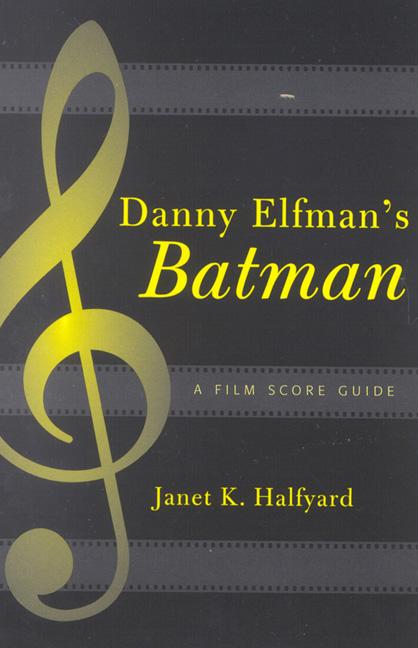
This book examines Elfman's scoring technique and provides a detailed analysis and commentary on the Batman score. The film is discussed in the context of its comic-book origins and the fantasy-action genre, setting it and its score against the late 1970s and early 1980s equivalents such as Star Wars and Superman, and revealing how Burton and Elfman between them changed the cinematic idea of what a superhero is. The book also explores Elfman's musical background, his place within the film music industry and the controversy that sprang up following the release of B
Beetlejuice was the first mainstream commercial success of the collaboration, but Batman was the film which marked Tim Burton's arrival as a major figure in Hollywood film direction, and equally established Danny Elfman as a film score composer, particularly in relation to action and fantasy genres. The score for Batman won a Grammy in 1989 and is an outstanding example of his collaboration with Burton as well as admirably demonstrating his particular talents and distinctive compositional voice. In particular, it displays the characteristic "darkness" of his orchestration in this genre and the means he uses to create a full length film score from what is often a relatively small amount of musical material, in this case the famous Batman theme.
This book examines Elfman's scoring technique and provides a detailed analysis and commentary on the Batman score. The film is discussed in the context of its comic-book origins and the fantasy-action genre, setting it and its score against the late 1970s and early 1980s equivalents such as Star Wars and Superman, and revealing how Burton and Elfman between them changed the cinematic idea of what a superhero is. The book also explores Elfman's musical background, his place within the film music industry and the controversy that sprang up following the release of B
Betal nemt med kort, Klarna, Apple Pay eller Google Pay. Ikke tilfreds? Du har altid 14 dages fortrydelsesret. Læs mere i vores vilkår. Har du spørgsmål, så send os en mail på hello@memmo.org.
Memmo gør det nemmere at studere – uanset hvor du er i verden. Hos os samler du dine kursusbøger og smarte studieværktøjer ét sted: resuméer, quizzer, podcasts og flashcards. Og så er der Ted, din studieven, der svarer på alt, du undrer dig over. Over 50 000 studerende studerer allerede her – bygget til at hjælpe dig med at lære hurtigere og stresse mindre.