
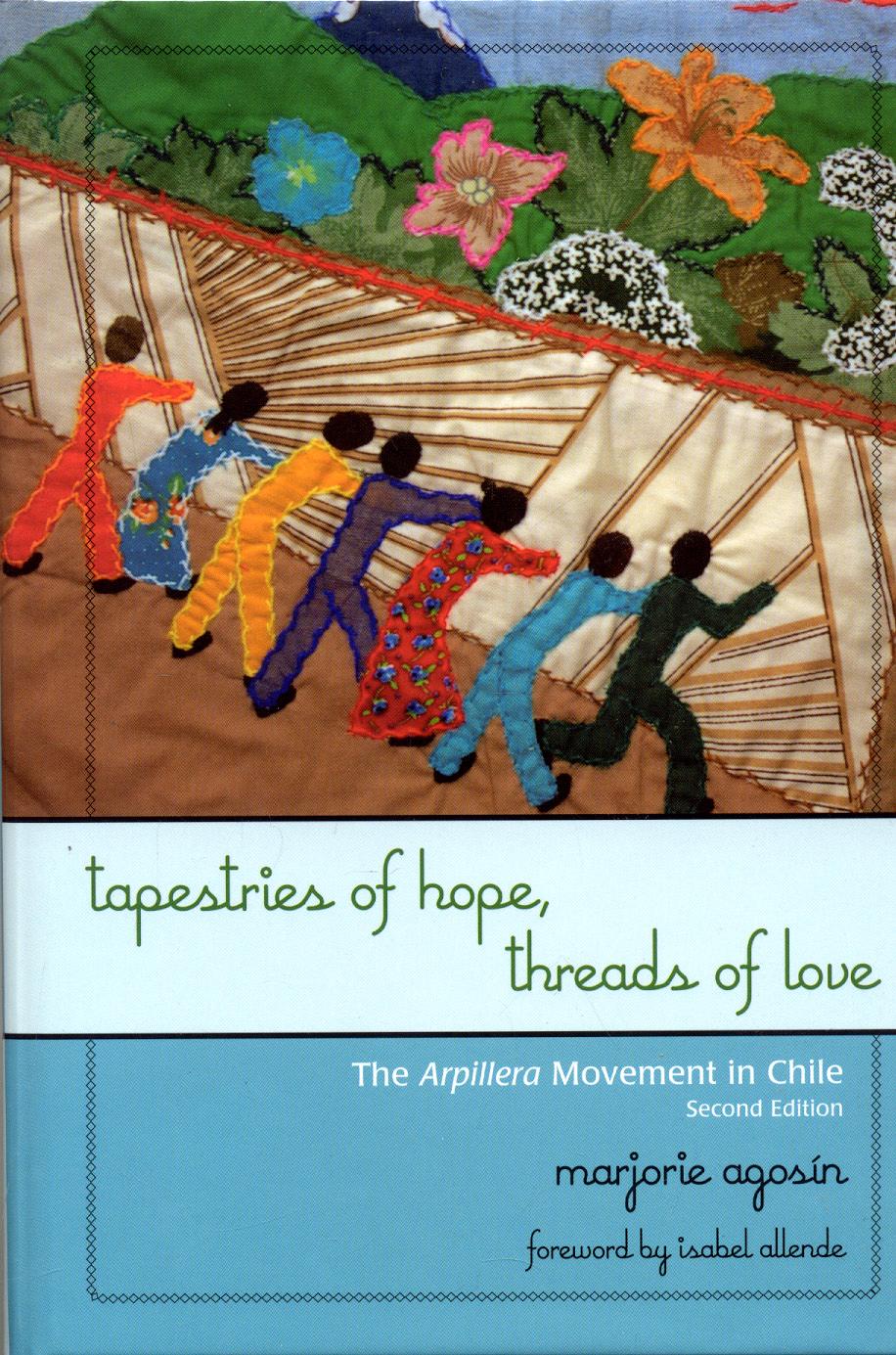
Tapestries of Hope, Threads of Love tells the story of ordinary women living in terror and extreme poverty under General Pinochet's oppressive rule in Chile (1973–1989). These women defied the military dictatorship by embroidering their sorrow on scraps of cloth, using needles and thread as one of the boldest means of popular protest and resistance in Latin America. The arpilleras they made—patchwork tapestries with scenes of everyday life and memorials to their disappeared relatives—were smuggled out of Chile and brought to the world the story of their fruitless searches in jails, morgues, government offices, and the tribunals of law for their husbands, brothers, and sons.
Marjorie Agosín, herself a native of and exile from Chile, has spent more than thirty years interviewing the arpilleristas and following their work. She knows their stories intimately and knows, too, that none of them has ever found a disappeared relative alive. Even though the dictatorship ended in 1989 and democracy returned to Chile, no full account of the detained and disappeared has ever been offered. Still, many women maintain hope and continue to make arpilleras, both in memory and as art.
This new edition of the book, updated for students, includes a reaction to the death of General Pinochet, a chronology of Chile, several new testimonies from arpilleristas in their own words, and an introduction by Peter Kornbluh. It retains a section of full-color plates of arpilleras, an afterword by Peter Winn, and a foreword by Isabel Allende. Students and interested readers will find the arpilleras beautiful, moving, and ultimately hopeful, and the testimonies a powerful way to learn about the history of contemporary Latin America and the arpillera movement in Chile.
Marjorie Agosín, herself a native of and exile from Chile, has spent more than thirty years interviewing the arpilleristas and following their work. She knows their stories intimately and knows, too, that none of them has ever found a disappeared relative alive. Even though the dictatorship ended in 1989 and democracy returned to Chile, no full account of the detained and disappeared has ever been offered. Still, many women maintain hope and continue to make arpilleras, both in memory and as art.
This new edition of the book, updated for students, includes a reaction to the death of General Pinochet, a chronology of Chile, several new testimonies from arpilleristas in their own words, and an introduction by Peter Kornbluh. It retains a section of full-color plates of arpilleras, an afterword by Peter Winn, and a foreword by Isabel Allende. Students and interested readers will find the arpilleras beautiful, moving, and ultimately hopeful, and the testimonies a powerful way to learn about the history of contemporary Latin America and the arpillera movement in Chile.
Betal nemt med kort, Klarna, Apple Pay eller Google Pay. Ikke tilfreds? Du har altid 14 dages fortrydelsesret. Læs mere i vores vilkår. Har du spørgsmål, så send os en mail på hello@memmo.org.
Memmo gør det nemmere at studere – uanset hvor du er i verden. Hos os samler du dine kursusbøger og smarte studieværktøjer ét sted: resuméer, quizzer, podcasts og flashcards. Og så er der Ted, din studieven, der svarer på alt, du undrer dig over. Over 50 000 studerende studerer allerede her – bygget til at hjælpe dig med at lære hurtigere og stresse mindre.