
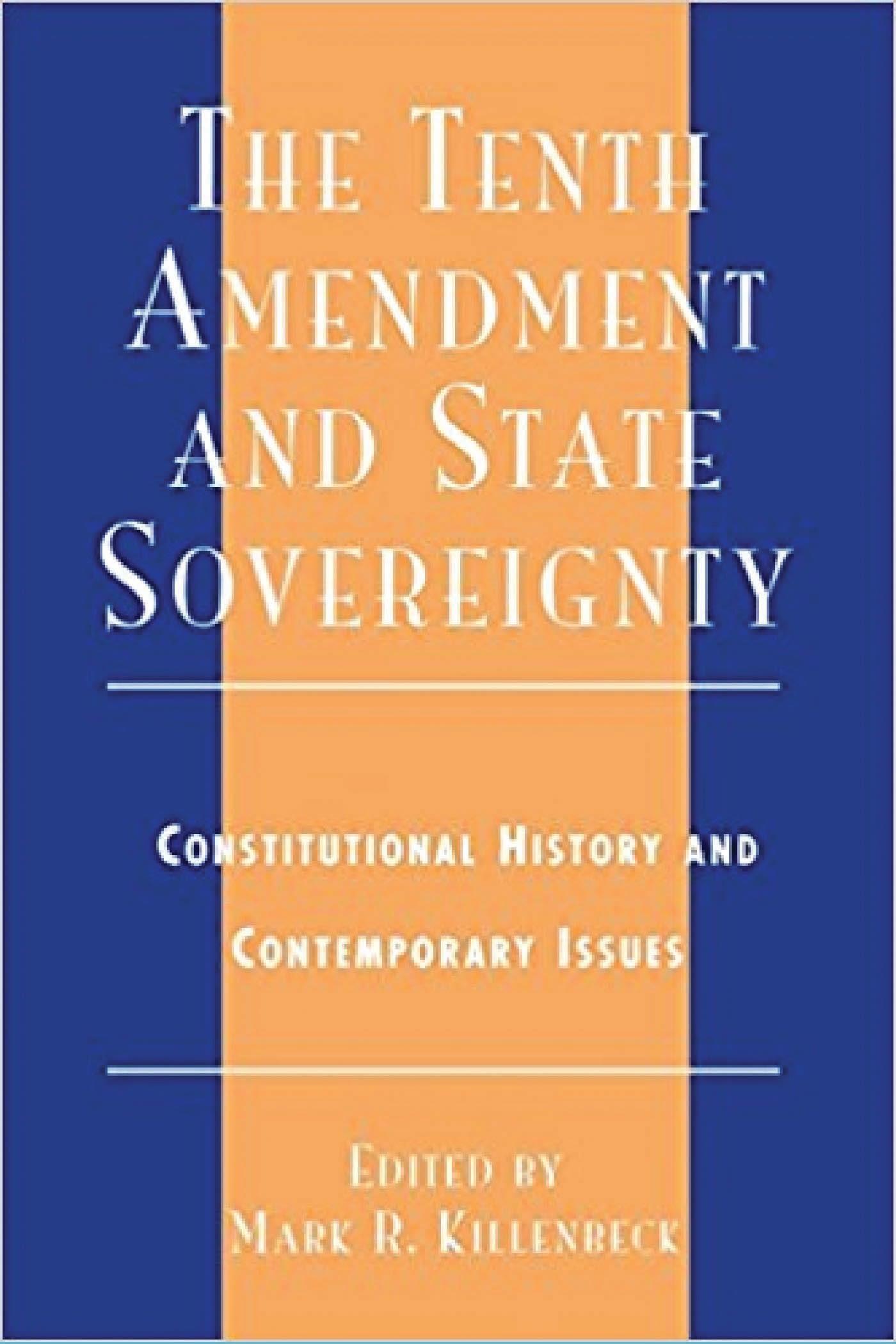
In the wake of the 2000 Election, the relationship between the Supreme Court and the American states has become more important. Once derided by the Court as a 'truism,' the Tenth Amendment has in recent years been transformed from a neglected provision into a vital 'first principle.' As such, it has provided the foundation for a series of decisions in which the Supreme Court has elevated the status of the states, often at the expense of federal power and in the face of previously settled assumptions. In this important volume, four prominent scholars-two historians and two law professors-examine carefully one of the central tenets in the Court's recent Tenth Amendment jurisprudence: the assumption that the results fashioned by a narrow majority are compelled by history and consistent with the intentions of the framers. They shed important new light on a series of decisions that mark a major change in our thinking about the nature of a constitutional system within which both the federal government and the states properly regard themselves as soverign entities.
Betal nemt med kort, Klarna, Apple Pay eller Google Pay. Ikke tilfreds? Du har altid 14 dages fortrydelsesret. Læs mere i vores vilkår. Har du spørgsmål, så send os en mail på hello@memmo.org.
Memmo gør det nemmere at studere – uanset hvor du er i verden. Hos os samler du dine kursusbøger og smarte studieværktøjer ét sted: resuméer, quizzer, podcasts og flashcards. Og så er der Ted, din studieven, der svarer på alt, du undrer dig over. Over 50 000 studerende studerer allerede her – bygget til at hjælpe dig med at lære hurtigere og stresse mindre.