
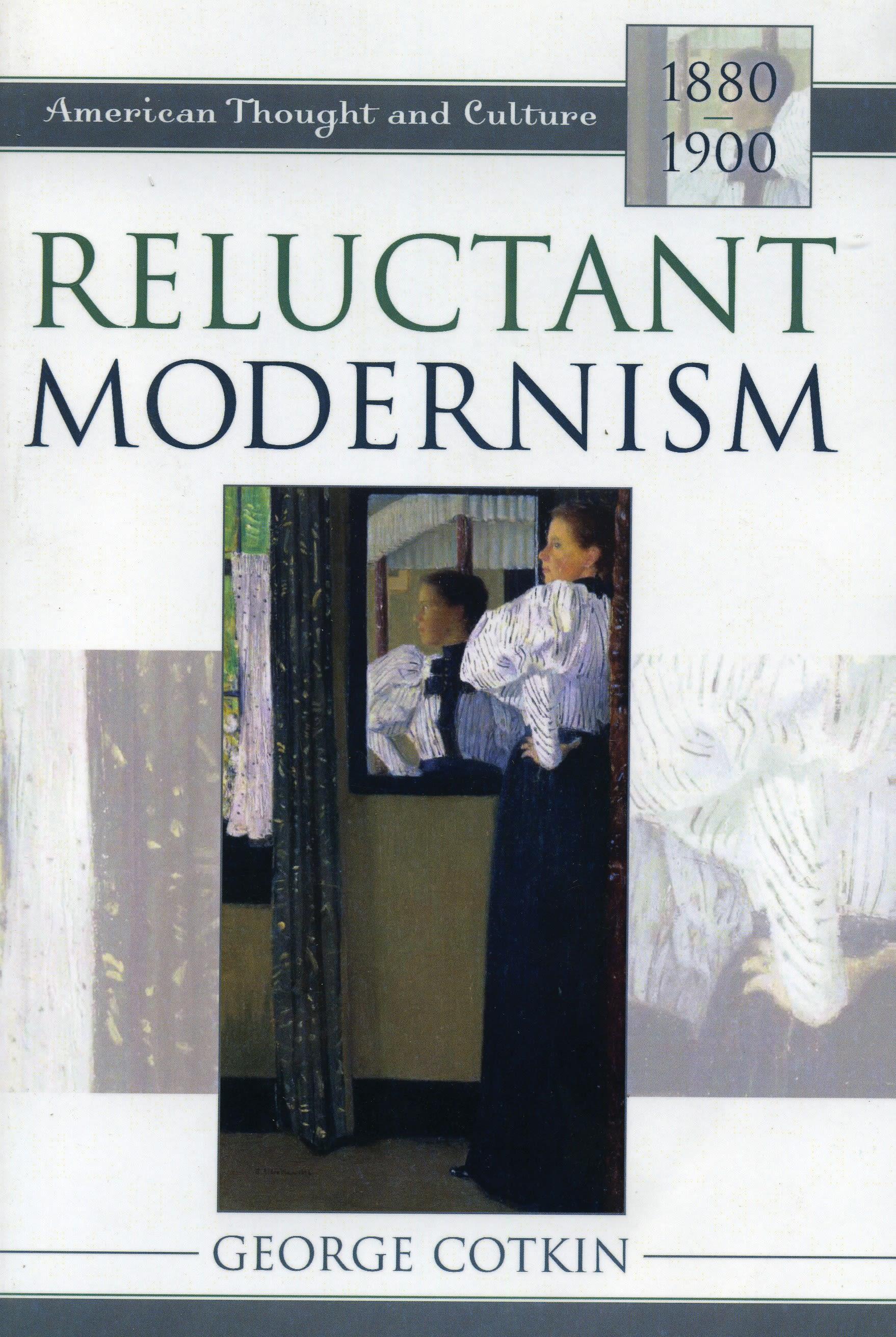
In the last two decades of the nineteenth century, Americans were faced with the challenges and uncertainties of a new era. The comfortable Victorian values of continuity, progress, and order clashed with the unsettling modern notions of constant change, relative truth, and chaos. Attempting to embrace the intellectual challenges of modernism, American thinkers of the day were yet reluctant to welcome the wholesale rejection of the past and destruction of traditional values.
In Reluctant Modernism: American Thought and Culture, 1880–1900, George Cotkin surveys the intellectual life of this crucial transitional period. His story begins with the Darwinian controversies, since the mainstream of American culture was just beginning to come to grips with the implications of the Origins of Species, published in 1859. Cotkin demonstrates the effects of this shift in thinking on philosophy, anthropology, and the newly developing field of psychology. Drawing on his extensive knowledge of these fields, he explains clearly and concisely the essential tenets of such major thinkers and writers as William James, Franz Boas, Charlotte Perkins Gilman, Henry Adams, and Kate Chopin. Throughout this fascinating, readable history of the American fin de siècle run the contrasting themes of continuity and change, faith and rationalism, despair over the meaninglessness of life and, ultimately, a guarded optimism about the future.
In Reluctant Modernism: American Thought and Culture, 1880–1900, George Cotkin surveys the intellectual life of this crucial transitional period. His story begins with the Darwinian controversies, since the mainstream of American culture was just beginning to come to grips with the implications of the Origins of Species, published in 1859. Cotkin demonstrates the effects of this shift in thinking on philosophy, anthropology, and the newly developing field of psychology. Drawing on his extensive knowledge of these fields, he explains clearly and concisely the essential tenets of such major thinkers and writers as William James, Franz Boas, Charlotte Perkins Gilman, Henry Adams, and Kate Chopin. Throughout this fascinating, readable history of the American fin de siècle run the contrasting themes of continuity and change, faith and rationalism, despair over the meaninglessness of life and, ultimately, a guarded optimism about the future.
Betal nemt med kort, Klarna, Apple Pay eller Google Pay. Ikke tilfreds? Du har altid 14 dages fortrydelsesret. Læs mere i vores vilkår. Har du spørgsmål, så send os en mail på hello@memmo.org.
Memmo gør det nemmere at studere – uanset hvor du er i verden. Hos os samler du dine kursusbøger og smarte studieværktøjer ét sted: resuméer, quizzer, podcasts og flashcards. Og så er der Ted, din studieven, der svarer på alt, du undrer dig over. Over 50 000 studerende studerer allerede her – bygget til at hjælpe dig med at lære hurtigere og stresse mindre.