
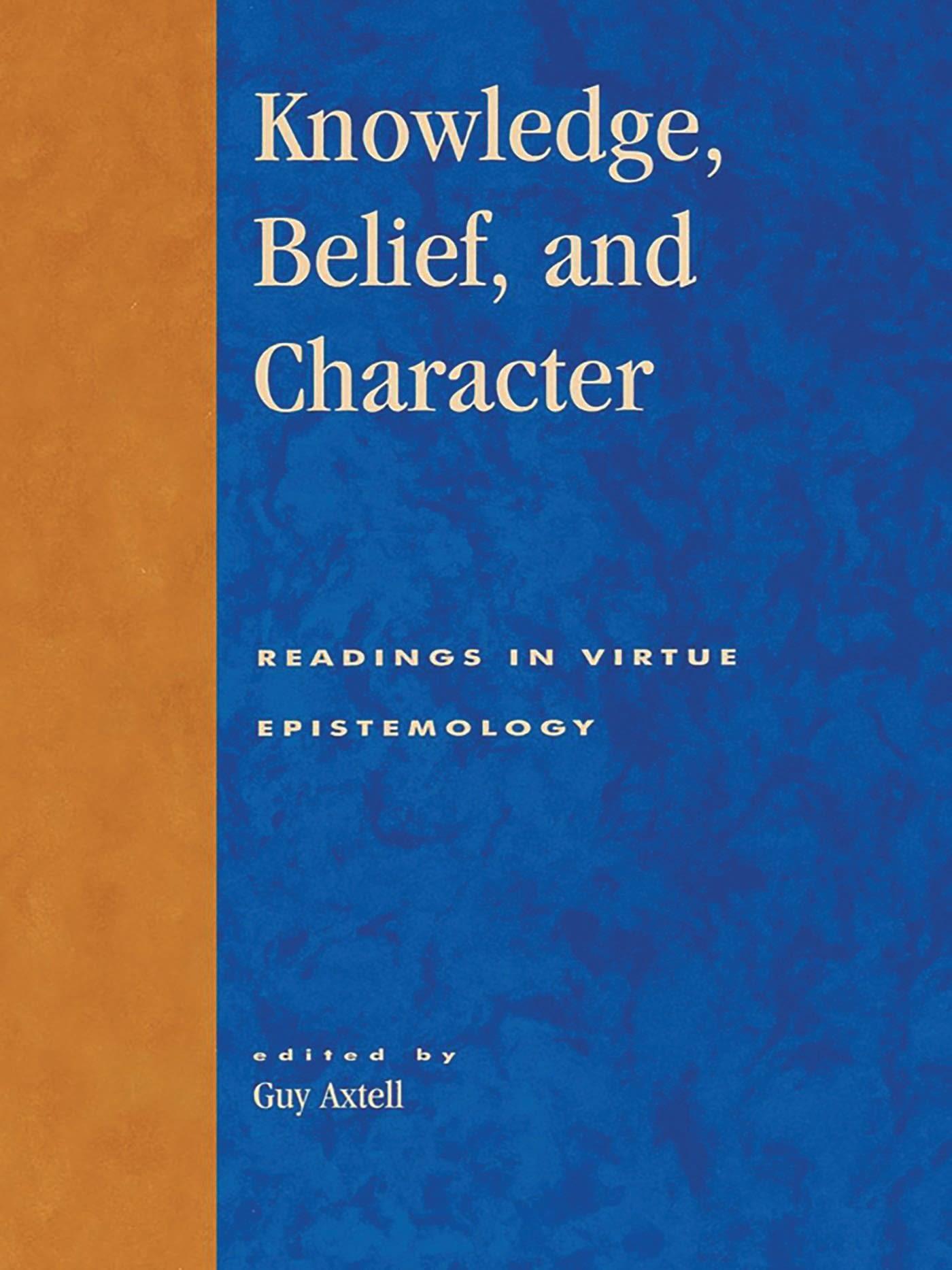
Knowledge, Belief, and Character
Forfatter: Hilary Kornblith, Julia Driver, Guy Axtell, Jonathan Dancy, Ernest Sosa, Alvin Goldman, John Greco, Laurence Bonjour, Linda Zagrebsky, James Montmarquet, Chirstopher Hookway, Ricard Paul, Casey Swank
Forlag: Bloomsbury Publishing
Udgave: 1
Udgivelsesdato: 2000
ISBN: 9780847696529
There have been many books over the past decade, including outstanding collections of essays, on the topic of the ethical virtues and virtue-theoretic approaches in ethics. But the professional journals of philosophy have only recently seen a strong and growing interest in the intellectual virtues and in the development of virtue-theoretic approaches in epistemology. There have been four single-authored book length treatments of issues of virtue epistemology over the last seven years, beginning with Ernest Sosa's Knowledge in Perspective (Cambridge, 1991), and extending to Linda Zabzebski's Virtue of the Mind (Cambridge, 1996). Weighing in with Jonathan Kvanvig's The Intellectual Virtues and the Life of the Mind (1992), and James Montmarquet's Epistemic Virtue and Doxastic Responsibility (1993), Rowman & Littlefield has had a particularly strong interest in the direction and growth of the field. To date, there has been no collection of articles directly devoted to the growing debate over the possibility and potential of a virtue epistemology. This volume exists in the belief that there is now a timely opportunity to gather together the best contributions of the influential authors working in this growing area of epistemological research, and to create a collection of essays as a useful course text and research source. Several of the articles included in the volume are previously unpublished. Several essays discuss the range and general approach of virtue theory in comparison with other general accounts. What advantages are supposed to accrue from a virtue-based account in epistemology, in handling well-known problems such as 'Gettier,' and 'Evil-Genie'-type problems? Can reliabilist virtue epistemology handle skeptical challenges more satisfactorily than non-virtue-centered forms of epistemic reliabilism? Others provide a needed discussion of relevant analogies and disanalogies between ethical and epistemic evaluation. The readings all contribute to our understanding of the relative importance, for a theory of justified belief, of the reliability of our cognitive faculties and of the individual's responsibility in gathering and weighing evidence. Highlights of the readings include direct exchanges between leading exponents of this approach and their critics. In addition, the volume includes contributions from feminist writers who offer a reassessment of the intellectual virtues from witin their own research paradigm.
Betal nemt med kort, Klarna, Apple Pay eller Google Pay. Ikke tilfreds? Du har altid 14 dages fortrydelsesret. Læs mere i vores vilkår. Har du spørgsmål, så send os en mail på hello@memmo.org.
Memmo gør det nemmere at studere – uanset hvor du er i verden. Hos os samler du dine kursusbøger og smarte studieværktøjer ét sted: resuméer, quizzer, podcasts og flashcards. Og så er der Ted, din studieven, der svarer på alt, du undrer dig over. Over 50 000 studerende studerer allerede her – bygget til at hjælpe dig med at lære hurtigere og stresse mindre.