
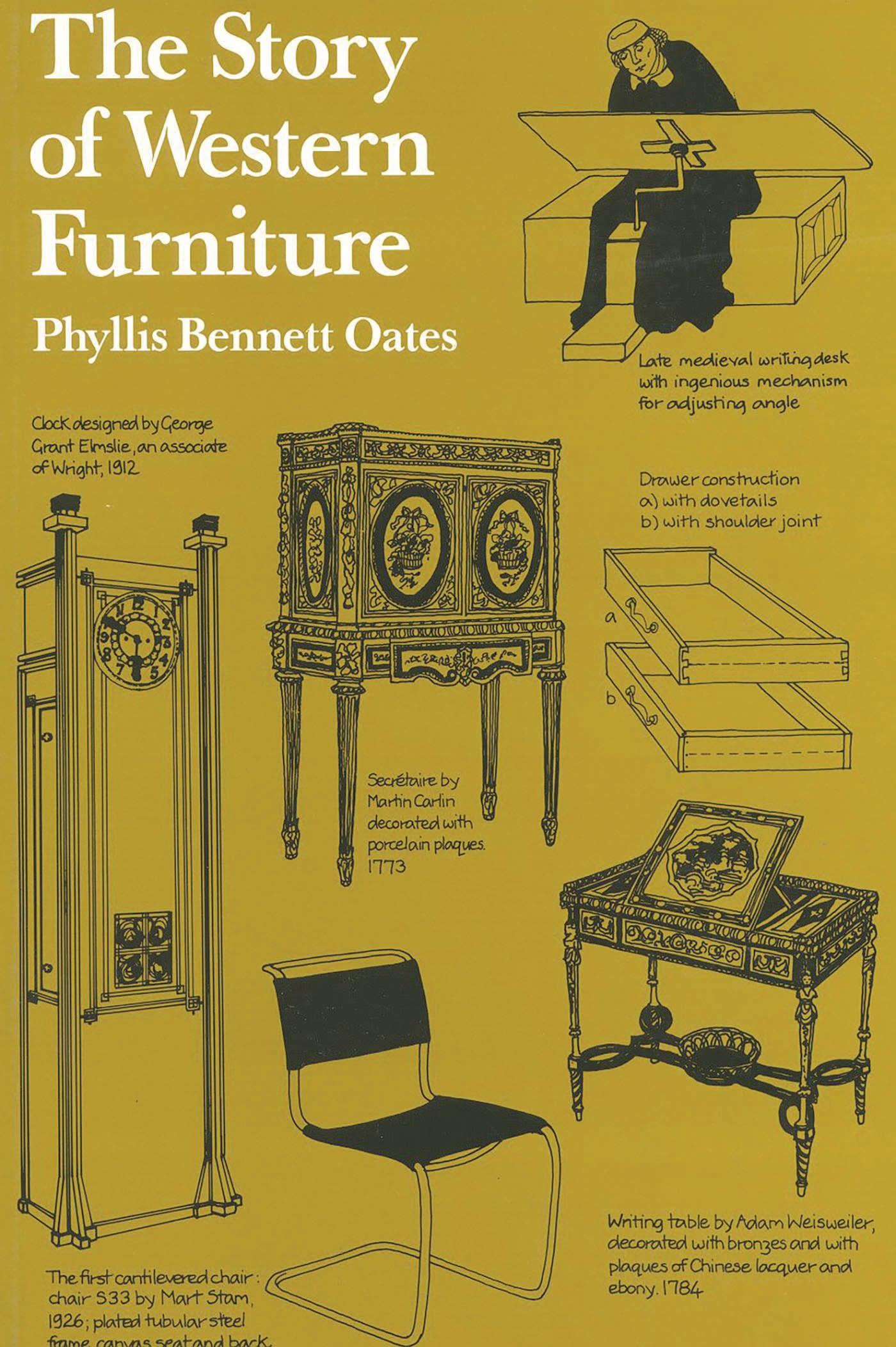
As well as fulfilling a functional need, furniture has always been an index of status. From the throne of Tutankhamen or the bed of State of Louis XIV to the austere Shaker chest or the Charles Eames chair and later modern pieces from Europe, the Far East and the United States, the style of each piece tells much about the outlook of the makers and the needs and skills of the time.
This absorbing history traces the development of furniture design and production, from the days of ancient Egypt to the present, describing what articles were made in each period, how they were made, and what were the social and economic conditions that affected style and finish. The author discusses techniques such as joinery, turning, veneering, marquetry, polishing, upholstery, bentwood work and lamination. Many examples are shown in the illustrations, which are invaluable recognition sources and a lively visual accompaniment to the text.
This absorbing history traces the development of furniture design and production, from the days of ancient Egypt to the present, describing what articles were made in each period, how they were made, and what were the social and economic conditions that affected style and finish. The author discusses techniques such as joinery, turning, veneering, marquetry, polishing, upholstery, bentwood work and lamination. Many examples are shown in the illustrations, which are invaluable recognition sources and a lively visual accompaniment to the text.
Betal nemt med kort, Klarna, Apple Pay eller Google Pay. Ikke tilfreds? Du har altid 14 dages fortrydelsesret. Læs mere i vores vilkår. Har du spørgsmål, så send os en mail på hello@memmo.org.
Memmo gør det nemmere at studere – uanset hvor du er i verden. Hos os samler du dine kursusbøger og smarte studieværktøjer ét sted: resuméer, quizzer, podcasts og flashcards. Og så er der Ted, din studieven, der svarer på alt, du undrer dig over. Over 50 000 studerende studerer allerede her – bygget til at hjælpe dig med at lære hurtigere og stresse mindre.