
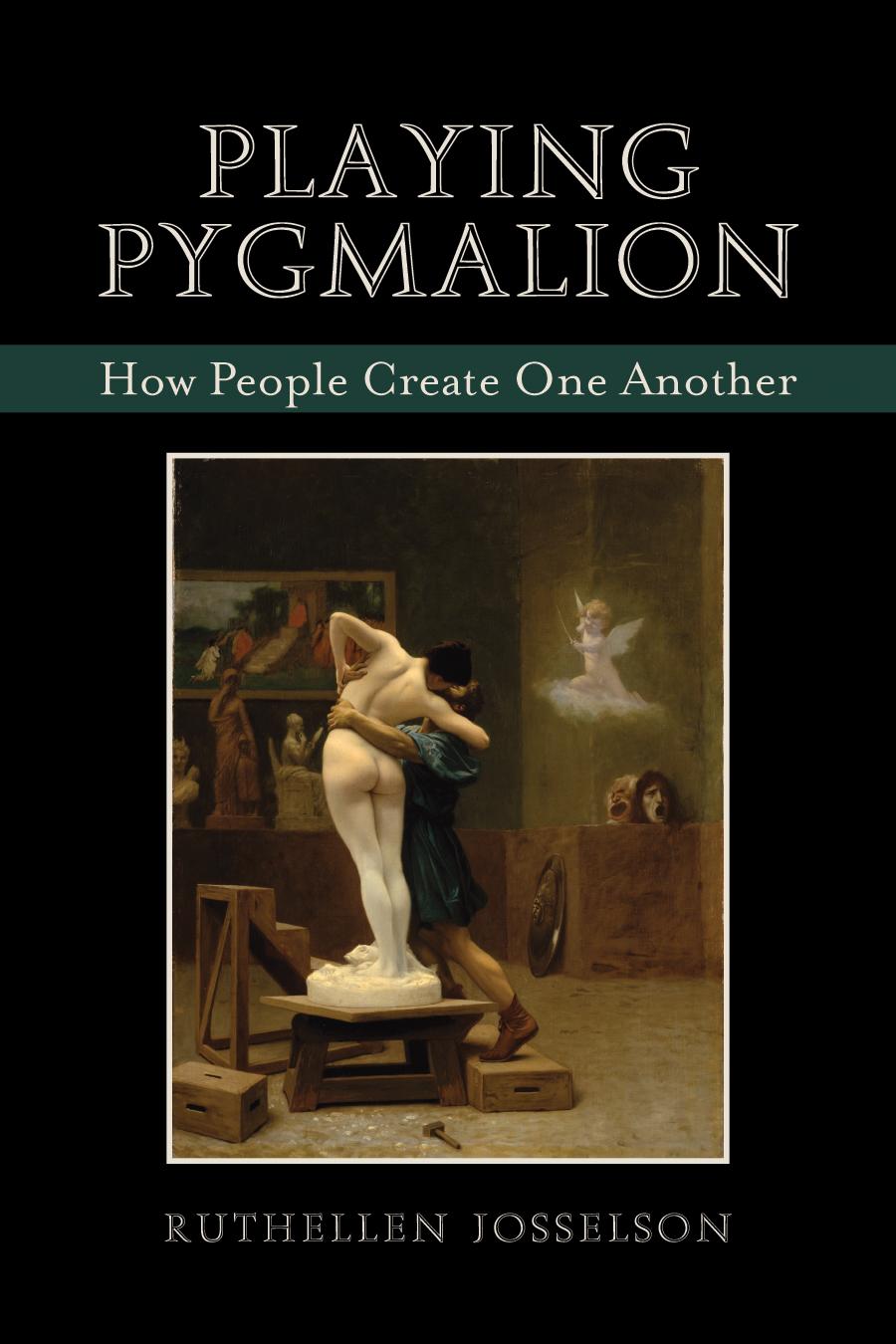
Like Pygmalion with his Galatea, we create the characters of people in our lives. Although others appear to us to be who they just "are", there are complicated psychological processes, outside of our awareness, that lead us to experience people in ways that we ourselves construct.
Psychoanalytic theory offers a wealth of understanding of how people unconsciously create what they both need and dread. But these processes are not well understood by most therapists. Too often, therapists join their patients in overlooking their own role in creating the relationships in their lives, such that it seems that patients were simply unfortunate to "have" an un-giving mother or to "find" an unloving spouse. Because processes of creation in relationship are largely unconscious, they are much harder to see. As a result, most theorists of relationships acknowledge that they exist, but offer little language or explication for how they unfold or manifest themselves. Playing Pygmalion is an effort to trace in psychological terms the subtle interplay by which people create the other.
This book adapts the psychoanalytic concepts of transitional object usage and projective identification to show their importance and applicability beyond the therapeutic situation to the understanding of people's relational lives. Using examples from literature, film and clinical work to illustrate the theory, the book goes on to consider in depth the relationship narratives of four pairs of ordinary people to demonstrate how people unconsciously "create" one another.
The stories demonstrate that the "other" is always more than one conceives him or her to be. Readers inevitably rethink some of their important relationships in terms of how they are creating people or being created by them. This may lead them to take in other aspects of the person, to see how they are looking very selectively at a human being who exists beyond their relationship. These stories also provide cautionary tales to therapists who begin to believe in the simpl
Psychoanalytic theory offers a wealth of understanding of how people unconsciously create what they both need and dread. But these processes are not well understood by most therapists. Too often, therapists join their patients in overlooking their own role in creating the relationships in their lives, such that it seems that patients were simply unfortunate to "have" an un-giving mother or to "find" an unloving spouse. Because processes of creation in relationship are largely unconscious, they are much harder to see. As a result, most theorists of relationships acknowledge that they exist, but offer little language or explication for how they unfold or manifest themselves. Playing Pygmalion is an effort to trace in psychological terms the subtle interplay by which people create the other.
This book adapts the psychoanalytic concepts of transitional object usage and projective identification to show their importance and applicability beyond the therapeutic situation to the understanding of people's relational lives. Using examples from literature, film and clinical work to illustrate the theory, the book goes on to consider in depth the relationship narratives of four pairs of ordinary people to demonstrate how people unconsciously "create" one another.
The stories demonstrate that the "other" is always more than one conceives him or her to be. Readers inevitably rethink some of their important relationships in terms of how they are creating people or being created by them. This may lead them to take in other aspects of the person, to see how they are looking very selectively at a human being who exists beyond their relationship. These stories also provide cautionary tales to therapists who begin to believe in the simpl
Betal nemt med kort, Klarna, Apple Pay eller Google Pay. Ikke tilfreds? Du har altid 14 dages fortrydelsesret. Læs mere i vores vilkår. Har du spørgsmål, så send os en mail på hello@memmo.org.
Memmo gør det nemmere at studere – uanset hvor du er i verden. Hos os samler du dine kursusbøger og smarte studieværktøjer ét sted: resuméer, quizzer, podcasts og flashcards. Og så er der Ted, din studieven, der svarer på alt, du undrer dig over. Over 50 000 studerende studerer allerede her – bygget til at hjælpe dig med at lære hurtigere og stresse mindre.