
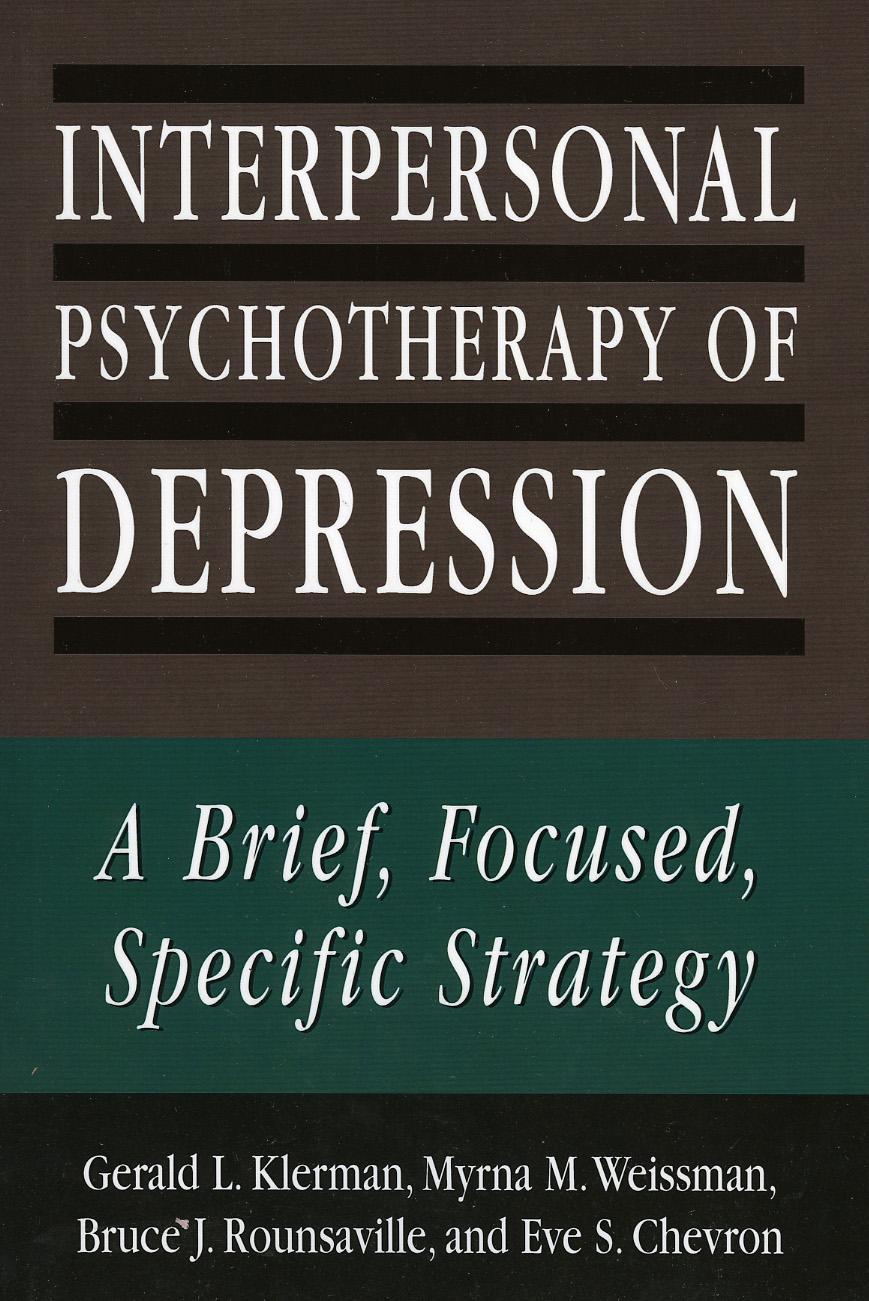
Reflecting the new and exciting trends in psychotherapy as well as responsive to the current emphasis on efficient, substantial therapeutic results, this book presents a model of interpersonal, short_term psychotherapy for clinically depressed patients. Gerald L. Klerman, whose research on depression has made him world renowned, and Myrna M. Weissman, who has written, with Eugene Paykel, an important book on women and depression, have worked with their colleagues to present the empirical basis for their new treatment method.
This theory builds on the heritage of Harry Stack Sullivan and John Bowlby and their focus on interpersonal issues and attachment on depression. Research shows that four categories of interpersonal difficulties predominate: grief, interpersonal disputes, role transitions. and interpersonal deficits. In this approach, the therapist focuses on the patient's primary problems and evaluates the need for medication in addition to interpersonal therapy. Acknowledging that these four areas are never mutually exclusive, the authors present a clear treatment strategy for each, augmenting their presentation with a discussion of common obstacles that arise during treatment.
As an overview, the book compares interpersonal psychotherapy with other psychotherapies for depression. Summaries of research documenting the efficacy of interpersonal psychotherapy are given.The authors outline the theoretical basis for an interpersonal approach, and apply it to depression. The following sections detail how to conduct interpersonal psychotherapy, supplying case vignettes to illustrate particular problems. Finally, the authors explore combining interpersonal psychotherapy with pharmacotherapy.
This theory builds on the heritage of Harry Stack Sullivan and John Bowlby and their focus on interpersonal issues and attachment on depression. Research shows that four categories of interpersonal difficulties predominate: grief, interpersonal disputes, role transitions. and interpersonal deficits. In this approach, the therapist focuses on the patient's primary problems and evaluates the need for medication in addition to interpersonal therapy. Acknowledging that these four areas are never mutually exclusive, the authors present a clear treatment strategy for each, augmenting their presentation with a discussion of common obstacles that arise during treatment.
As an overview, the book compares interpersonal psychotherapy with other psychotherapies for depression. Summaries of research documenting the efficacy of interpersonal psychotherapy are given.The authors outline the theoretical basis for an interpersonal approach, and apply it to depression. The following sections detail how to conduct interpersonal psychotherapy, supplying case vignettes to illustrate particular problems. Finally, the authors explore combining interpersonal psychotherapy with pharmacotherapy.
Sider: 272
Kategori: Psykologi
e-ISBN: 9781461629009
Forsendelsesvægt: 1.2 kg
Sendes inden for: 1-2 dage
Betal nemt med kort, Klarna, Apple Pay eller Google Pay. Ikke tilfreds? Du har altid 14 dages fortrydelsesret. Læs mere i vores vilkår. Har du spørgsmål, så send os en mail på hello@memmo.org.
Memmo gør det nemmere at studere – uanset hvor du er i verden. Hos os samler du dine kursusbøger og smarte studieværktøjer ét sted: resuméer, quizzer, podcasts og flashcards. Og så er der Ted, din studieven, der svarer på alt, du undrer dig over. Over 50 000 studerende studerer allerede her – bygget til at hjælpe dig med at lære hurtigere og stresse mindre.