
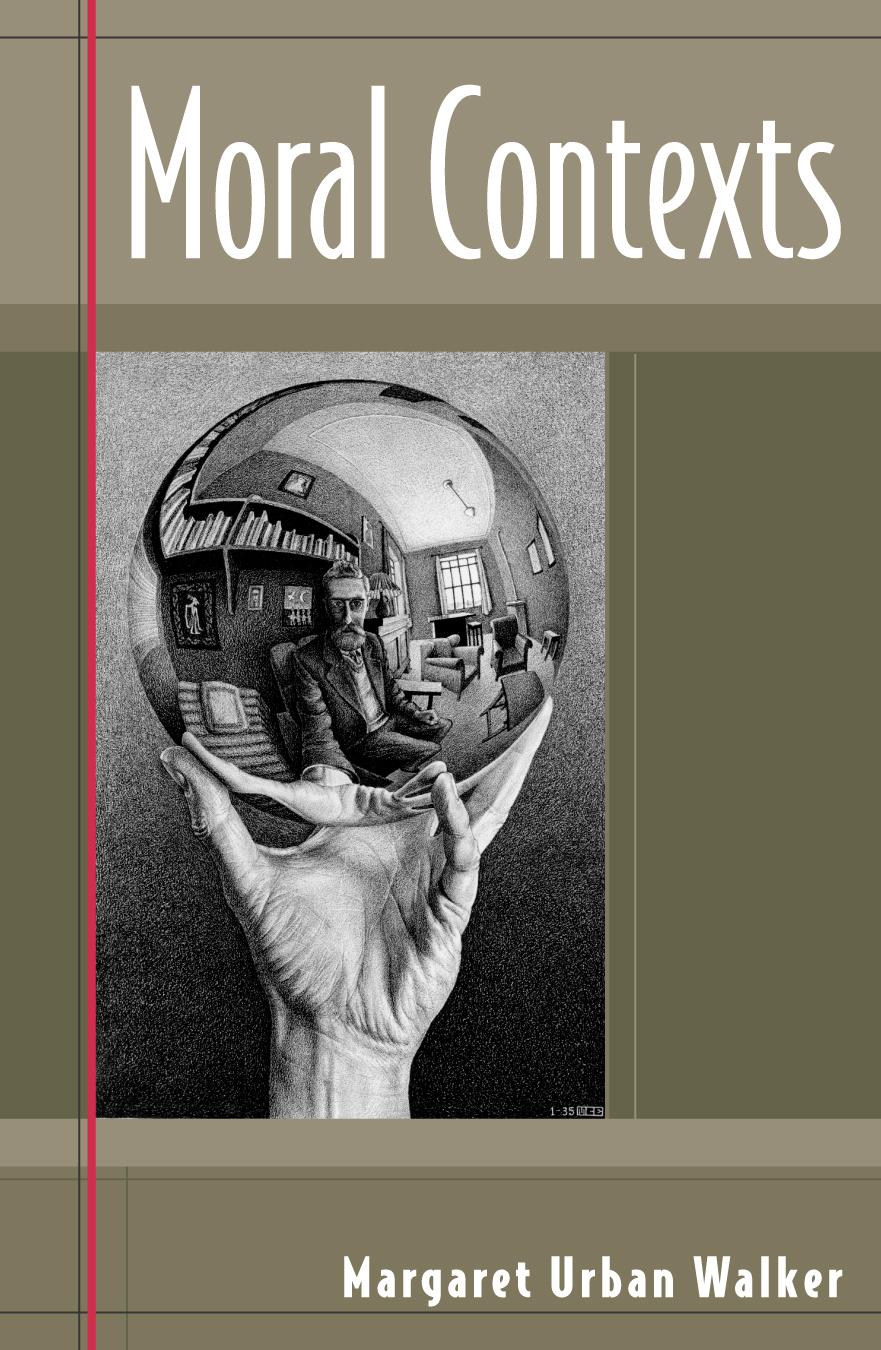
Many contexts shape and limit moral thinking in philosophy and life. Human conditions of vulnerability and interdependency, of limited awareness and control, of imperfect insight into ourselves and others are inevitable contexts that neither moral thought nor theory should forget. To be truly reflective, moral thinking and moral philosophy must become aware of the contexts that bind our thinking about how to live. This collection of essays by Margaret Urban Walker seek to show how to do this, and why it makes a difference.
Contingent and changeable contexts that shape moral thinking include our individual histories, our social positions, and institutional roles, relationships, cultural settings, and social arrangements, and the specific moral idioms we pick up along the way. The paradigms and specialized language of ethical theory are contexts, too; they shape how moral theory looks and what or whom it looks at. Ethical theory and practice are meaningless without these Moral Contexts.
Contingent and changeable contexts that shape moral thinking include our individual histories, our social positions, and institutional roles, relationships, cultural settings, and social arrangements, and the specific moral idioms we pick up along the way. The paradigms and specialized language of ethical theory are contexts, too; they shape how moral theory looks and what or whom it looks at. Ethical theory and practice are meaningless without these Moral Contexts.
Betal nemt med kort, Klarna, Apple Pay eller Google Pay. Ikke tilfreds? Du har altid 14 dages fortrydelsesret. Læs mere i vores vilkår. Har du spørgsmål, så send os en mail på hello@memmo.org.
Memmo gør det nemmere at studere – uanset hvor du er i verden. Hos os samler du dine kursusbøger og smarte studieværktøjer ét sted: resuméer, quizzer, podcasts og flashcards. Og så er der Ted, din studieven, der svarer på alt, du undrer dig over. Over 50 000 studerende studerer allerede her – bygget til at hjælpe dig med at lære hurtigere og stresse mindre.