
"Kevin Williams has authored an account of "foreign" correspondence and international journalism that is the most comprehensively-sourced, inclusive, contextualized, timely and critical in its field. At last, we have an account that acknowledges that the largest employers of "foreign" correspondents for nearly two hundred years have been and continue to be the news agencies; that the occupation is rooted in a history of imperialism, post-colonialism and commercialization, whose vestiges today are all too apparent; that the impacts of so-called "new media" on the amount, range and quality of international news, while significant, are less dramatic and less positive than commonly supposed."
- Oliver Boyd-Barrett, Bowling Green State University, Ohio
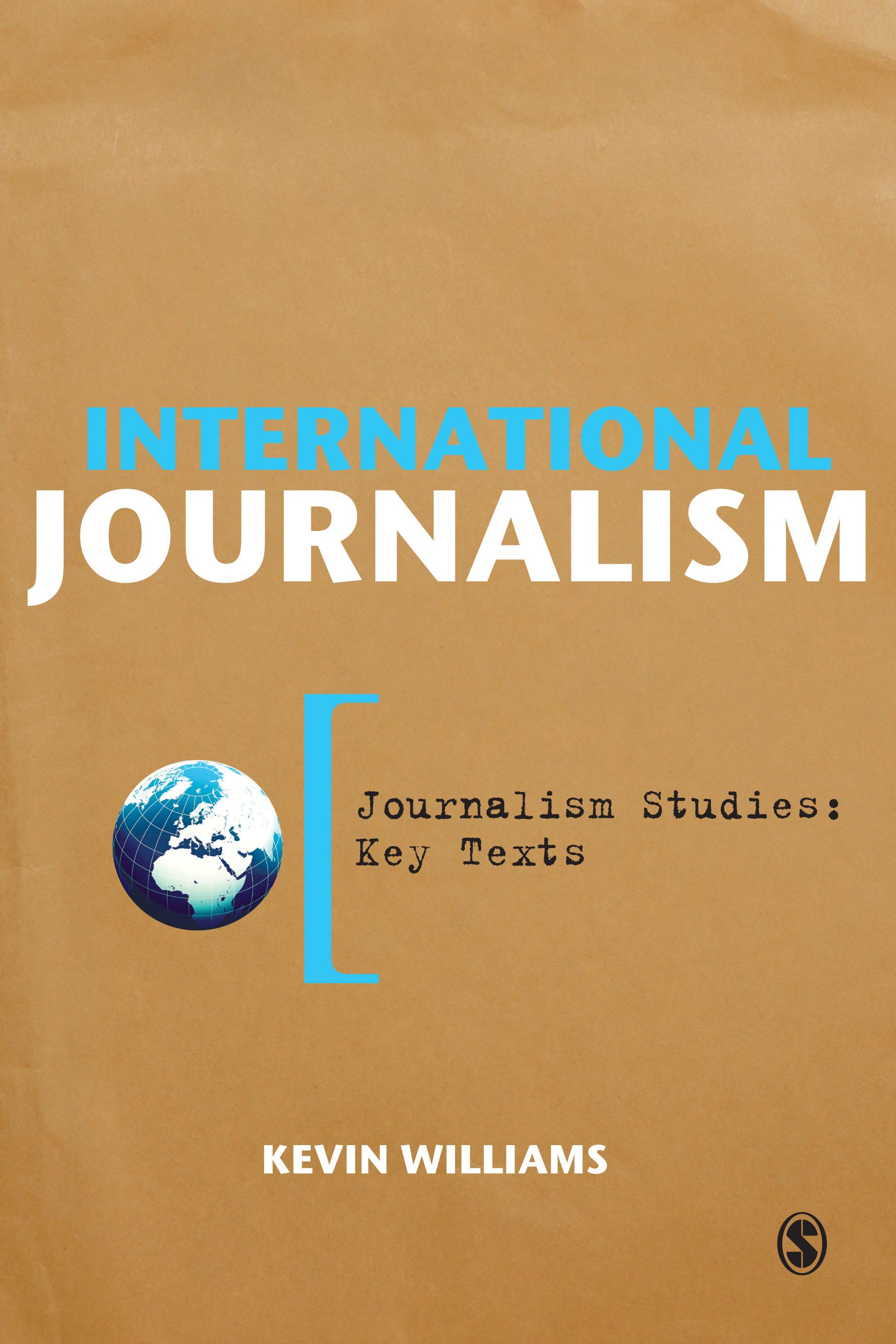
What is the future of the foreign correspondent - is there one? Tracing the historical development of international reporting, Kevin Williams examines the organizational structures, occupational culture and information environment in which it is practiced to explore the argument that foreign correspondence is becoming extinct in the globalized world.
Mapping the institutional, political, economic, cultural, and historical context within which news is gathered across borders, this book reveals how foreign correspondents are adapting to new global and commercial realities in how they gather, adapt and disseminate news.
Lucid and engaging, the book expertly probes three global models of reporting - Anglo-American, European and the developing world - to lay bare the forces of technology, commercial constraint and globalization that are changing how journalism is practiced and understood.
Essential reading for students of journalism, this is a timely and thought-provoking book for anyone who wishes to fully grasp the core issues of journalism and reporting in a global context.
- Oliver Boyd-Barrett, Bowling Green State University, Ohio
What is the future of the foreign correspondent - is there one? Tracing the historical development of international reporting, Kevin Williams examines the organizational structures, occupational culture and information environment in which it is practiced to explore the argument that foreign correspondence is becoming extinct in the globalized world.
Mapping the institutional, political, economic, cultural, and historical context within which news is gathered across borders, this book reveals how foreign correspondents are adapting to new global and commercial realities in how they gather, adapt and disseminate news.
Lucid and engaging, the book expertly probes three global models of reporting - Anglo-American, European and the developing world - to lay bare the forces of technology, commercial constraint and globalization that are changing how journalism is practiced and understood.
Essential reading for students of journalism, this is a timely and thought-provoking book for anyone who wishes to fully grasp the core issues of journalism and reporting in a global context.
Betal nemt med kort, Klarna, Apple Pay eller Google Pay. Ikke tilfreds? Du har altid 14 dages fortrydelsesret. Læs mere i vores vilkår. Har du spørgsmål, så send os en mail på hello@memmo.org.
Memmo gør det nemmere at studere – uanset hvor du er i verden. Hos os samler du dine kursusbøger og smarte studieværktøjer ét sted: resuméer, quizzer, podcasts og flashcards. Og så er der Ted, din studieven, der svarer på alt, du undrer dig over. Over 50 000 studerende studerer allerede her – bygget til at hjælpe dig med at lære hurtigere og stresse mindre.