
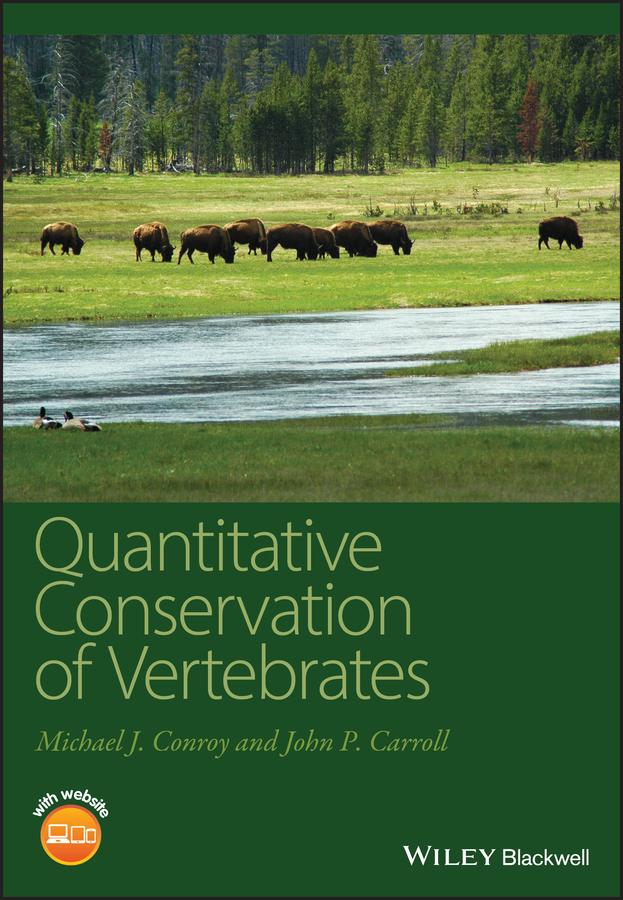
Part I provides a basic background in population and community modeling. It introduces statistical models, and familiarizes the reader with important concepts in the design of monitoring and research programs. These programs provide the essential data that guide conservation decision making. Part II covers the principal methods used to estimate abundance, occupancy, demographic parameters, and community parameters, including occupancy sampling, sample counts, distance sampling, and capture-mark-recapture (for both closed and open populations). Emphasis is placed on practical aspects of designing and implementing field studies, and the proper analysis of data. Part III introduces structured decision making and adaptive management, in which predictive models are used to inform conservation decision makers on appropriate decisions in the face of uncertainty—with the goal of reducing uncertainty through monitoring and research. A detailed case study is used to illustrate each of these themes.
Numerous worked examples and accompanying electronic material (on a website - http://www.blackwellpublishing.com/conroy - and accompanying CD) provide the details of model construction and application, and data analysis.
Betal nemt med kort, Klarna, Apple Pay eller Google Pay. Ikke tilfreds? Du har altid 14 dages fortrydelsesret. Læs mere i vores vilkår. Har du spørgsmål, så send os en mail på hello@memmo.org.
Memmo gør det nemmere at studere – uanset hvor du er i verden. Hos os samler du dine kursusbøger og smarte studieværktøjer ét sted: resuméer, quizzer, podcasts og flashcards. Og så er der Ted, din studieven, der svarer på alt, du undrer dig over. Over 50 000 studerende studerer allerede her – bygget til at hjælpe dig med at lære hurtigere og stresse mindre.