
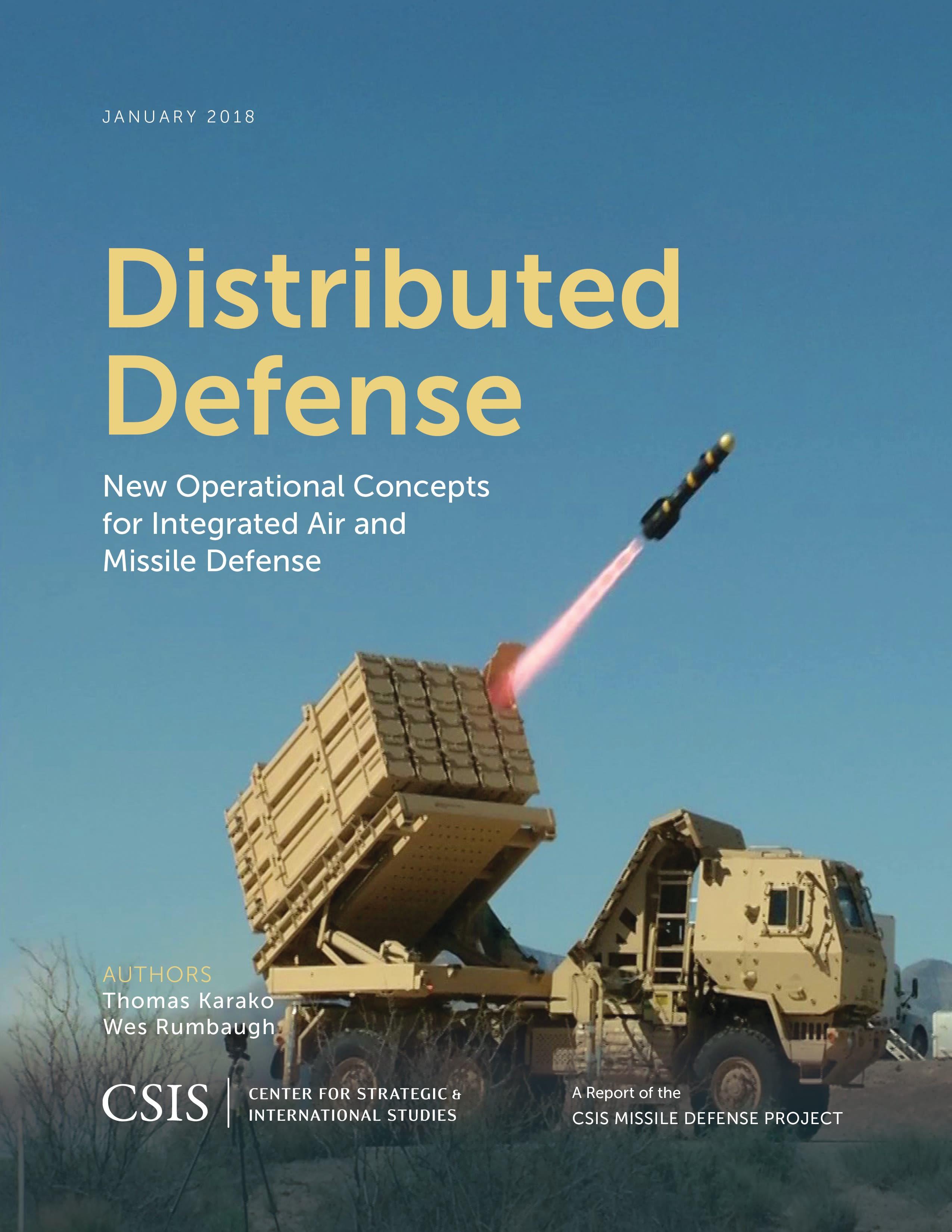
Despite the rising salience of missile threats, current air and missile defense forces are far too susceptible to suppression. Today’s U.S. air and missile defense (AMD) force lacks the depth, capacity, and operational flexibility to simultaneously perform both missions. Discussions about improving AMD usually revolve around improvements to the capability and capacity of interceptors or sensors. Rather than simply doing more of the same, the joint integrated air and missile defense (IAMD) efforts might be well served by new or reinvigorated operational concepts, here discussed collectively as “Distributed Defense.” By leveraging networked integration, Distributed Defense envisions a more flexible and more dispersible air and missile defense force capable of imposing costs and dilemmas on an adversary, complicating the suppression of U.S. air and missile defenses. Although capability and capacity improvements remain essential to the high-end threats, the Distributed Defense concept focuses on creating a new architecture for today’s fielded or soon-to-be fielded IAMD force to boost flexibility and resilience.
Betal nemt med kort, Klarna, Apple Pay eller Google Pay. Ikke tilfreds? Du har altid 14 dages fortrydelsesret. Læs mere i vores vilkår. Har du spørgsmål, så send os en mail på hello@memmo.org.
Memmo gør det nemmere at studere – uanset hvor du er i verden. Hos os samler du dine kursusbøger og smarte studieværktøjer ét sted: resuméer, quizzer, podcasts og flashcards. Og så er der Ted, din studieven, der svarer på alt, du undrer dig over. Over 50 000 studerende studerer allerede her – bygget til at hjælpe dig med at lære hurtigere og stresse mindre.