
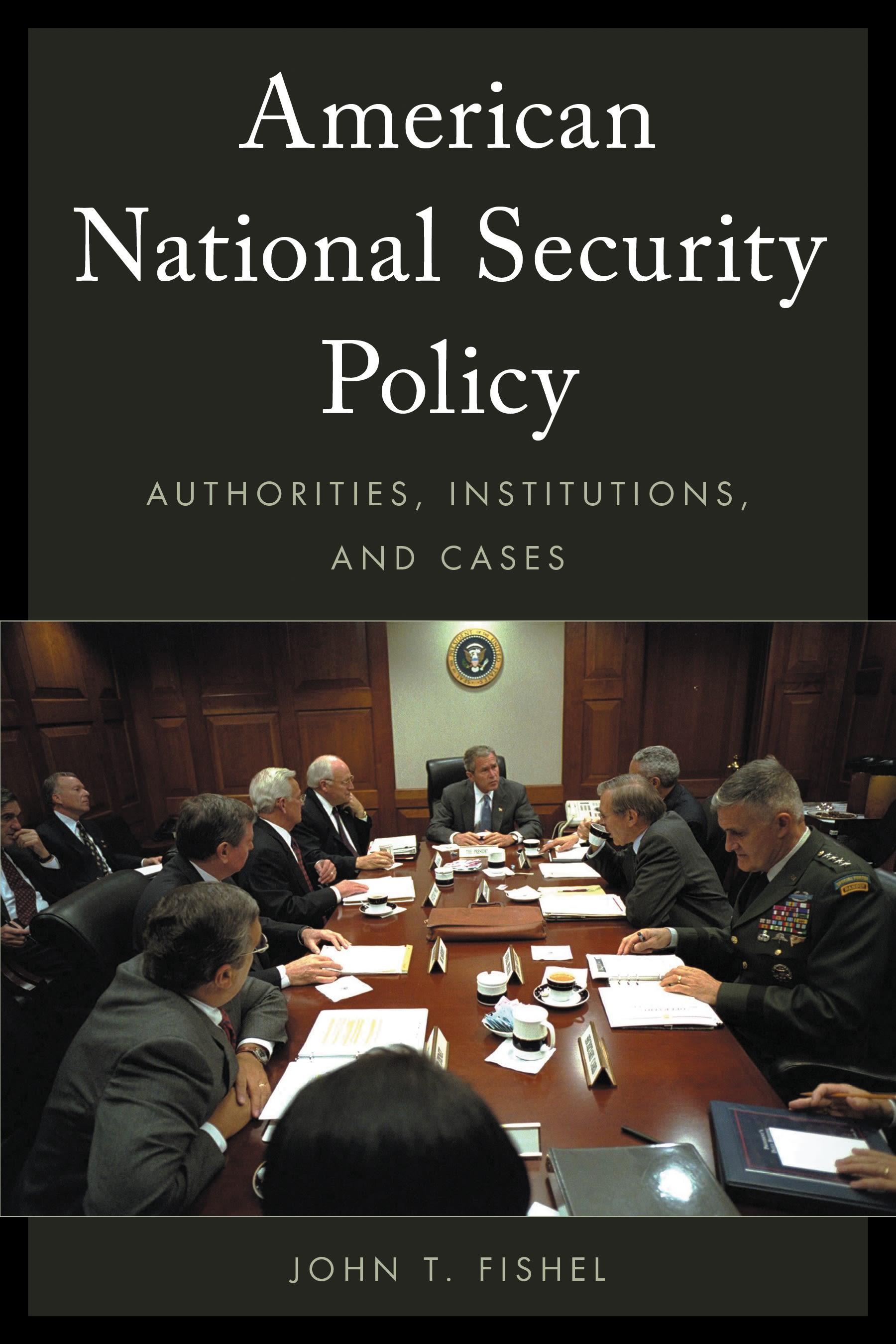
Security policy is a key factor not only of domestic politics in the U.S., but also of foreign relations and global security. This text sets to explain the process of security policy making in the United States by looking at all the elements that shape it, from institutions and legislation to policymakers themselves and historical precedents.
To understand national security policy, the book first needs to address the way national security policy makers see the world. It shows that they generally see it in realist terms where the state is a single rational actor pursuing its national interest. It then focuses on how legislative authorities enable and constrain these policy makers before looking at the organizational context in which policies are made and implemented. This means examining the legal authorities that govern how the system functions, such as the Constitution and the National Security Act of 1947, as well as the various governmental institutions whose capabilities either limit or allow execution, such as the CIA, NSA, etc. Next, the text analyzes the processes and products of national security policy making, such as reports, showing how they differ from administration to administration. Lastly, a series of case studies illustrate the challenges of implementing and developing policy. These span the post-Cold war period to the present, and include the Panama crisis, Somalia, the Balkans Haiti, the Iraq wars, and Afghanistan. By combining both the theory and process, this textbook reveals all aspects of the making of national security policy in United States from agenda setting to the successes and failures of implementation.
To understand national security policy, the book first needs to address the way national security policy makers see the world. It shows that they generally see it in realist terms where the state is a single rational actor pursuing its national interest. It then focuses on how legislative authorities enable and constrain these policy makers before looking at the organizational context in which policies are made and implemented. This means examining the legal authorities that govern how the system functions, such as the Constitution and the National Security Act of 1947, as well as the various governmental institutions whose capabilities either limit or allow execution, such as the CIA, NSA, etc. Next, the text analyzes the processes and products of national security policy making, such as reports, showing how they differ from administration to administration. Lastly, a series of case studies illustrate the challenges of implementing and developing policy. These span the post-Cold war period to the present, and include the Panama crisis, Somalia, the Balkans Haiti, the Iraq wars, and Afghanistan. By combining both the theory and process, this textbook reveals all aspects of the making of national security policy in United States from agenda setting to the successes and failures of implementation.
Sider: 240
Kategori: Statsvetenskap & Politik
e-ISBN: 9781442248397
Forsendelsesvægt: 1.2 kg
Sendes inden for: 1-2 dage
Betal nemt med kort, Klarna, Apple Pay eller Google Pay. Ikke tilfreds? Du har altid 14 dages fortrydelsesret. Læs mere i vores vilkår. Har du spørgsmål, så send os en mail på hello@memmo.org.
Memmo gør det nemmere at studere – uanset hvor du er i verden. Hos os samler du dine kursusbøger og smarte studieværktøjer ét sted: resuméer, quizzer, podcasts og flashcards. Og så er der Ted, din studieven, der svarer på alt, du undrer dig over. Over 50 000 studerende studerer allerede her – bygget til at hjælpe dig med at lære hurtigere og stresse mindre.