
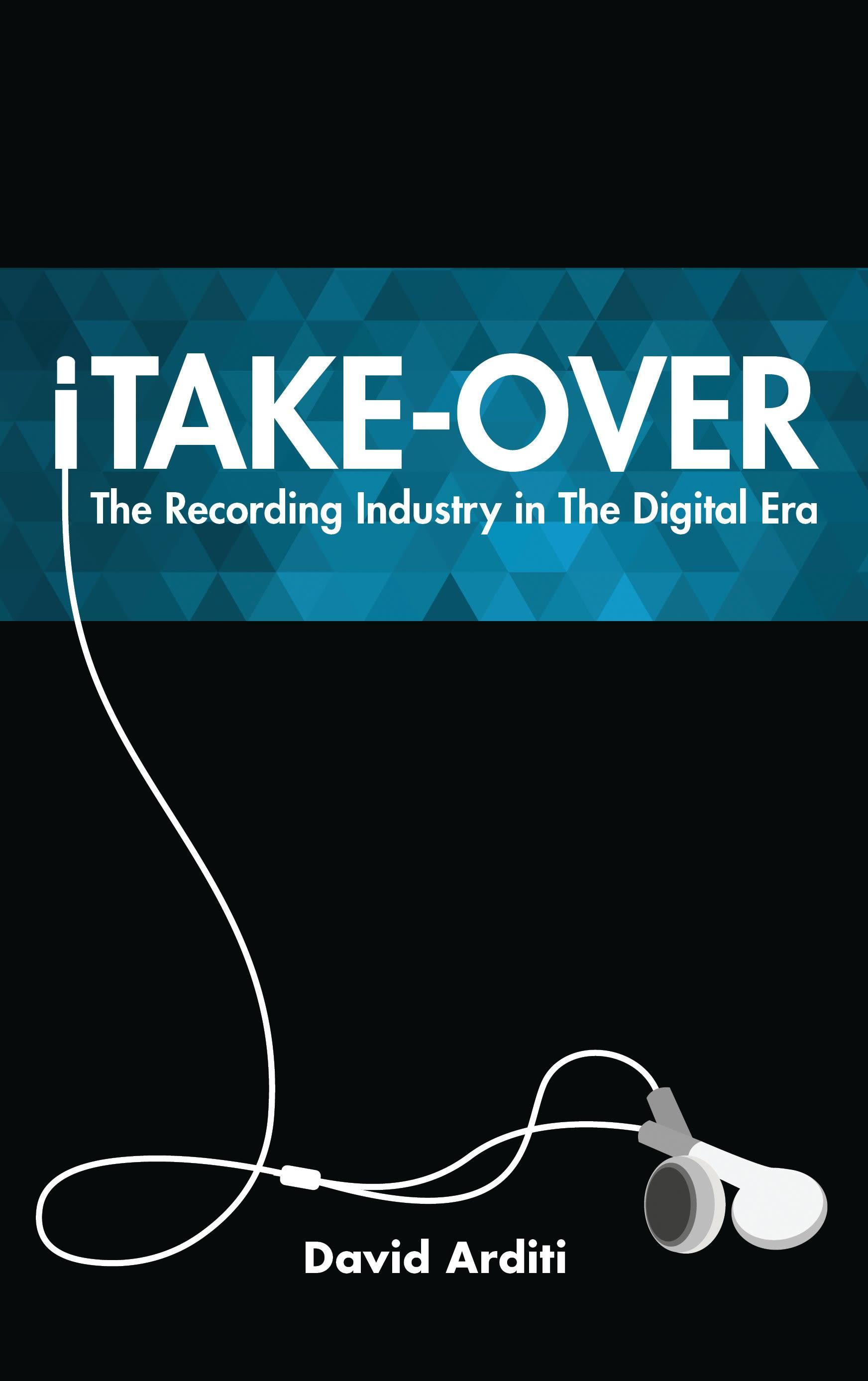
iTake-Over: The Recording Industry in the Digital Era sheds light on the way large corporations appropriate new technologies related to recording and distribution of audio material to maintain their market dominance in a capitalist system. All too commonly, scholars have asserted too confidently, how the rise and reign of digital music has diminished the power of major record labels. In iTake-Over, music scholar David Arditi argues otherwise, adopting a broader perspective by examining how the recording industry has strengthened copyright laws for their corporate ends at the expense of the broader public good, which has traditionally depended on the safe harbor of fair use. Arditi also challenges the dominant discourse over digital music distribution, which has largely adopted the position that the recording industry has a legitimate claim to profitability at the detriment of a shared culture.
iTake-Over more specifically surveys the actual material effects that digital distribution has had on the industry. Most notable among these is how major record labels find themselves in a stronger financial position today in the music industry than they were before the launch of Napster. Arditi contends that this is largely because of reduced production and distribution costs and the steady gain in digital music sales. Moreover, instead of merely trying to counteract the phenomenon of digital distribution, the RIAA and the major record labels embraced, and then altered, the distribution system. Throughout the 1990s and early 2000s, the RIAA lobbied for legislation, built technologies, and waged war in the courts in order to shape the digital environment for music distribution. From mp3s to the Digital Millennium Copyright Act (DMCA), from the Audio Home Recording Act (AHRA) to iTunes, the major record labels and the RIAA, instead of trying to torpedo the switch to digital distribution, engineered it to their benefit—often at the expense of the public interest.
Throughout, Arditi boldly asserts that the sea change to digital music did not destroy the recording industry. Rather, it stands as a testament to the recording industry’s successful management of this migration to digital production and distribution. As such, this work should appeal to musicians and music scholars, political scientists and sociologists, technologists and audio professionals seeking to grasp this remarkable change in music production and consumption.
iTake-Over more specifically surveys the actual material effects that digital distribution has had on the industry. Most notable among these is how major record labels find themselves in a stronger financial position today in the music industry than they were before the launch of Napster. Arditi contends that this is largely because of reduced production and distribution costs and the steady gain in digital music sales. Moreover, instead of merely trying to counteract the phenomenon of digital distribution, the RIAA and the major record labels embraced, and then altered, the distribution system. Throughout the 1990s and early 2000s, the RIAA lobbied for legislation, built technologies, and waged war in the courts in order to shape the digital environment for music distribution. From mp3s to the Digital Millennium Copyright Act (DMCA), from the Audio Home Recording Act (AHRA) to iTunes, the major record labels and the RIAA, instead of trying to torpedo the switch to digital distribution, engineered it to their benefit—often at the expense of the public interest.
Throughout, Arditi boldly asserts that the sea change to digital music did not destroy the recording industry. Rather, it stands as a testament to the recording industry’s successful management of this migration to digital production and distribution. As such, this work should appeal to musicians and music scholars, political scientists and sociologists, technologists and audio professionals seeking to grasp this remarkable change in music production and consumption.
Betal nemt med kort, Klarna, Apple Pay eller Google Pay. Ikke tilfreds? Du har altid 14 dages fortrydelsesret. Læs mere i vores vilkår. Har du spørgsmål, så send os en mail på hello@memmo.org.
Memmo gør det nemmere at studere – uanset hvor du er i verden. Hos os samler du dine kursusbøger og smarte studieværktøjer ét sted: resuméer, quizzer, podcasts og flashcards. Og så er der Ted, din studieven, der svarer på alt, du undrer dig over. Over 50 000 studerende studerer allerede her – bygget til at hjælpe dig med at lære hurtigere og stresse mindre.