
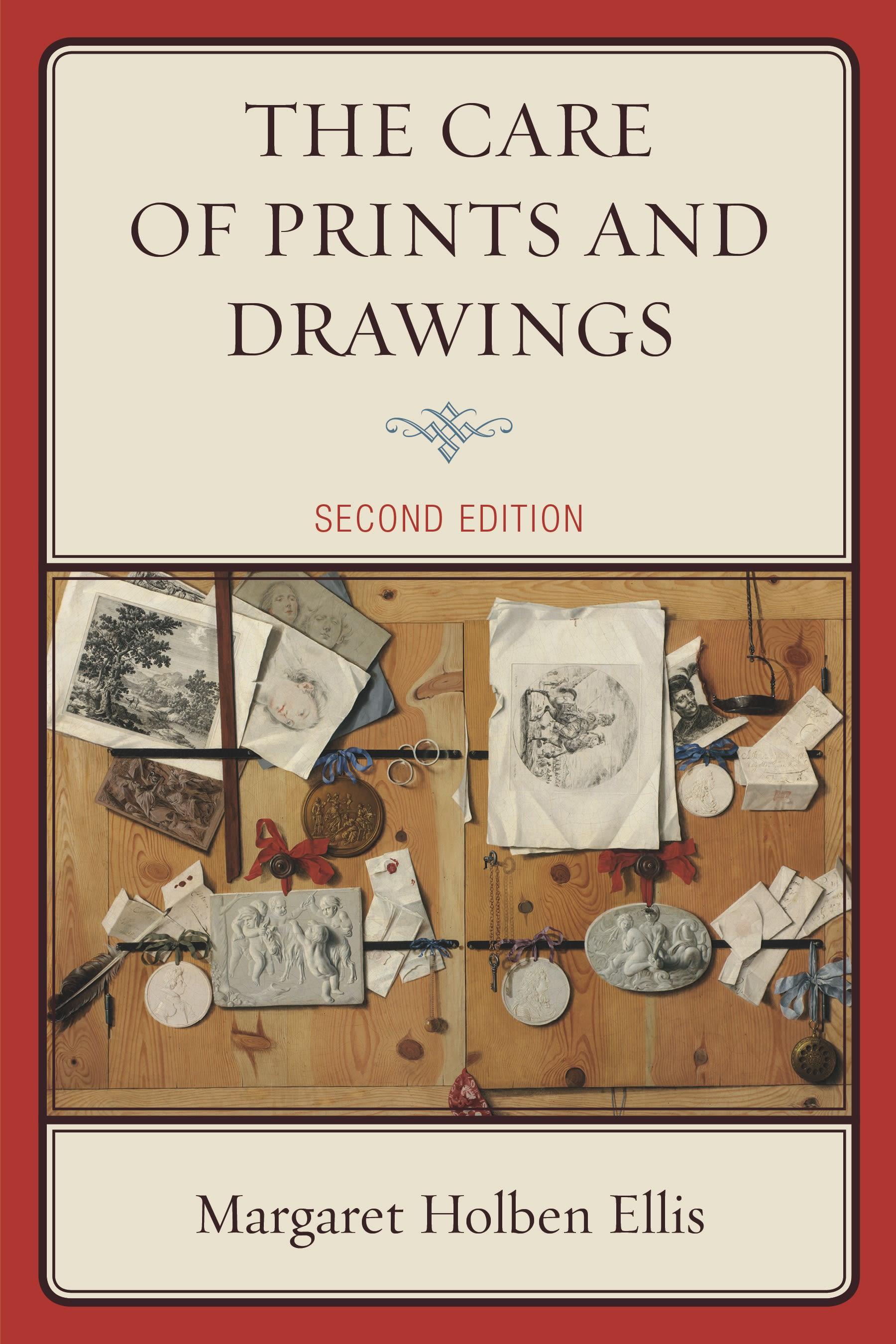
The 2nd edition of The Care of Prints and Drawings provides practical, straightforward advice to those responsible for the preservation of works on paper, ranging from curators, facility managers, conservators, registrars, collection care specialists, private collectors, artists, or students of museum studies, visual arts, art history, or conservation. A greater emphasis is placed on preventive conservation, a trend among collecting institutions, which reflects the growing recognition that scarce resources are best expended on preventing deterioration, rather than on less effective measures of reversing it. Expanded and richly illustrated chapters include:
Supports for Prints and Drawings discusses the properties of parchment and paper and introduces the general preservation needs and conservation problems of all works on paper, regardless of their media. Conservation Problems Related to the Paper Support of Prints and Drawings presents a guide to recognizing the symptoms and diagnosing the causes of damage specific to paper. Conservation Problems Related to the Materials and Techniques of Prints describes the conservation problems that affect certain printmaking materials and arise from specific processes. Conservation Problems Related to the Materials and Techniques of Drawings focuses on the various materials used to create marks on paper. Item-Level Collection Protection: Envelopes, Sleeves, Folders, Enclosures, Mats, Boxes, Frames, and Furniture, discusses measures taken for prints and drawings so that they can better withstand the rigors of handling, examination, exhibition, travel, and adverse environmental conditions.Preventive Conservation for Prints and Drawings describes how the integration of a comprehensive Collections Care Program into a Collections Management Policy can reduce the need for item-level conservation treatments. Basic Paper Conservation Procedures provides instructions on how to stabilize damaged works.How to Make Starch Paste and Methyl Cellulose Adhesive and Suppliers of Paper Conservation Materials and Equipment are appended as well as a Glossary.
Supports for Prints and Drawings discusses the properties of parchment and paper and introduces the general preservation needs and conservation problems of all works on paper, regardless of their media. Conservation Problems Related to the Paper Support of Prints and Drawings presents a guide to recognizing the symptoms and diagnosing the causes of damage specific to paper. Conservation Problems Related to the Materials and Techniques of Prints describes the conservation problems that affect certain printmaking materials and arise from specific processes. Conservation Problems Related to the Materials and Techniques of Drawings focuses on the various materials used to create marks on paper. Item-Level Collection Protection: Envelopes, Sleeves, Folders, Enclosures, Mats, Boxes, Frames, and Furniture, discusses measures taken for prints and drawings so that they can better withstand the rigors of handling, examination, exhibition, travel, and adverse environmental conditions.Preventive Conservation for Prints and Drawings describes how the integration of a comprehensive Collections Care Program into a Collections Management Policy can reduce the need for item-level conservation treatments. Basic Paper Conservation Procedures provides instructions on how to stabilize damaged works.How to Make Starch Paste and Methyl Cellulose Adhesive and Suppliers of Paper Conservation Materials and Equipment are appended as well as a Glossary.
Betal nemt med kort, Klarna, Apple Pay eller Google Pay. Ikke tilfreds? Du har altid 14 dages fortrydelsesret. Læs mere i vores vilkår. Har du spørgsmål, så send os en mail på hello@memmo.org.
Memmo gør det nemmere at studere – uanset hvor du er i verden. Hos os samler du dine kursusbøger og smarte studieværktøjer ét sted: resuméer, quizzer, podcasts og flashcards. Og så er der Ted, din studieven, der svarer på alt, du undrer dig over. Over 50 000 studerende studerer allerede her – bygget til at hjælpe dig med at lære hurtigere og stresse mindre.