
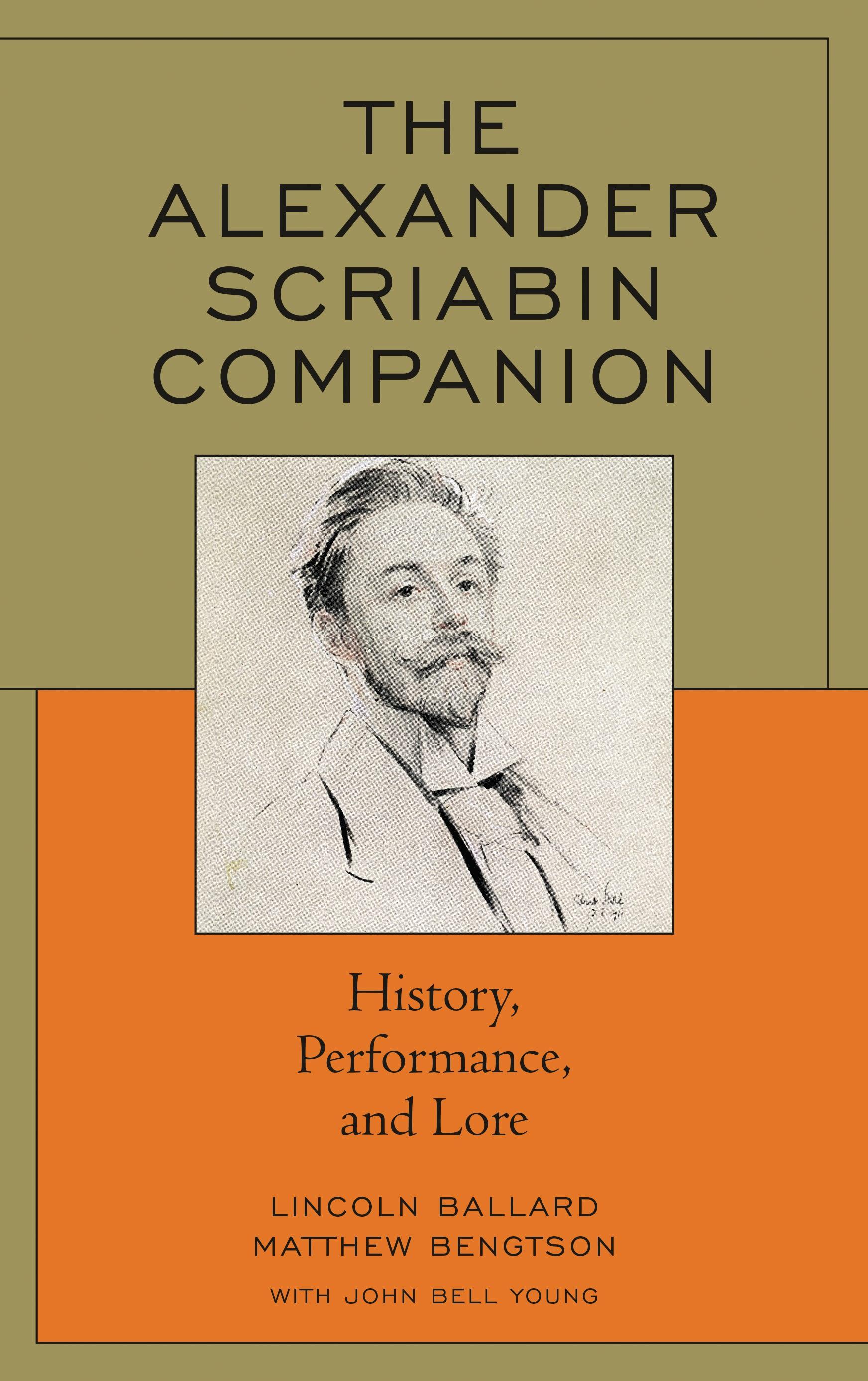
This unique collaboration between a musicologist and two pianists – all experts in Russian music – takes a fresh look at the supercharged music and polarizing reception of the Russian composer Alexander Scriabin. From his Chopin-inspired miniatures to his genre-bending symphonies and avant-garde late works, Scriabin left a unique mark on music history. Scriabin’s death centennial in 2015 brought wider exposure and renewed attention to this pioneering composer. Music lovers who are curious about Scriabin have been torn between specialized academic studies and popular sources that glamorize his interests and activities, often at the expense of historical accuracy. This book bridges the divide between these two branches of literature, and brings a modern perspective to his music and legacy.
Drawing on archival materials, primary sources in Russian, and recently published books and articles, Part One details the reception and performance history of Scriabin’s solo piano and orchestral music. High quality recordings are recommended for each piece. Part Two explores four topics in Scriabin’s reception: the myths generated by Scriabin’s biographers, his claims to synaesthesia or “color-hearing,” his revival in 1960s America as a proto-Flower Child, and the charges of anti-Russianness leveled against his music. Part Three investigates stylistic context and performance practice in the piano music, and considers the domains of sound, rhythm, and harmony. It offers interpretive strategies for deciphering Scriabin’s challenging scores at the keyboard.
Students, scholars, and music enthusiasts will benefit from the historical insights offered in this interdisciplinary book. Armed with this knowledge, readers will be able to better appreciate the stylistic innovations and colorful imagination of this extraordinary composer.
Drawing on archival materials, primary sources in Russian, and recently published books and articles, Part One details the reception and performance history of Scriabin’s solo piano and orchestral music. High quality recordings are recommended for each piece. Part Two explores four topics in Scriabin’s reception: the myths generated by Scriabin’s biographers, his claims to synaesthesia or “color-hearing,” his revival in 1960s America as a proto-Flower Child, and the charges of anti-Russianness leveled against his music. Part Three investigates stylistic context and performance practice in the piano music, and considers the domains of sound, rhythm, and harmony. It offers interpretive strategies for deciphering Scriabin’s challenging scores at the keyboard.
Students, scholars, and music enthusiasts will benefit from the historical insights offered in this interdisciplinary book. Armed with this knowledge, readers will be able to better appreciate the stylistic innovations and colorful imagination of this extraordinary composer.
Betal nemt med kort, Klarna, Apple Pay eller Google Pay. Ikke tilfreds? Du har altid 14 dages fortrydelsesret. Læs mere i vores vilkår. Har du spørgsmål, så send os en mail på hello@memmo.org.
Memmo gør det nemmere at studere – uanset hvor du er i verden. Hos os samler du dine kursusbøger og smarte studieværktøjer ét sted: resuméer, quizzer, podcasts og flashcards. Og så er der Ted, din studieven, der svarer på alt, du undrer dig over. Over 50 000 studerende studerer allerede her – bygget til at hjælpe dig med at lære hurtigere og stresse mindre.