
The rampant nature of technology has caused a shift in information seeking behaviors. In addition, current trends such as evidence based medicine and information literacy mean that one time instructional sessions cannot provide our patrons with all of the skills they need. For this reason, many librarians are working to develop curriculum based instruction that is semester long or consisting of many sessions throughout an academic program. In addition to teaching, librarians are also becoming embedded in the curriculums they support by serving as web-based course designers, problem-based learning facilitators, or members of curriculum committees.
Although it is fairly obvious that library instruction is important and that librarians should be equipped to provide this instruction, the majority of ALA accredited programs offer only one course on library instruction, the courses are only available as electives, and they are often only offered once a year. Librarians need to gain their instructional experiences through real life experiences, mentors, and of course, books like this one. Many books commonly discuss one-shot sessions and provide tips for getting the most out of that type of instruction. There are not as many that discuss curriculum based instruction in a section, let alone an entire book.
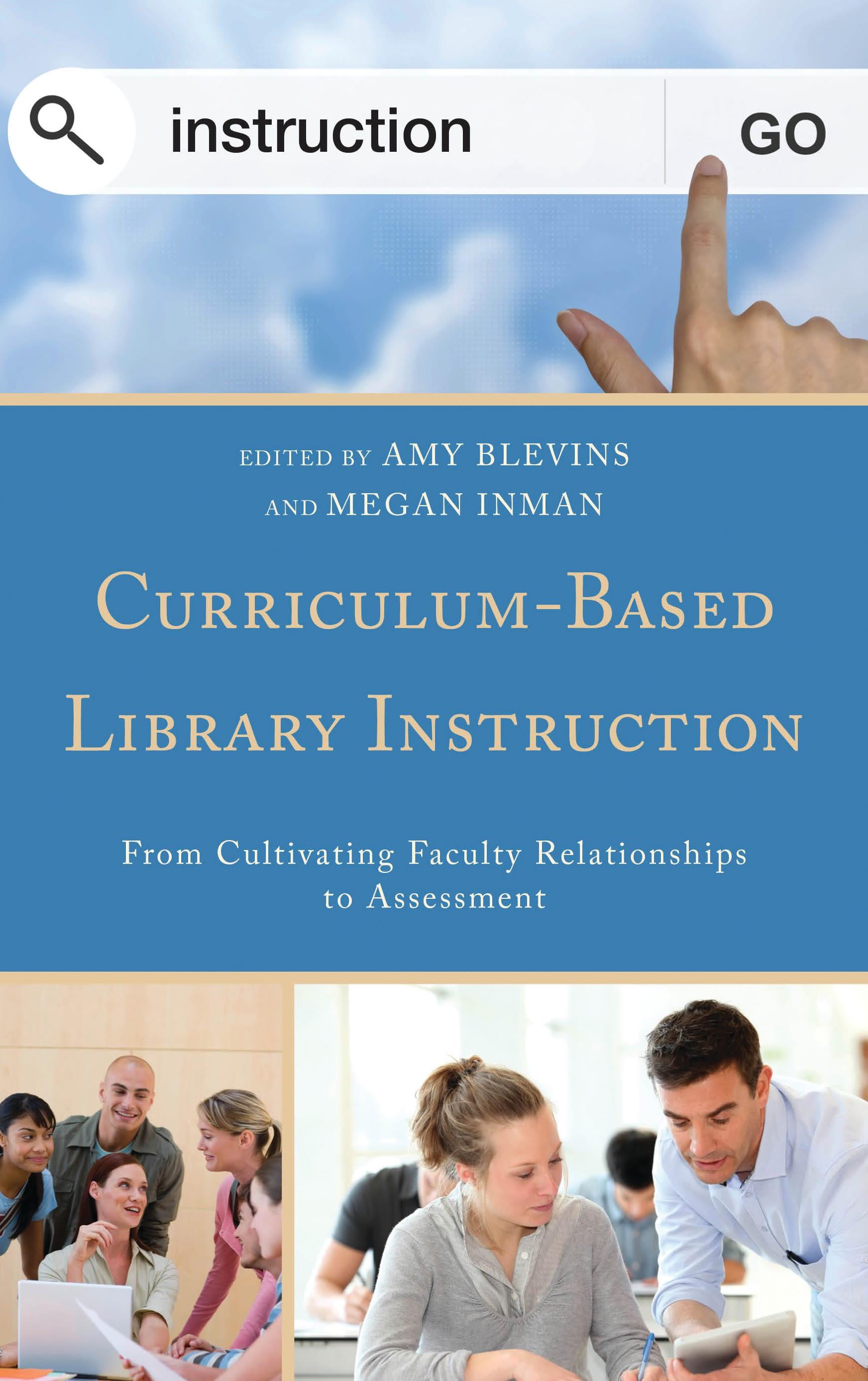
Curriculum-Based Library Instruction: From Cultivating Faculty Relationships to Assessment highlights the movement beyond one-shot instruction sessions, specifically focusing on situations where academic librarians have developed curriculum based sessions and/or become involved in curriculum committees.
This volume describes and provides examples of librarians’ varied roles in the curriculum of education programs. These roles include semester long or multi-session instructor, web-based course designer, problem-based learning facilitator, and member of a curriculum committee. In addition to describing the roles that librarians have in supporting curriculum, the book describes how to carry out those roles with sections devoted to adult learning theory, teaching methods, developing learning objectives, and working with faculty to develop curriculum. Examples of library sessions devoted to information literacy, evidence based practice, information literacy, and biomedical informatics are included. This book is not limited to one mode of delivering information and covers examples of face to face, distance and blended learning initiatives.
Although it is fairly obvious that library instruction is important and that librarians should be equipped to provide this instruction, the majority of ALA accredited programs offer only one course on library instruction, the courses are only available as electives, and they are often only offered once a year. Librarians need to gain their instructional experiences through real life experiences, mentors, and of course, books like this one. Many books commonly discuss one-shot sessions and provide tips for getting the most out of that type of instruction. There are not as many that discuss curriculum based instruction in a section, let alone an entire book.
Curriculum-Based Library Instruction: From Cultivating Faculty Relationships to Assessment highlights the movement beyond one-shot instruction sessions, specifically focusing on situations where academic librarians have developed curriculum based sessions and/or become involved in curriculum committees.
This volume describes and provides examples of librarians’ varied roles in the curriculum of education programs. These roles include semester long or multi-session instructor, web-based course designer, problem-based learning facilitator, and member of a curriculum committee. In addition to describing the roles that librarians have in supporting curriculum, the book describes how to carry out those roles with sections devoted to adult learning theory, teaching methods, developing learning objectives, and working with faculty to develop curriculum. Examples of library sessions devoted to information literacy, evidence based practice, information literacy, and biomedical informatics are included. This book is not limited to one mode of delivering information and covers examples of face to face, distance and blended learning initiatives.
Betal nemt med kort, Klarna, Apple Pay eller Google Pay. Ikke tilfreds? Du har altid 14 dages fortrydelsesret. Læs mere i vores vilkår. Har du spørgsmål, så send os en mail på hello@memmo.org.
Memmo gør det nemmere at studere – uanset hvor du er i verden. Hos os samler du dine kursusbøger og smarte studieværktøjer ét sted: resuméer, quizzer, podcasts og flashcards. Og så er der Ted, din studieven, der svarer på alt, du undrer dig over. Over 50 000 studerende studerer allerede her – bygget til at hjælpe dig med at lære hurtigere og stresse mindre.