
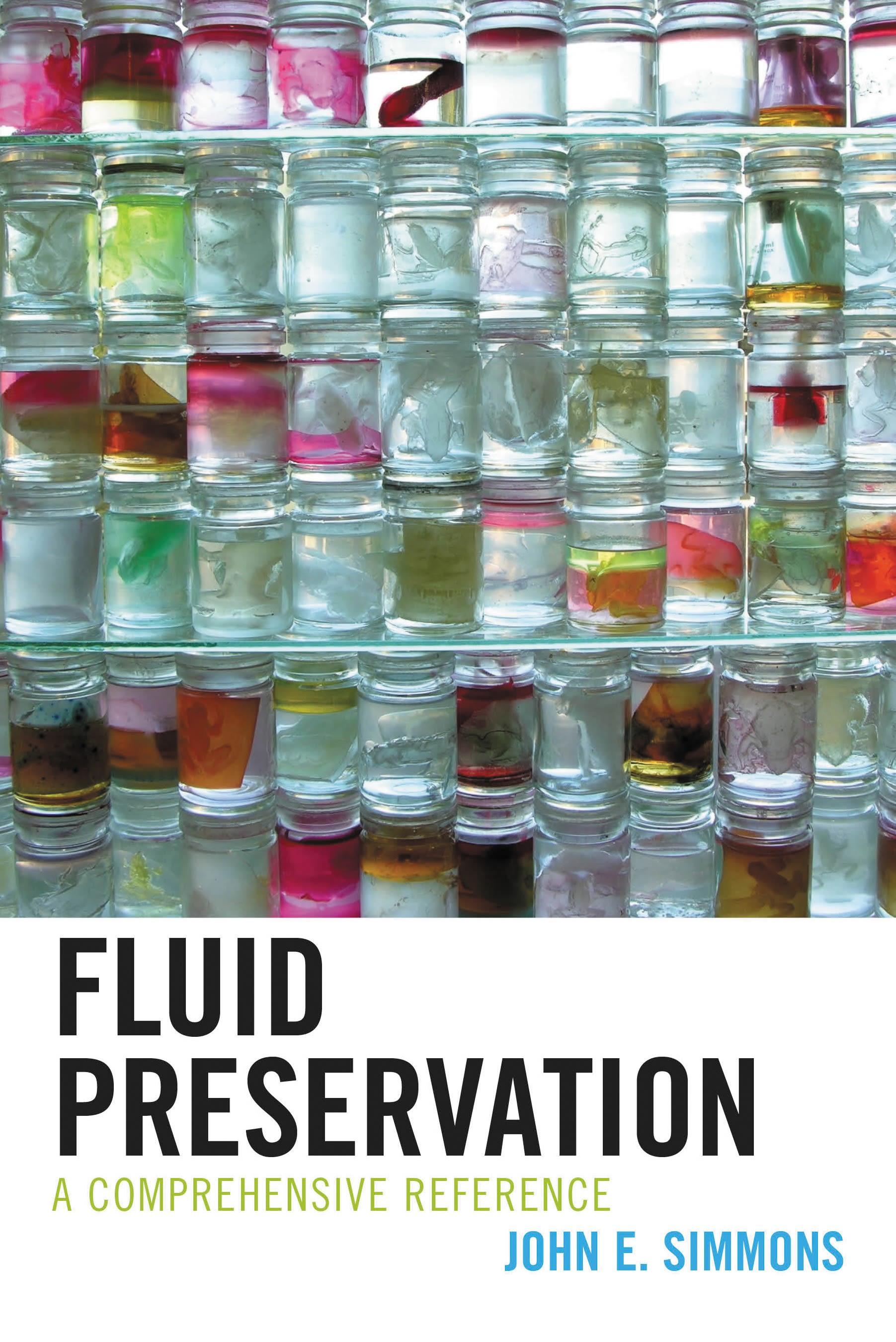
Fluid preservation refers to specimens and objects that are preserved in fluids, most commonly alcohol and formaldehyde, but also glycerin, mineral oil, acids, glycols, and a host of other chemicals that protect the specimen from deterioration. Some of the oldest natural history specimens in the world are preserved in fluid.
Despite the fact that fluid preservation has been practiced for more than 350 years, this is the only handbook that summarize all that is known about this complex and often confusing topic. Fluid Preservation: A Comprehensive Reference covers the history and techniques of fluid preservation and how to care for fluid preserved specimens in collections.
More than 900 references on fluid preservation were reviewed for this project.An historical survey of preservative recipes provides for guidance for museums with older collections (many fluid preservatives contain hazardous chemicals). Current standards and best practices for collection care and management are presented.Current and controversial topics (e.g., the preservation of DNA, alternatives to alcohol and formaldehyde) are discussed and fully referenced.Health and safety issues involved with caring for fluid preserved collections are discussed.The final chapter addresses fluid preserved specimens as cultural products and their use in art, literature, film, and song.
Although most fluid-preserved specimens are found in natural history and medical museums, it is not at all uncommon to find them in art museums, history museums, and science centers. In addition to animals, plants, and anatomical specimens, fluid preserved collections include some minerals and fossils and many other objects.
Fluid Preservation is an essential reference for:
Natural history curatorsNatural history collections managers ConservatorsMedical and anatomical museum collections managers and curatorsArt and history museum staff who have fluid preserved specimens and objects in their care (e.g., works by Damien Hirst)Private collectorsResearchers using museum collections as sources of DNA, isotopes, etc.Health and safety professionalsExhibit planners and designersMuseum facilities planners and managersPeople interested in the history of sciencePeople interested in the history of natural history museumsMuseum studies students
Despite the fact that fluid preservation has been practiced for more than 350 years, this is the only handbook that summarize all that is known about this complex and often confusing topic. Fluid Preservation: A Comprehensive Reference covers the history and techniques of fluid preservation and how to care for fluid preserved specimens in collections.
More than 900 references on fluid preservation were reviewed for this project.An historical survey of preservative recipes provides for guidance for museums with older collections (many fluid preservatives contain hazardous chemicals). Current standards and best practices for collection care and management are presented.Current and controversial topics (e.g., the preservation of DNA, alternatives to alcohol and formaldehyde) are discussed and fully referenced.Health and safety issues involved with caring for fluid preserved collections are discussed.The final chapter addresses fluid preserved specimens as cultural products and their use in art, literature, film, and song.
Although most fluid-preserved specimens are found in natural history and medical museums, it is not at all uncommon to find them in art museums, history museums, and science centers. In addition to animals, plants, and anatomical specimens, fluid preserved collections include some minerals and fossils and many other objects.
Fluid Preservation is an essential reference for:
Natural history curatorsNatural history collections managers ConservatorsMedical and anatomical museum collections managers and curatorsArt and history museum staff who have fluid preserved specimens and objects in their care (e.g., works by Damien Hirst)Private collectorsResearchers using museum collections as sources of DNA, isotopes, etc.Health and safety professionalsExhibit planners and designersMuseum facilities planners and managersPeople interested in the history of sciencePeople interested in the history of natural history museumsMuseum studies students
Betal nemt med kort, Klarna, Apple Pay eller Google Pay. Ikke tilfreds? Du har altid 14 dages fortrydelsesret. Læs mere i vores vilkår. Har du spørgsmål, så send os en mail på hello@memmo.org.
Memmo gør det nemmere at studere – uanset hvor du er i verden. Hos os samler du dine kursusbøger og smarte studieværktøjer ét sted: resuméer, quizzer, podcasts og flashcards. Og så er der Ted, din studieven, der svarer på alt, du undrer dig over. Over 50 000 studerende studerer allerede her – bygget til at hjælpe dig med at lære hurtigere og stresse mindre.