
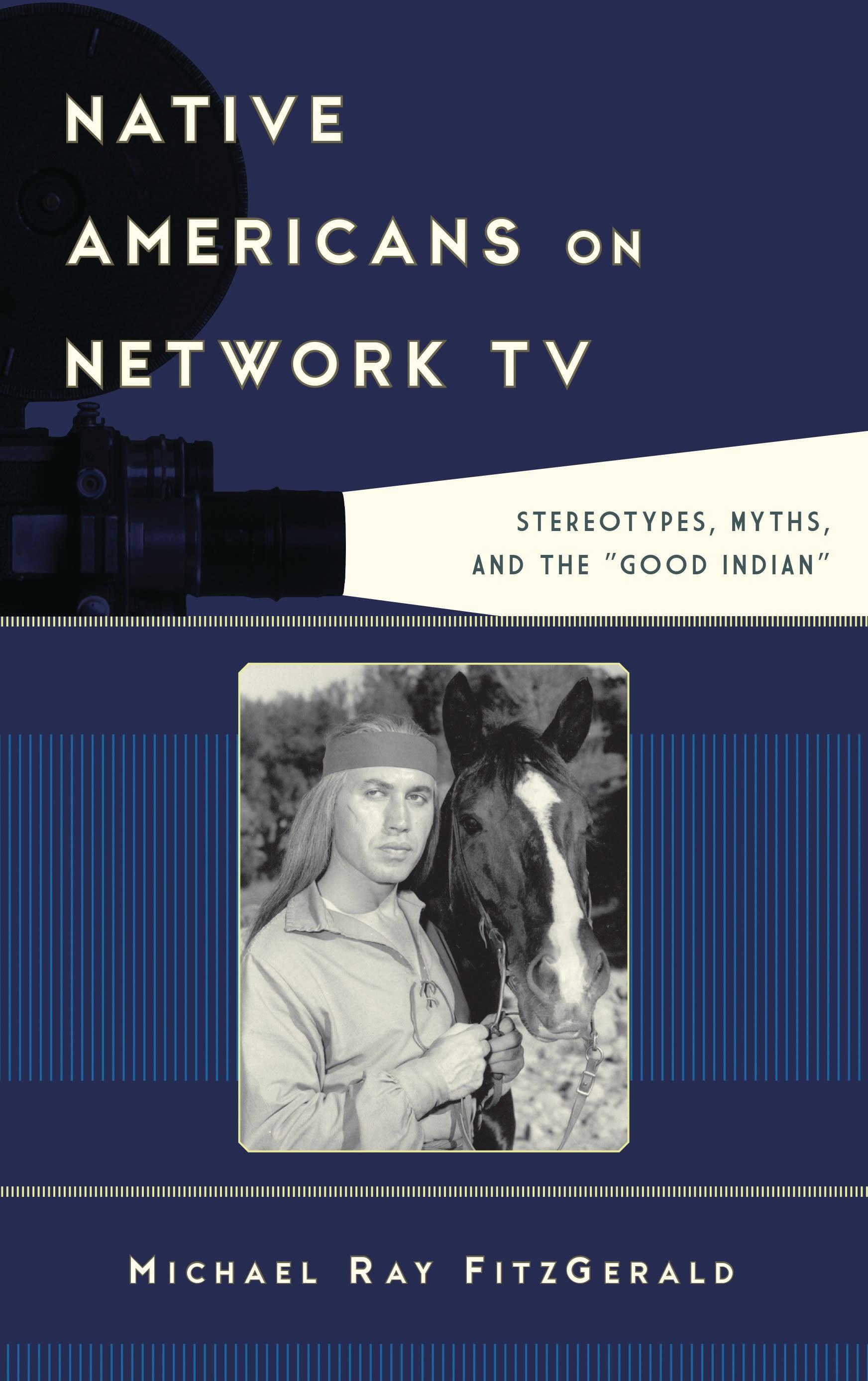
The American Indian has figured prominently in many films and television shows, portrayed variously as a villain, subservient friend, or a hapless victim of progress. Many Indian stereotypes that were derived from European colonial discourse—some hundreds of years old—still exist in the media today. Even when set in the contemporary era, novels, films, and programs tend to purvey rehashed tropes such as Pocahontas or man Friday.
In Native Americans on Network TV: Stereotypes, Myths, and the “Good Indian,” Michael Ray FitzGerald argues that the colonial power of the U.S. is clearly evident in network television’s portrayals of Native Americans. FitzGerald contends that these representations fit neatly into existing conceptions of colonial discourse and that their messages about the “Good Indian” have become part of viewers’ understandings of Native Americans. In this study, FitzGerald offers close examinations of such series as The Lone Ranger, Daniel Boone, Broken Arrow, Hawk, Nakia, and Walker, Texas Ranger.
By examining the traditional role of stereotypes and their functions in the rhetoric of colonialism, the volume ultimately offers a critical analysis of images of the “Good Indian”—minority figures that enforce the dominant group’s norms. A long overdue discussion of this issue, Native Americans on Network TV will be of interest to scholars of television and media studies, but also those of Native American studies, subaltern studies, and media history.
In Native Americans on Network TV: Stereotypes, Myths, and the “Good Indian,” Michael Ray FitzGerald argues that the colonial power of the U.S. is clearly evident in network television’s portrayals of Native Americans. FitzGerald contends that these representations fit neatly into existing conceptions of colonial discourse and that their messages about the “Good Indian” have become part of viewers’ understandings of Native Americans. In this study, FitzGerald offers close examinations of such series as The Lone Ranger, Daniel Boone, Broken Arrow, Hawk, Nakia, and Walker, Texas Ranger.
By examining the traditional role of stereotypes and their functions in the rhetoric of colonialism, the volume ultimately offers a critical analysis of images of the “Good Indian”—minority figures that enforce the dominant group’s norms. A long overdue discussion of this issue, Native Americans on Network TV will be of interest to scholars of television and media studies, but also those of Native American studies, subaltern studies, and media history.
Sider: 278
Kategori: Film- & Medievetenskap
e-ISBN: 9781442229624
Forsendelsesvægt: 1.2 kg
Sendes inden for: 1-2 dage
Betal nemt med kort, Klarna, Apple Pay eller Google Pay. Ikke tilfreds? Du har altid 14 dages fortrydelsesret. Læs mere i vores vilkår. Har du spørgsmål, så send os en mail på hello@memmo.org.
Memmo gør det nemmere at studere – uanset hvor du er i verden. Hos os samler du dine kursusbøger og smarte studieværktøjer ét sted: resuméer, quizzer, podcasts og flashcards. Og så er der Ted, din studieven, der svarer på alt, du undrer dig over. Over 50 000 studerende studerer allerede her – bygget til at hjælpe dig med at lære hurtigere og stresse mindre.