
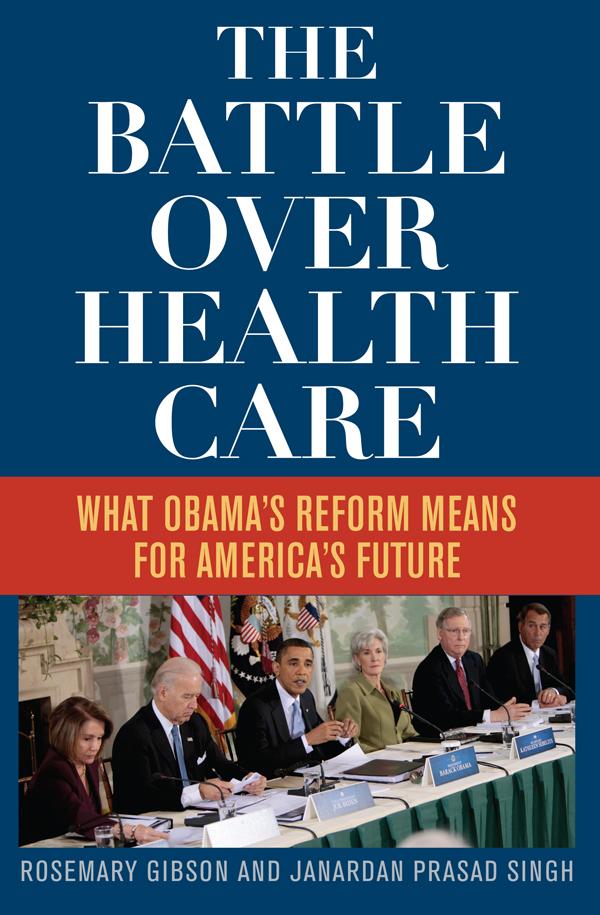
As the most substantial health care reform in almost half a century, President Obama's health care overhaul was as historic as it was divisive. In its aftermath, the debate continues.
Drawing on decades of experience in health care policy, health care delivery reform, and economics, Rosemary Gibson and Janardan Prasad Singh provide a non-partisan analysis of the reform and what it means for America and its future. The authors shine a light on truths that have been hidden behind a raucous debate marred by political correctness on both sides of the aisle. They show how health care reform was enacted only with the consent of health insurance companies, drug firms, device manufacturers, hospitals, and other special interests that comprise the medical-industrial complex, which gained millions of new customers with the stroke of a pen. Health care businesses in a market-oriented system are designed to generate revenue, which runs counter to affordable health care.
Gibson and Singh take a broader perspective on health care reform not as a single issue but as part of the economic life of the nation. The national debate unfolded while the banking and financial system teetered on the brink of collapse. The authors trace uncanny similarities between the health care industry and the unfettered banking and financial sector. They argue that a fast-changing global economy will have profound implications for the country's economic security and the jobs and health care benefits that come with it, and they predict that global competition will shape the future of employer-provided insurance more than the health care reform law.
Drawing on decades of experience in health care policy, health care delivery reform, and economics, Rosemary Gibson and Janardan Prasad Singh provide a non-partisan analysis of the reform and what it means for America and its future. The authors shine a light on truths that have been hidden behind a raucous debate marred by political correctness on both sides of the aisle. They show how health care reform was enacted only with the consent of health insurance companies, drug firms, device manufacturers, hospitals, and other special interests that comprise the medical-industrial complex, which gained millions of new customers with the stroke of a pen. Health care businesses in a market-oriented system are designed to generate revenue, which runs counter to affordable health care.
Gibson and Singh take a broader perspective on health care reform not as a single issue but as part of the economic life of the nation. The national debate unfolded while the banking and financial system teetered on the brink of collapse. The authors trace uncanny similarities between the health care industry and the unfettered banking and financial sector. They argue that a fast-changing global economy will have profound implications for the country's economic security and the jobs and health care benefits that come with it, and they predict that global competition will shape the future of employer-provided insurance more than the health care reform law.
Sider: 190
Kategori: Statsvetenskap & Politik
e-ISBN: 9781442214514
Forsendelsesvægt: 1.2 kg
Sendes inden for: 1-2 dage
Betal nemt med kort, Klarna, Apple Pay eller Google Pay. Ikke tilfreds? Du har altid 14 dages fortrydelsesret. Læs mere i vores vilkår. Har du spørgsmål, så send os en mail på hello@memmo.org.
Memmo gør det nemmere at studere – uanset hvor du er i verden. Hos os samler du dine kursusbøger og smarte studieværktøjer ét sted: resuméer, quizzer, podcasts og flashcards. Og så er der Ted, din studieven, der svarer på alt, du undrer dig over. Over 50 000 studerende studerer allerede her – bygget til at hjælpe dig med at lære hurtigere og stresse mindre.