
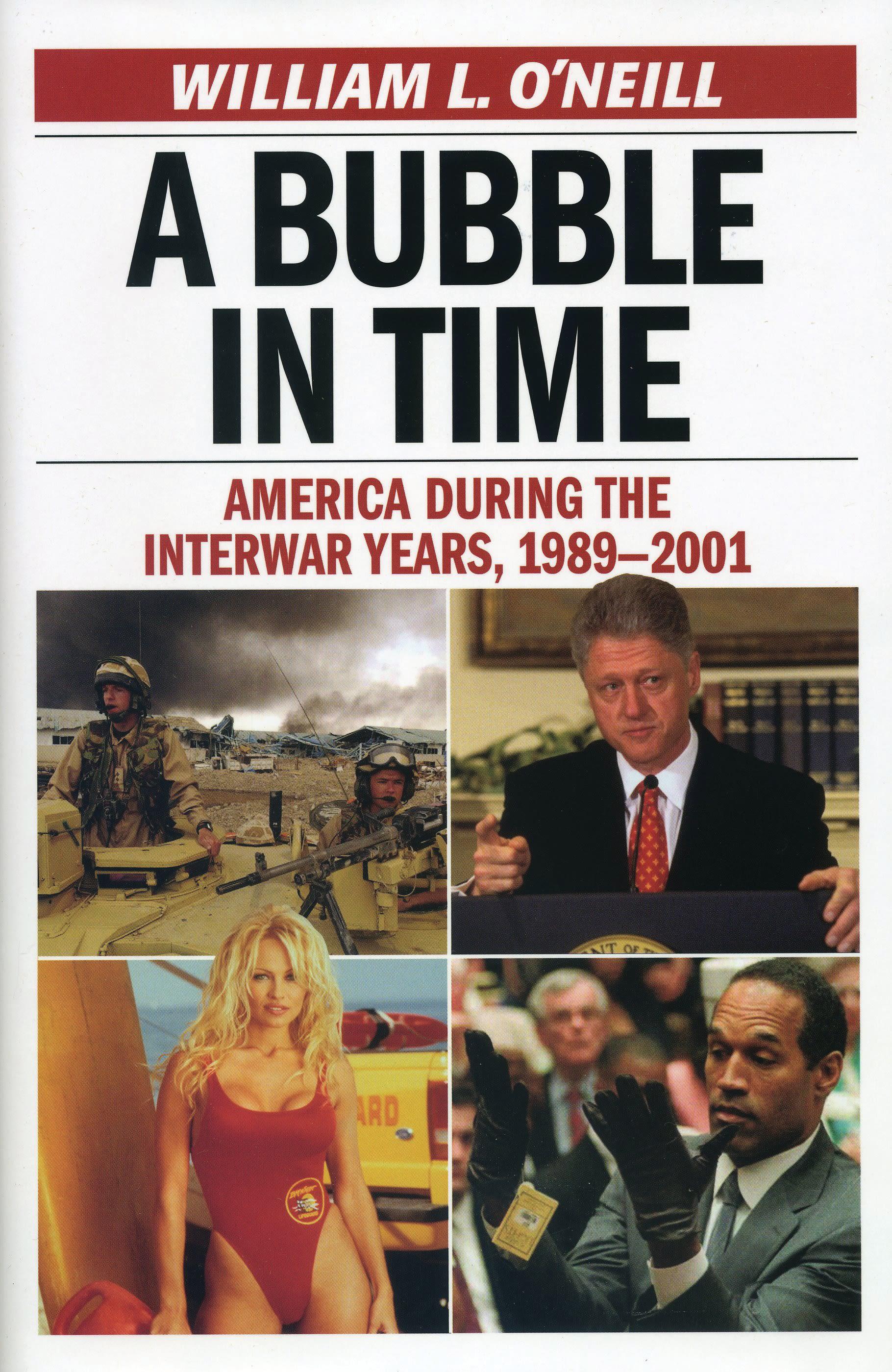
The all-too-brief period of relative tranquility that extended from the end of the Cold War to the beginning of the War on Terror is the subject of William L. O'Neill's brilliant new study of recent American history. Mr. O'Neill's sharp eye for the telling incident and the apt quotation combine with an acute historical judgment to make A Bubble in Time a compellingly readable informal history.
The first Gulf War and President Clinton's interventions abroad notwithstanding, American spirits were freer from fear than they had been since the 1920s, the author argues. No world war loomed before the United States, and after the Berlin Wall came down the specter of nuclear annihilation faded as well. A brief recession in the 1990s gave way to the most prosperous years Americans had known for decades. Unlike in the 1980s under Ronald Reagan, the increase in national wealth trickled down to the middle class thanks to an unusual rise in productivity and large infrastructure investments by firms in the "new economy." To general amazement, crime rates began falling after almost thirty years of increases, so that Americans were happier, safer, and materially better off than before.
Although the Republican party turned to the dark side, Mr. O'Neill writes, peace and prosperity enabled people to enjoy the finer things in life and to lavish their concerns on political correctness, the decline of the military, the troubles of higher education, and the manifestations of an out-of-control popular culture he calls "Tabloid Nation"—the trials of O.J. Simpson and President Clinton, SUVs, cell phones, and bimbo eruptions.
Mr. O'Neill explores them all, and more, with insight and wit. "It was all too good to last," he tells us. "Reality intruded again with the dot.com crash in 2000 and the terrorist attacks of 2001. Still, we will always have Paris Hilton." With 8 pages of black-and-white photographs.
The first Gulf War and President Clinton's interventions abroad notwithstanding, American spirits were freer from fear than they had been since the 1920s, the author argues. No world war loomed before the United States, and after the Berlin Wall came down the specter of nuclear annihilation faded as well. A brief recession in the 1990s gave way to the most prosperous years Americans had known for decades. Unlike in the 1980s under Ronald Reagan, the increase in national wealth trickled down to the middle class thanks to an unusual rise in productivity and large infrastructure investments by firms in the "new economy." To general amazement, crime rates began falling after almost thirty years of increases, so that Americans were happier, safer, and materially better off than before.
Although the Republican party turned to the dark side, Mr. O'Neill writes, peace and prosperity enabled people to enjoy the finer things in life and to lavish their concerns on political correctness, the decline of the military, the troubles of higher education, and the manifestations of an out-of-control popular culture he calls "Tabloid Nation"—the trials of O.J. Simpson and President Clinton, SUVs, cell phones, and bimbo eruptions.
Mr. O'Neill explores them all, and more, with insight and wit. "It was all too good to last," he tells us. "Reality intruded again with the dot.com crash in 2000 and the terrorist attacks of 2001. Still, we will always have Paris Hilton." With 8 pages of black-and-white photographs.
Betal nemt med kort, Klarna, Apple Pay eller Google Pay. Ikke tilfreds? Du har altid 14 dages fortrydelsesret. Læs mere i vores vilkår. Har du spørgsmål, så send os en mail på hello@memmo.org.
Memmo gør det nemmere at studere – uanset hvor du er i verden. Hos os samler du dine kursusbøger og smarte studieværktøjer ét sted: resuméer, quizzer, podcasts og flashcards. Og så er der Ted, din studieven, der svarer på alt, du undrer dig over. Over 50 000 studerende studerer allerede her – bygget til at hjælpe dig med at lære hurtigere og stresse mindre.