
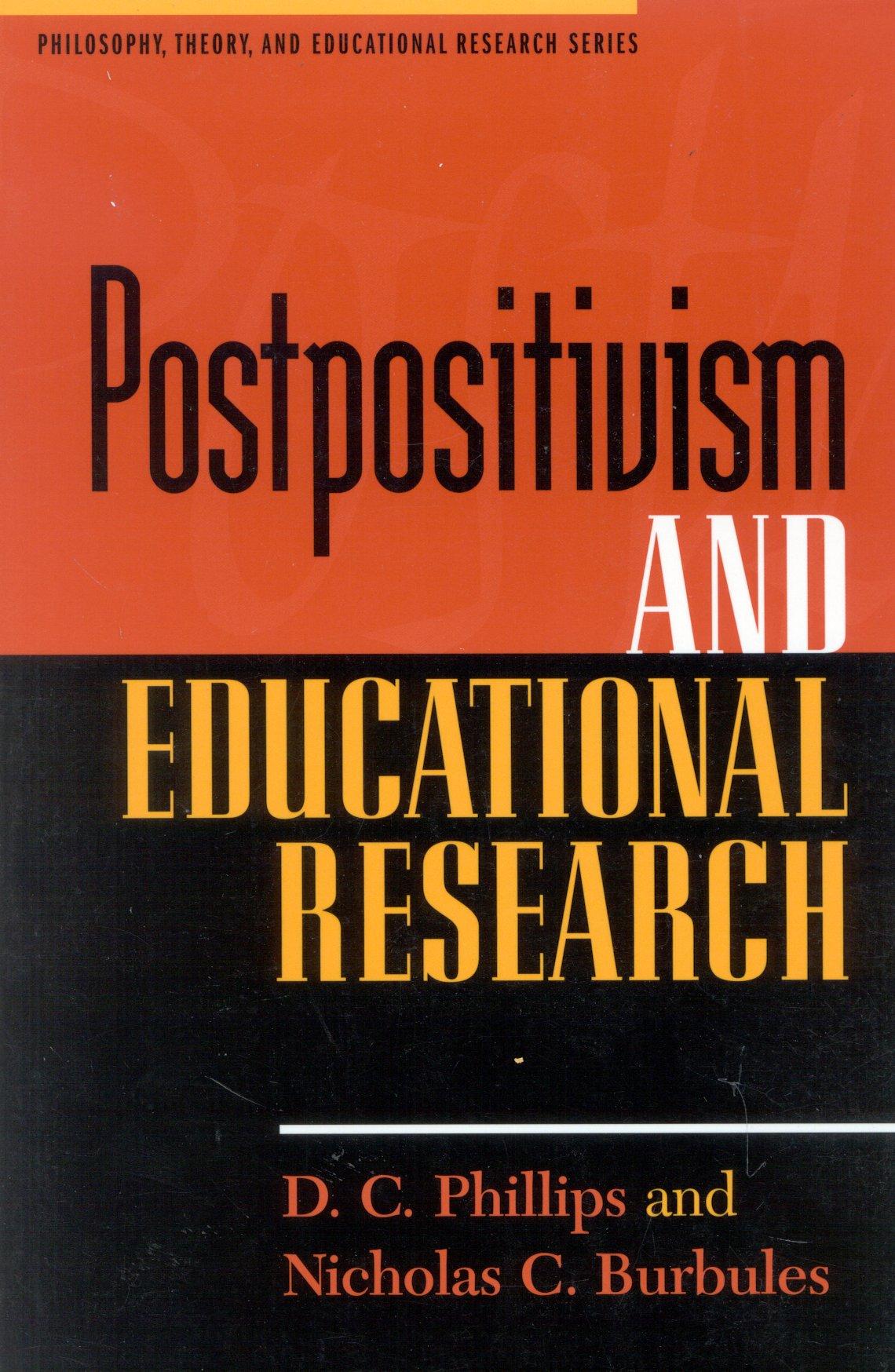
This volume presents in a forthright and lively way, an account of the philosophical position generally identified as 'Postpositivistic' that undergirds much of mainstream research in education and the related social sciences. The discussion throughout is informed by recent developments in philosophy of science. Authors D. C. Phillips and Nicholas C. Burbules cite a number of interesting examples from the educational research and evaluation literature to illustrate the value of a scientific approach. Many educational researchers aspire to carry out rigorous or disciplined inquiry aimed at producing accurate (and generally 'truthful') accounts of educational phenomena and the causal psychological or social processes that lay behind them. However, many recent critics have argued that it is a mistake to believe that research can yield theories, or advance claims that are true, objective, and value-neutral. In other words, that researchers always work within frameworks that embody important (and often questionable) assumptions about values and the nature of human knowledge. This book argues that , while there is much to be learned from recent critiques, traditional scientific values and assumptions are not outmoded. The authors show students how to implement and benefit from the scientific method in ways that take into account recent critiques.
Betal nemt med kort, Klarna, Apple Pay eller Google Pay. Ikke tilfreds? Du har altid 14 dages fortrydelsesret. Læs mere i vores vilkår. Har du spørgsmål, så send os en mail på hello@memmo.org.
Memmo gør det nemmere at studere – uanset hvor du er i verden. Hos os samler du dine kursusbøger og smarte studieværktøjer ét sted: resuméer, quizzer, podcasts og flashcards. Og så er der Ted, din studieven, der svarer på alt, du undrer dig over. Over 50 000 studerende studerer allerede her – bygget til at hjælpe dig med at lære hurtigere og stresse mindre.