
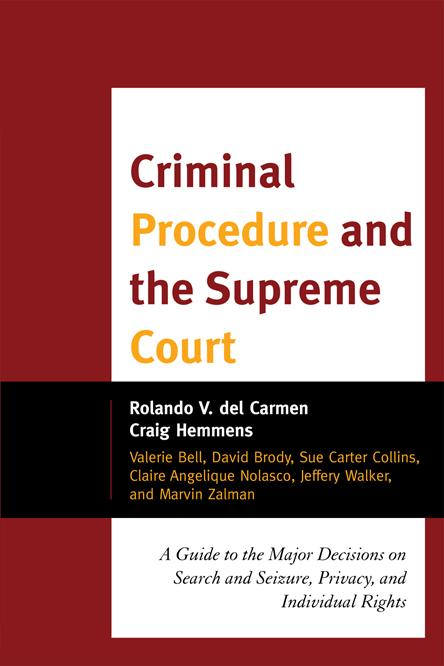
In any episode of the popular television show Law and Order, questions of police procedure in collecting evidence often arise. Was a search legal? Was the evidence obtained lawfully? Did the police follow the rules in pursuing their case? While the show depicts fictional cases and scenarios, police procedure with regard to search and seizure is a real and significant issue in the criminal justice system today. The subject of many Supreme Court decisions, they seriously impact the way police pursue their investigations, the way prosecutors proceed with their cases, and the way defense attorneys defend their clients. This book answers these questions and explains these decisions in accessible and easy to follow language. Each chapter explores a separate case or series of cases involving the application of the Fourth Amendment to current police investigatory practices or prosecutorial conduct of the criminal trial. The police-related cases involve topics such as searches of suspects (both prior and incident to arrest), pretext stops, the knock-and-announce rule, interrogation procedures, and the parameters of an individual's reasonable expectation of privacy. The prosecutor-related cases involve topics such as jury selection, the right to counsel, and sentencing. This important overview serves as an introduction to the realities and practicalities of police investigation and the functioning of the criminal justice system when search and seizure becomes an issue.
Betal nemt med kort, Klarna, Apple Pay eller Google Pay. Ikke tilfreds? Du har altid 14 dages fortrydelsesret. Læs mere i vores vilkår. Har du spørgsmål, så send os en mail på hello@memmo.org.
Memmo gør det nemmere at studere – uanset hvor du er i verden. Hos os samler du dine kursusbøger og smarte studieværktøjer ét sted: resuméer, quizzer, podcasts og flashcards. Og så er der Ted, din studieven, der svarer på alt, du undrer dig over. Over 50 000 studerende studerer allerede her – bygget til at hjælpe dig med at lære hurtigere og stresse mindre.