
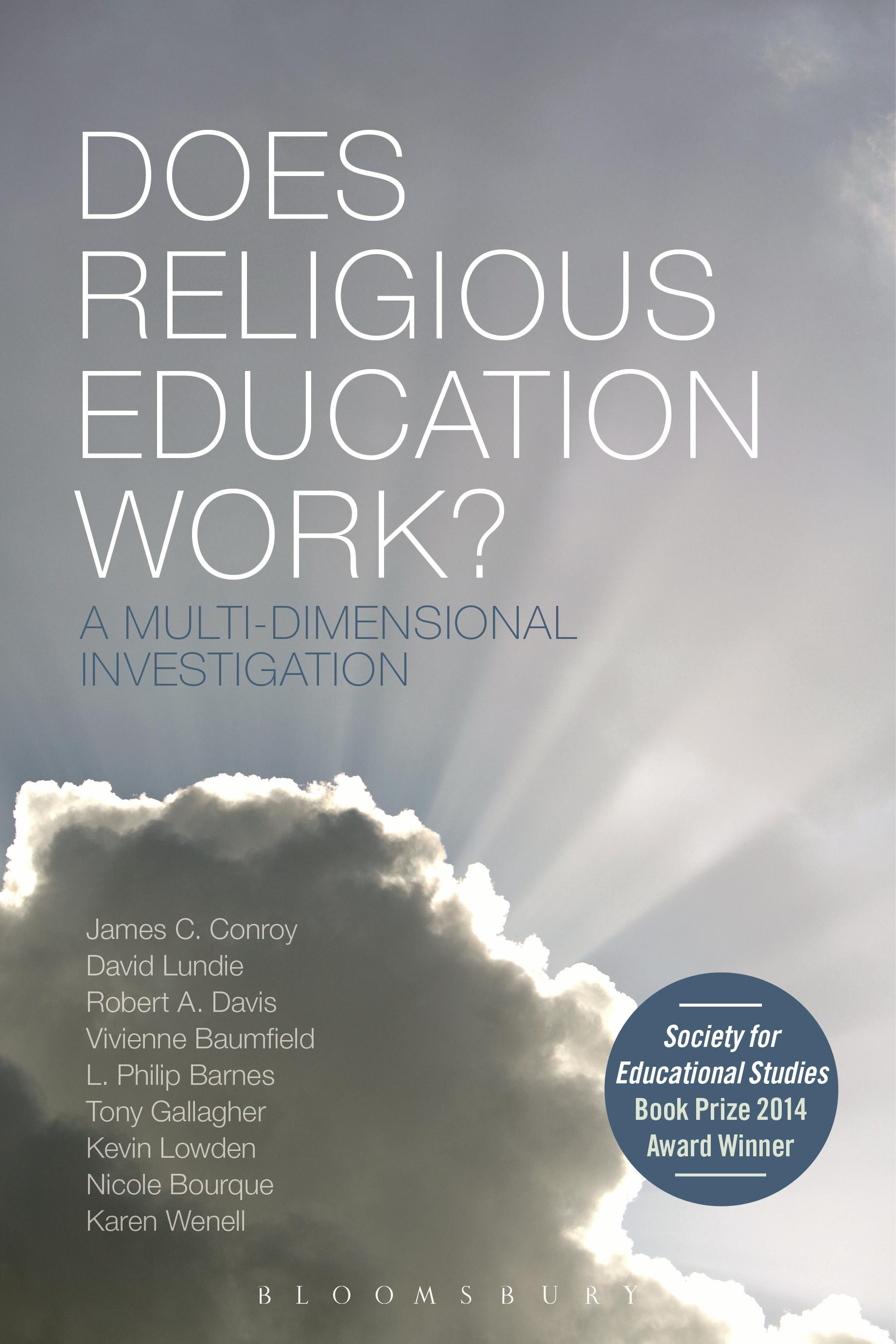
Society for Educational Studies Annual Book Prize winner: 2nd Prize
This ground-breaking volume draws upon a rich and variegated range of methodologies to understand more fully the practices, policies and resources available in and to religious education in British schools. The descriptions, explanations and analyses undertaken here draw on an innovative combination of policy work, ethnography, Delphi methods, Actor Network Theory, questionnaires, textual analysis as well as theological and philosophical insight. It traces the evolution of religious education in a post-religious age from the creation of policy to the everyday experiences of teachers and students in the classroom. It begins by analysing the way in which policy has evolved since the 1970s with an examination of the social forces that have shaped curriculum development. It goes on to explore the impact and intentions of a diverse group of stakeholders with sometimes competing accounts of the purposes of religious educations. It then examines the manner in which policy is, or is not, enacted in the classroom. Finally, it explores contradictions and confusions, successes and failures, and the ways in which wider public debates enter the classroom. The book also exposes the challenge religious education teachers have in using the language of religion.
This ground-breaking volume draws upon a rich and variegated range of methodologies to understand more fully the practices, policies and resources available in and to religious education in British schools. The descriptions, explanations and analyses undertaken here draw on an innovative combination of policy work, ethnography, Delphi methods, Actor Network Theory, questionnaires, textual analysis as well as theological and philosophical insight. It traces the evolution of religious education in a post-religious age from the creation of policy to the everyday experiences of teachers and students in the classroom. It begins by analysing the way in which policy has evolved since the 1970s with an examination of the social forces that have shaped curriculum development. It goes on to explore the impact and intentions of a diverse group of stakeholders with sometimes competing accounts of the purposes of religious educations. It then examines the manner in which policy is, or is not, enacted in the classroom. Finally, it explores contradictions and confusions, successes and failures, and the ways in which wider public debates enter the classroom. The book also exposes the challenge religious education teachers have in using the language of religion.
Betal nemt med kort, Klarna, Apple Pay eller Google Pay. Ikke tilfreds? Du har altid 14 dages fortrydelsesret. Læs mere i vores vilkår. Har du spørgsmål, så send os en mail på hello@memmo.org.
Memmo gør det nemmere at studere – uanset hvor du er i verden. Hos os samler du dine kursusbøger og smarte studieværktøjer ét sted: resuméer, quizzer, podcasts og flashcards. Og så er der Ted, din studieven, der svarer på alt, du undrer dig over. Over 50 000 studerende studerer allerede her – bygget til at hjælpe dig med at lære hurtigere og stresse mindre.