
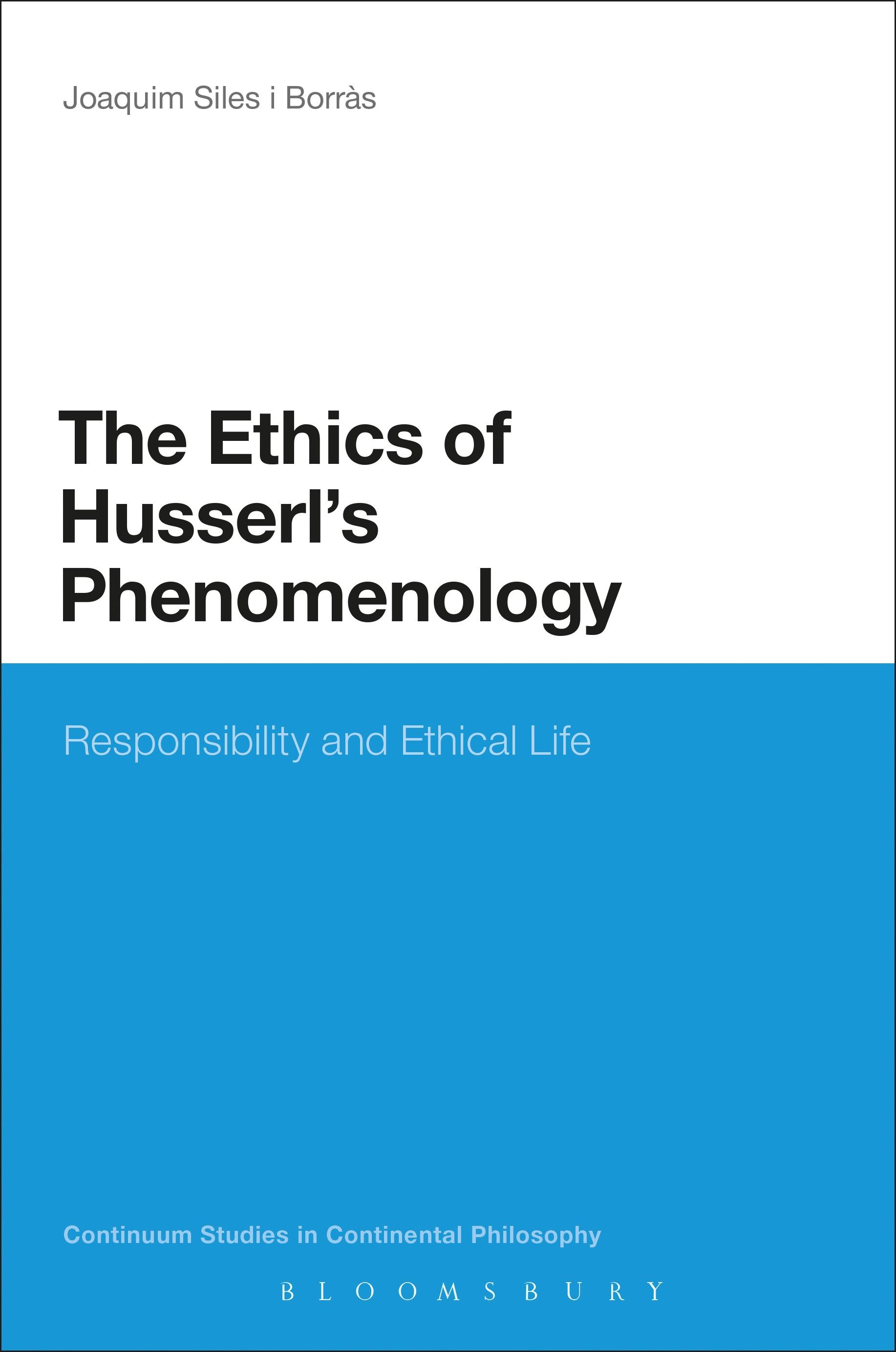
The Ethics of Husserl's Phenomenology aims to relocate the question of ethics at the very heart of Husserl's phenomenology. This is based on the idea that Husserl's phenomenology is an epistemological inquiry ultimately motivated by an ethical demand that pervades his writing from the publication of Logical Investigations (1900-1901) up to The Crisis of European Sciences and Transcendental Phenomenology (1935).
Joaquim Siles-Borràs traces the ethical concepts apparent throughout Husserl's main body of work and argues that Husserl's phenomenology of consciousness, experience and meaning is ultimately motivated by an ethical demand, by means of which Husserl aims to re-define philosophy and re-found science, with the aim of making philosophy and science capable of dealing with the most pressing questions concerning the meaningfulness of human existence.
Joaquim Siles-Borràs traces the ethical concepts apparent throughout Husserl's main body of work and argues that Husserl's phenomenology of consciousness, experience and meaning is ultimately motivated by an ethical demand, by means of which Husserl aims to re-define philosophy and re-found science, with the aim of making philosophy and science capable of dealing with the most pressing questions concerning the meaningfulness of human existence.
Betal nemt med kort, Klarna, Apple Pay eller Google Pay. Ikke tilfreds? Du har altid 14 dages fortrydelsesret. Læs mere i vores vilkår. Har du spørgsmål, så send os en mail på hello@memmo.org.
Memmo gør det nemmere at studere – uanset hvor du er i verden. Hos os samler du dine kursusbøger og smarte studieværktøjer ét sted: resuméer, quizzer, podcasts og flashcards. Og så er der Ted, din studieven, der svarer på alt, du undrer dig over. Over 50 000 studerende studerer allerede her – bygget til at hjælpe dig med at lære hurtigere og stresse mindre.