
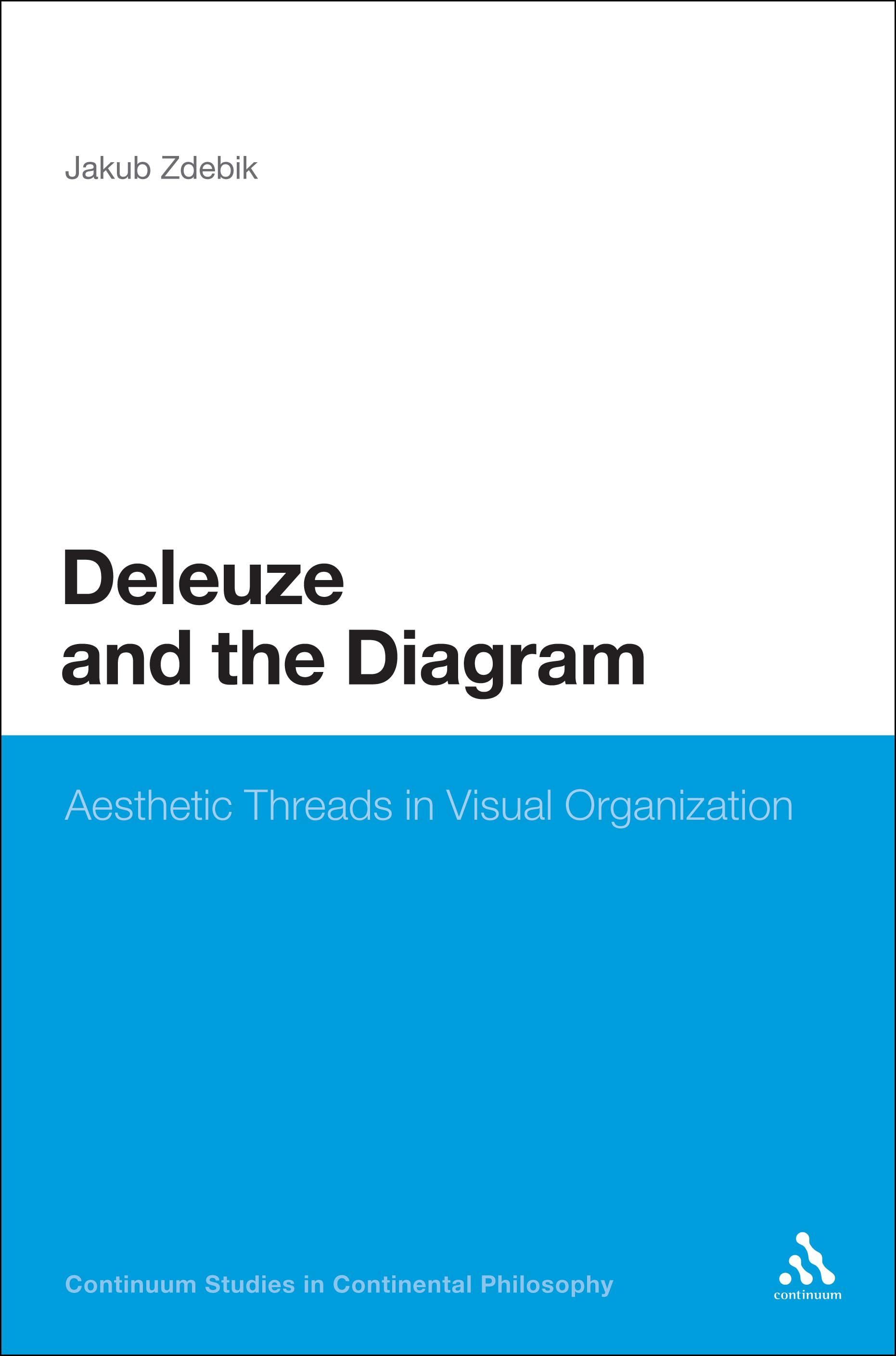
Deleuze and the Diagram charts Deleuze's corpus according to aesthetic concepts such as the map, the sketch and the drawing to bring out a comprehensive concept of the diagram. In his interrogation of Deleuze's visual aesthetic theory, Jakub Zdebik focuses on artists that hold an important place in Deleuze's system. The art of Paul Klee and Francis Bacon is presented as the visual manifestation of Deleuze's philosophy and yields novel ways of assessing visual culture. Zdebik goes on to compare Deleuze's philosophy with the visual theories of Foucault, Lyotard and Simondon, as well as the aesthetic philosophy of Heidegger and Kant. He shows how the visual and aesthetic elements of the diagram shed new light on Deleuze's writings.
Deleuze conceptualized his theory as a form of painting, saying that, like art, it needed to shift from figuration to abstraction. This book focuses on the visual devices in Deleuze's work and uses the concept of the diagram to describe the relationship between philosophy and art and to formulate a way to think about philosophy through art.
Deleuze conceptualized his theory as a form of painting, saying that, like art, it needed to shift from figuration to abstraction. This book focuses on the visual devices in Deleuze's work and uses the concept of the diagram to describe the relationship between philosophy and art and to formulate a way to think about philosophy through art.
Betal nemt med kort, Klarna, Apple Pay eller Google Pay. Ikke tilfreds? Du har altid 14 dages fortrydelsesret. Læs mere i vores vilkår. Har du spørgsmål, så send os en mail på hello@memmo.org.
Memmo gør det nemmere at studere – uanset hvor du er i verden. Hos os samler du dine kursusbøger og smarte studieværktøjer ét sted: resuméer, quizzer, podcasts og flashcards. Og så er der Ted, din studieven, der svarer på alt, du undrer dig over. Over 50 000 studerende studerer allerede her – bygget til at hjælpe dig med at lære hurtigere og stresse mindre.