
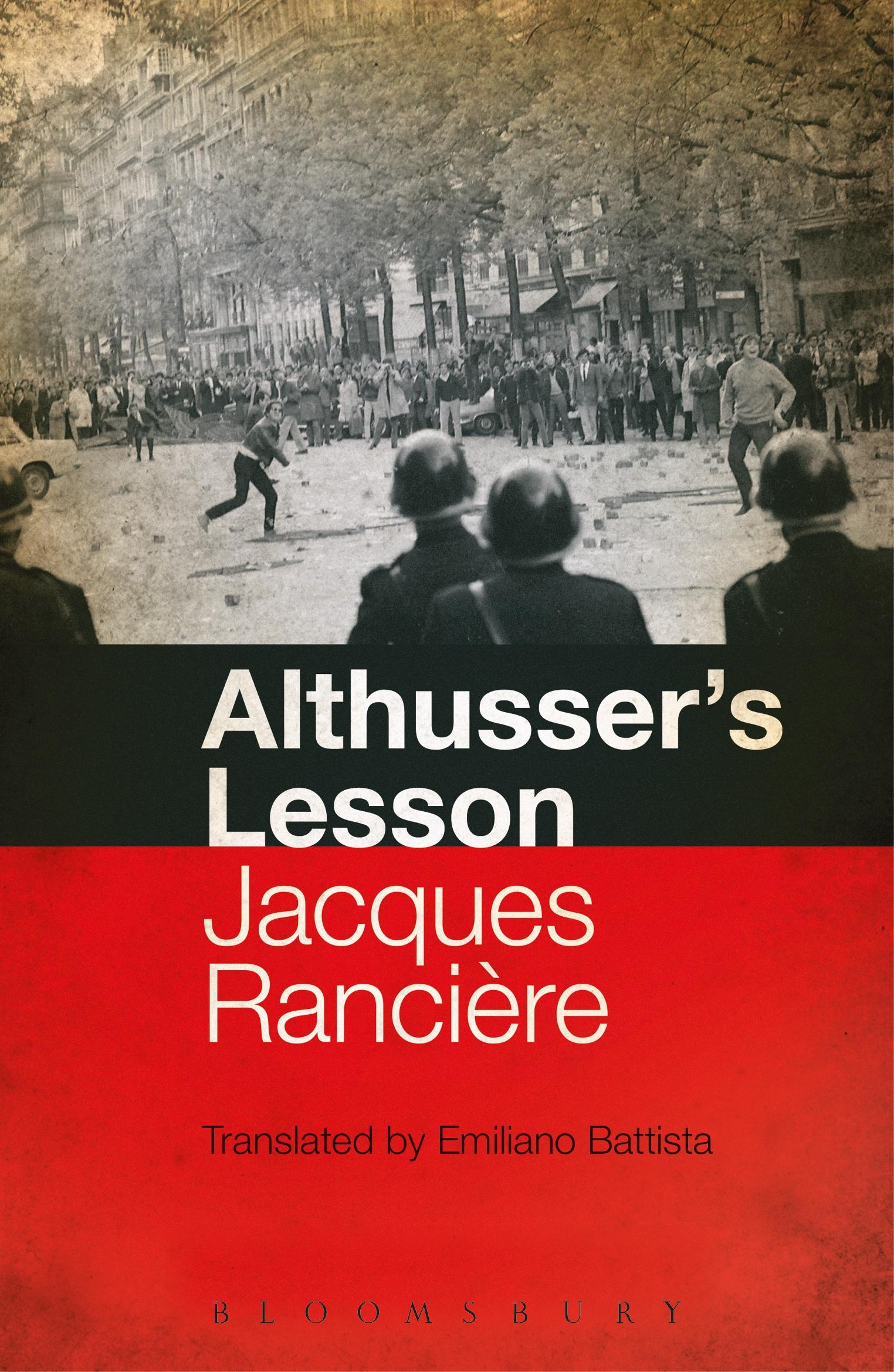
Jacques Rancière's first major work, Althusser's Lesson appeared in 1974, just as the energies of May 68 were losing ground to the calls for a return to order. Rancière's analysis of Althusserian Marxism unfolds against this background: what is the relationship between the return to order and the enthusiasm which greeted the publication of Althusser's Reply to John Lewis in 1973? How to explain the rehabilitation of a philosophy that had been declared 'dead and buried on the barricades of May 68'? What had changed? The answer to this question takes the form of a genealogy of Althusserianism that is, simultaneously, an account of the emergence of militant student movements in the '60s, of the arrival of Maoism in France, and of how May 68 rearranged all the pieces anew. Encompassing the book's distinctive combination of theoretical analysis and historical description is a question that has guided Rancière's thought ever since: how do theories of subversion become the rationale for order?
Betal nemt med kort, Klarna, Apple Pay eller Google Pay. Ikke tilfreds? Du har altid 14 dages fortrydelsesret. Læs mere i vores vilkår. Har du spørgsmål, så send os en mail på hello@memmo.org.
Memmo gør det nemmere at studere – uanset hvor du er i verden. Hos os samler du dine kursusbøger og smarte studieværktøjer ét sted: resuméer, quizzer, podcasts og flashcards. Og så er der Ted, din studieven, der svarer på alt, du undrer dig over. Over 50 000 studerende studerer allerede her – bygget til at hjælpe dig med at lære hurtigere og stresse mindre.