
A short history of piracy and capitalism
When capitalism spread along the trade routes toward the Indies…when radio opened an era of mass communication . . . when the Internet became part of the global economy…pirates were there. And although most people see pirates as solitary anarchists out to destroy capitalism, it turns out the opposite is true. They are the ones who forge the path.
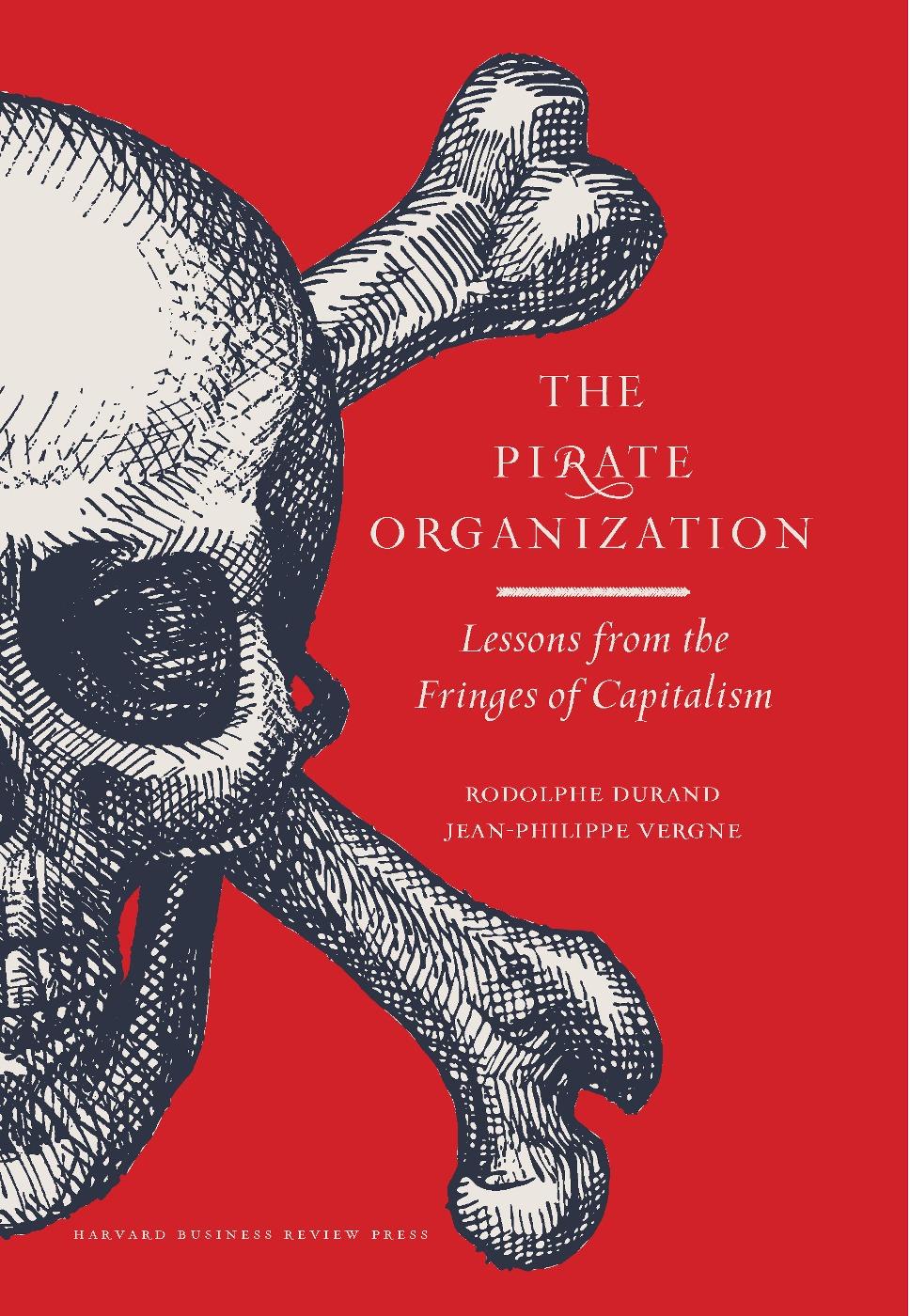
In The Pirate Organization, Rodolphe Durand and Jean-Philippe Vergne argue that piracy drives capitalism’s evolution and foreshadows the direction of the economy. Through a rigorous yet engaging analysis of the history and golden ages of piracy, the authors show how pirates form complex and sophisticated organizations that change the course of capitalism. Surprisingly, pirate organizations also behave in predictable ways: challenging widespread norms; controlling resources, communication, and transportation; maintaining trade relationships with other communities; and formulating strategies favoring speed and surprise. We could learn a lot from them—if only we paid more attention.
Durand and Vergne recommend that rather than trying to stamp out piracy, savvy entrepreneurs and organizations should keep a sharp eye on the pirate space to stay successful as the game changes—and it always does.
First published in French to great critical acclaim and commercial success as L’Organisation Pirate: Essai sur l’évolution du capitalisme, this book shows that piracy is not random. It’s predictable, it cannot be separated from capitalism, and it likely will be the source of capitalism’s continuing evolution.
Pirates, surprisingly, also behave in predictable ways: challenging widespread norms; controlling resources, communication, and transportation; maintaining trade relationships with other communities; and formulating strategies favoring speed and surprise.
And we can learn from them.
Durand and Vergne recommend that rather than trying to stamp out piracy, savvy companies should keep a sharp eye on the pirate space. Only then can they detect how capitalism’s rules of engagement are changing—and then revise their business practices to remain successful in the new game.
When capitalism spread along the trade routes toward the Indies…when radio opened an era of mass communication . . . when the Internet became part of the global economy…pirates were there. And although most people see pirates as solitary anarchists out to destroy capitalism, it turns out the opposite is true. They are the ones who forge the path.
In The Pirate Organization, Rodolphe Durand and Jean-Philippe Vergne argue that piracy drives capitalism’s evolution and foreshadows the direction of the economy. Through a rigorous yet engaging analysis of the history and golden ages of piracy, the authors show how pirates form complex and sophisticated organizations that change the course of capitalism. Surprisingly, pirate organizations also behave in predictable ways: challenging widespread norms; controlling resources, communication, and transportation; maintaining trade relationships with other communities; and formulating strategies favoring speed and surprise. We could learn a lot from them—if only we paid more attention.
Durand and Vergne recommend that rather than trying to stamp out piracy, savvy entrepreneurs and organizations should keep a sharp eye on the pirate space to stay successful as the game changes—and it always does.
First published in French to great critical acclaim and commercial success as L’Organisation Pirate: Essai sur l’évolution du capitalisme, this book shows that piracy is not random. It’s predictable, it cannot be separated from capitalism, and it likely will be the source of capitalism’s continuing evolution.
Pirates, surprisingly, also behave in predictable ways: challenging widespread norms; controlling resources, communication, and transportation; maintaining trade relationships with other communities; and formulating strategies favoring speed and surprise.
And we can learn from them.
Durand and Vergne recommend that rather than trying to stamp out piracy, savvy companies should keep a sharp eye on the pirate space. Only then can they detect how capitalism’s rules of engagement are changing—and then revise their business practices to remain successful in the new game.
Betal nemt med kort, Klarna, Apple Pay eller Google Pay. Ikke tilfreds? Du har altid 14 dages fortrydelsesret. Læs mere i vores vilkår. Har du spørgsmål, så send os en mail på hello@memmo.org.
Memmo gør det nemmere at studere – uanset hvor du er i verden. Hos os samler du dine kursusbøger og smarte studieværktøjer ét sted: resuméer, quizzer, podcasts og flashcards. Og så er der Ted, din studieven, der svarer på alt, du undrer dig over. Over 50 000 studerende studerer allerede her – bygget til at hjælpe dig med at lære hurtigere og stresse mindre.
Du kan måske også lide
Køb bogen0