
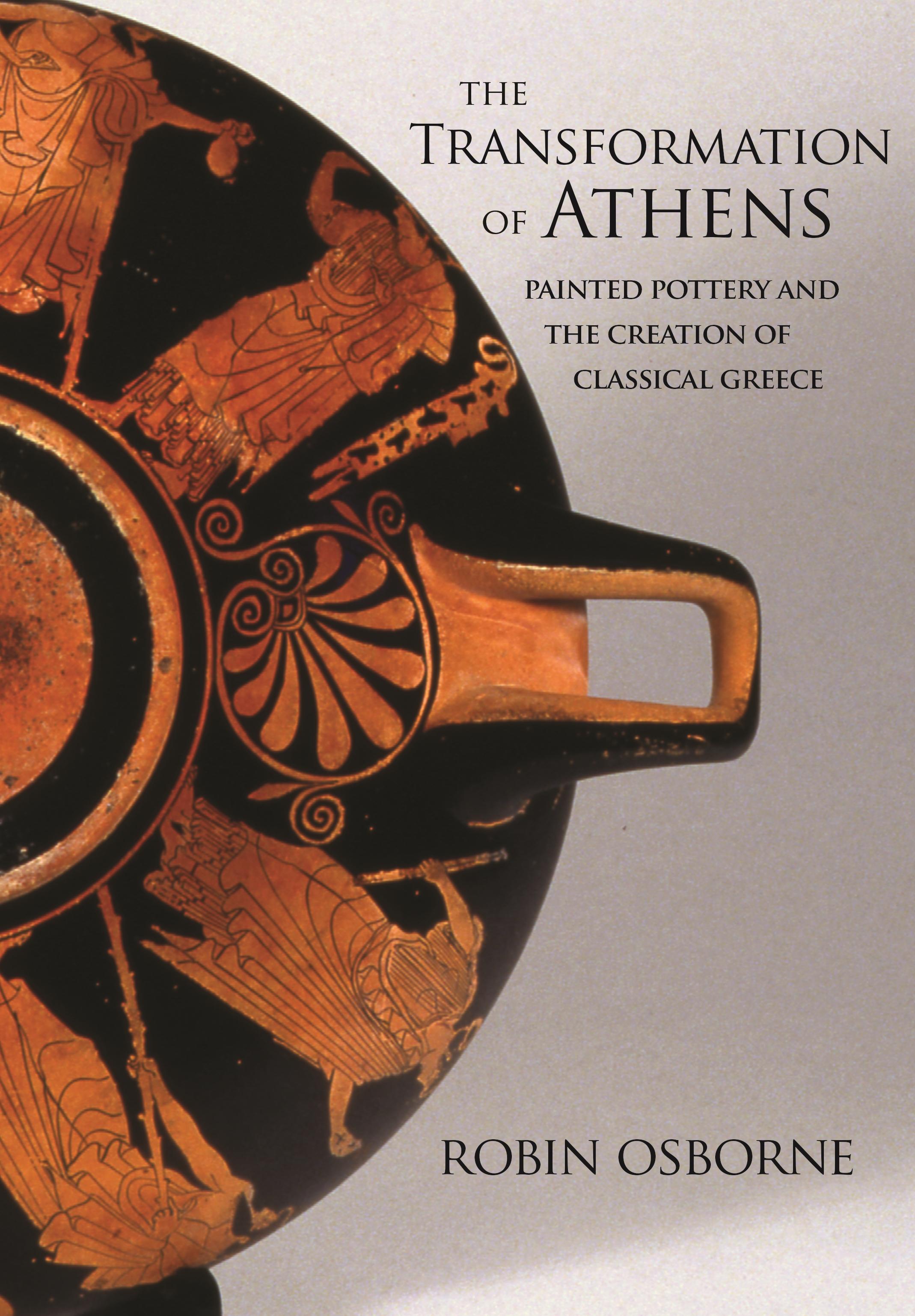
How remarkable changes in ancient Greek pottery reveal the transformation of classical Greek culture
Why did soldiers stop fighting, athletes stop competing, and lovers stop having graphic sex in classical Greek art? The scenes depicted on Athenian pottery of the mid-fifth century BC are very different from those of the late sixth century. Did Greek potters have a different world to see—or did they come to see the world differently? In this lavishly illustrated and engagingly written book, Robin Osborne argues that these remarkable changes are the best evidence for the shifting nature of classical Greek culture.
Osborne examines the thousands of surviving Athenian red-figure pots painted between 520 and 440 BC and describes the changing depictions of soldiers and athletes, drinking parties and religious occasions, sexual relations, and scenes of daily life. He shows that it was not changes in each activity that determined how the world was shown, but changes in values and aesthetics.
By demonstrating that changes in artistic style involve choices about what aspects of the world we decide to represent as well as how to represent them, this book rewrites the history of Greek art. By showing that Greeks came to see the world differently over the span of less than a century, it reassesses the history of classical Greece and of Athenian democracy. And by questioning whether art reflects or produces social and political change, it provokes a fresh examination of the role of images in an ever-evolving world.
Betal nemt med kort, Klarna, Apple Pay eller Google Pay. Ikke tilfreds? Du har altid 14 dages fortrydelsesret. Læs mere i vores vilkår. Har du spørgsmål, så send os en mail på hello@memmo.org.
Memmo gør det nemmere at studere – uanset hvor du er i verden. Hos os samler du dine kursusbøger og smarte studieværktøjer ét sted: resuméer, quizzer, podcasts og flashcards. Og så er der Ted, din studieven, der svarer på alt, du undrer dig over. Over 50 000 studerende studerer allerede her – bygget til at hjælpe dig med at lære hurtigere og stresse mindre.