
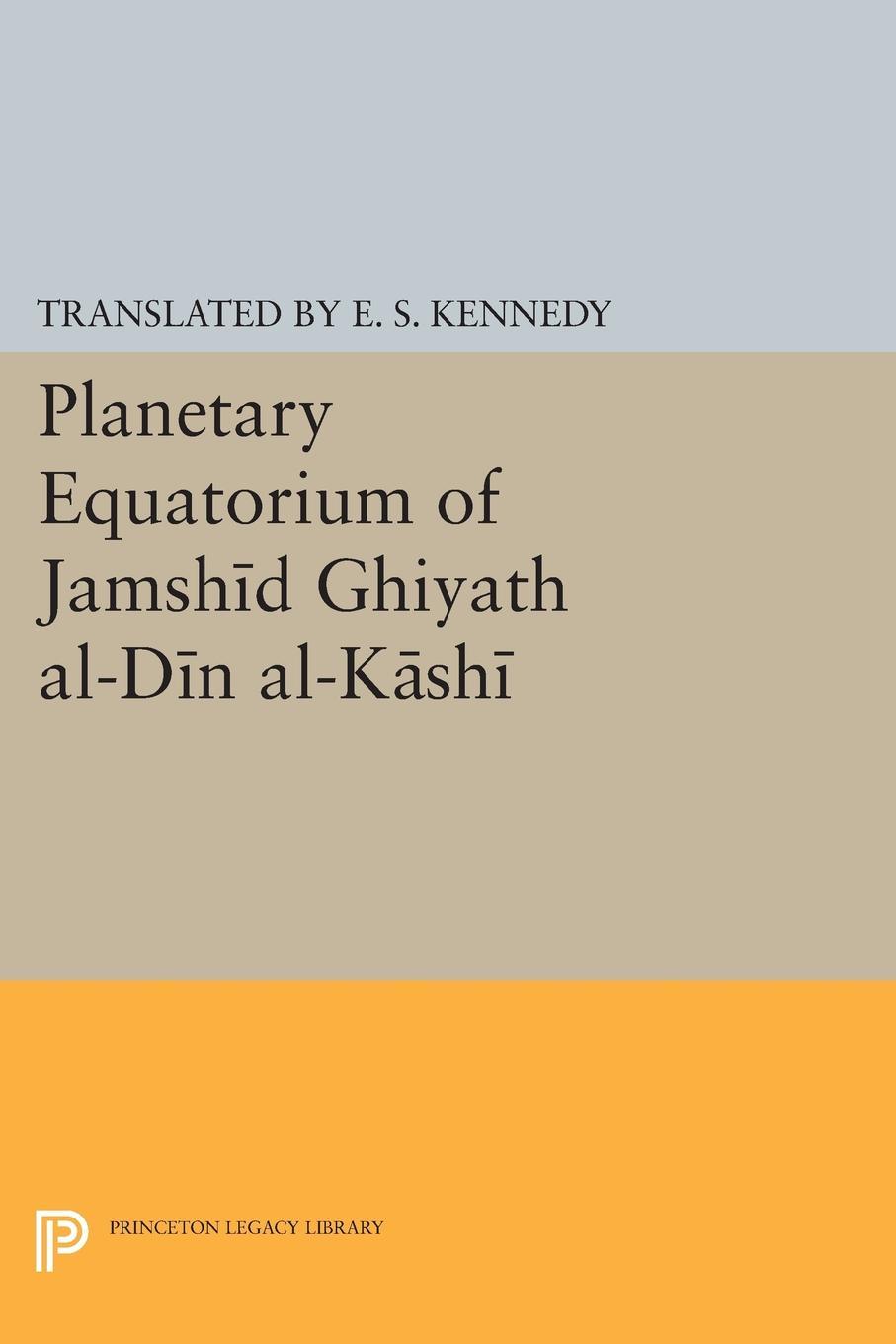
Instruments for solving astronomical problems are part of a continuous tradition reaching far back through the Middle Ages into the Hellenistic world. Dr. Kennedy expands the history of analog computers by providing an account of an important development in Central Asia where, in the Samarqand observatory of the Timurid prince Ulugh Beg, an outstanding mathematician of the fifteenth century invented his unique planetary equatorium. With this mechanico-graphical device, Kashi determined solar, lunar, and planetary true longitudes and predicted eclipses, obtaining magnitude, time, and duration. His was the only equatorium with which the determination of planetary latitudes was attempted. In this sense it represents the apex of development reached by this class of instrument. Dr. Kennedy here presents the text of the Persian manuscript describing Kashi's instrument together with an English translation and commentaryÃ?
Originally published in 1960.
The Princeton Legacy Library uses the latest print-on-demand technology to again make available previously out-of-print books from the distinguished backlist of Princeton University Press. These editions preserve the original texts of these important books while presenting them in durable paperback and hardcover editions. The goal of the Princeton Legacy Library is to vastly increase access to the rich scholarly heritage found in the thousands of books published by Princeton University Press since its founding in 1905.
Betal nemt med kort, Klarna, Apple Pay eller Google Pay. Ikke tilfreds? Du har altid 14 dages fortrydelsesret. Læs mere i vores vilkår. Har du spørgsmål, så send os en mail på hello@memmo.org.
Memmo gør det nemmere at studere – uanset hvor du er i verden. Hos os samler du dine kursusbøger og smarte studieværktøjer ét sted: resuméer, quizzer, podcasts og flashcards. Og så er der Ted, din studieven, der svarer på alt, du undrer dig over. Over 50 000 studerende studerer allerede her – bygget til at hjælpe dig med at lære hurtigere og stresse mindre.