
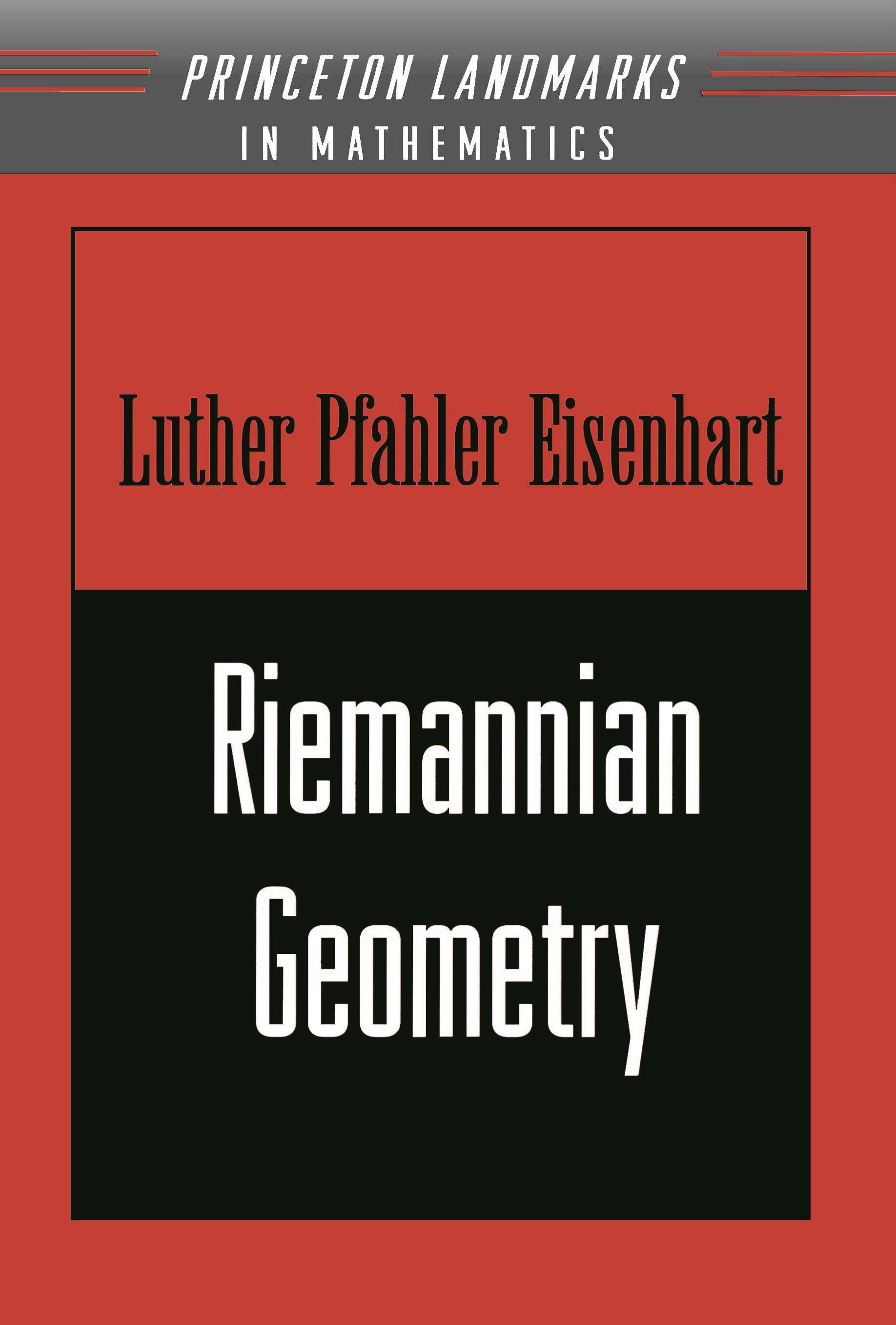
In his classic work of geometry, Euclid focused on the properties of flat surfaces. In the age of exploration, mapmakers such as Mercator had to concern themselves with the properties of spherical surfaces. The study of curved surfaces, or non-Euclidean geometry, flowered in the late nineteenth century, as mathematicians such as Riemann increasingly questioned Euclid's parallel postulate, and by relaxing this constraint derived a wealth of new results. These seemingly abstract properties found immediate application in physics upon Einstein's introduction of the general theory of relativity.
In this book, Eisenhart succinctly surveys the key concepts of Riemannian geometry, addressing mathematicians and theoretical physicists alike.
Betal nemt med kort, Klarna, Apple Pay eller Google Pay. Ikke tilfreds? Du har altid 14 dages fortrydelsesret. Læs mere i vores vilkår. Har du spørgsmål, så send os en mail på hello@memmo.org.
Memmo gør det nemmere at studere – uanset hvor du er i verden. Hos os samler du dine kursusbøger og smarte studieværktøjer ét sted: resuméer, quizzer, podcasts og flashcards. Og så er der Ted, din studieven, der svarer på alt, du undrer dig over. Over 50 000 studerende studerer allerede her – bygget til at hjælpe dig med at lære hurtigere og stresse mindre.