
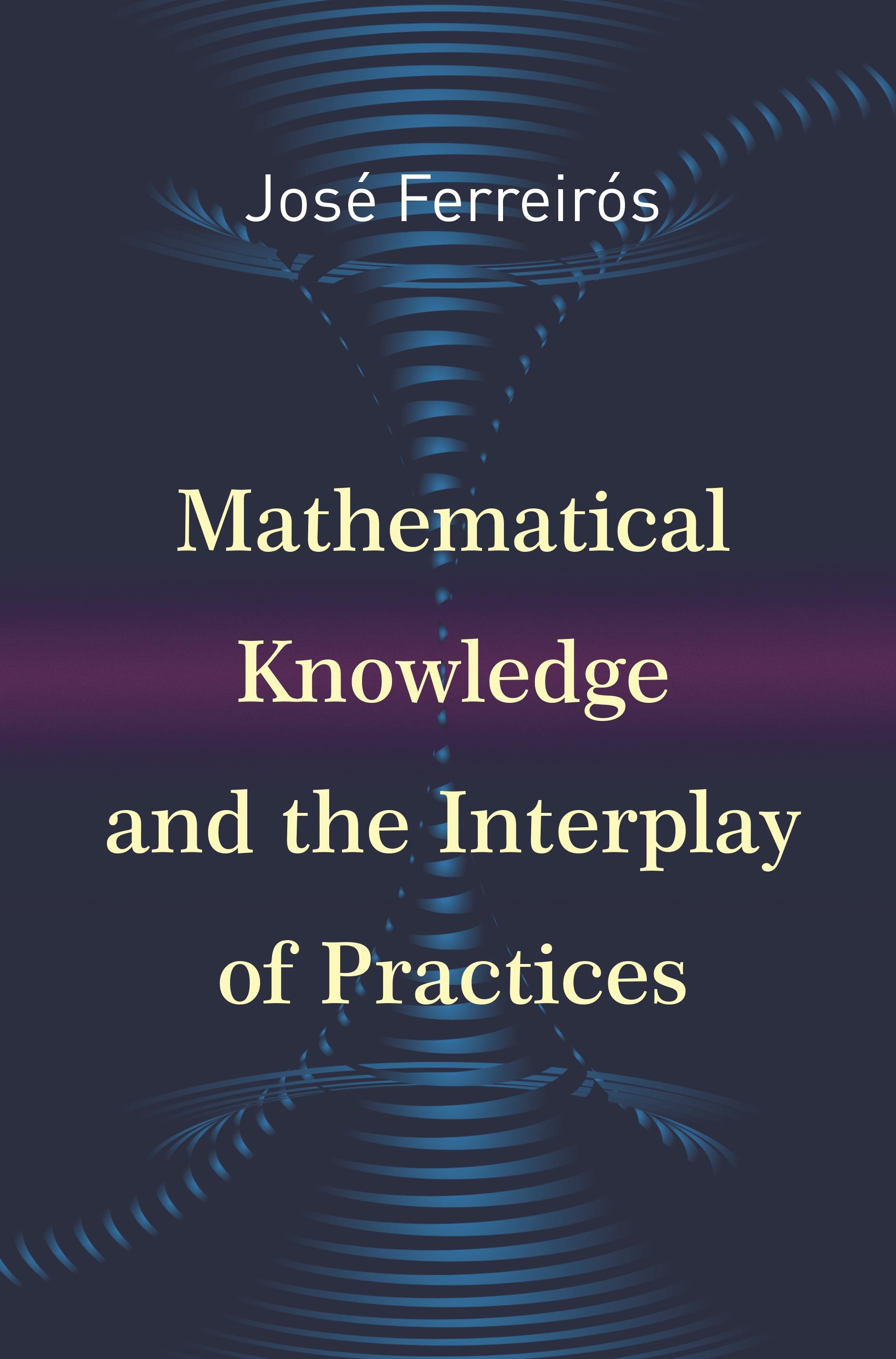
This book presents a new approach to the epistemology of mathematics by viewing mathematics as a human activity whose knowledge is intimately linked with practice. Charting an exciting new direction in the philosophy of mathematics, José Ferreirós uses the crucial idea of a continuum to provide an account of the development of mathematical knowledge that reflects the actual experience of doing math and makes sense of the perceived objectivity of mathematical results.
Describing a historically oriented, agent-based philosophy of mathematics, Ferreirós shows how the mathematical tradition evolved from Euclidean geometry to the real numbers and set-theoretic structures. He argues for the need to take into account a whole web of mathematical and other practices that are learned and linked by agents, and whose interplay acts as a constraint. Ferreirós demonstrates how advanced mathematics, far from being a priori, is based on hypotheses, in contrast to elementary math, which has strong cognitive and practical roots and therefore enjoys certainty.
Offering a wealth of philosophical and historical insights, Mathematical Knowledge and the Interplay of Practices challenges us to rethink some of our most basic assumptions about mathematics, its objectivity, and its relationship to culture and science.
Betal nemt med kort, Klarna, Apple Pay eller Google Pay. Ikke tilfreds? Du har altid 14 dages fortrydelsesret. Læs mere i vores vilkår. Har du spørgsmål, så send os en mail på hello@memmo.org.
Memmo gør det nemmere at studere – uanset hvor du er i verden. Hos os samler du dine kursusbøger og smarte studieværktøjer ét sted: resuméer, quizzer, podcasts og flashcards. Og så er der Ted, din studieven, der svarer på alt, du undrer dig over. Over 50 000 studerende studerer allerede her – bygget til at hjælpe dig med at lære hurtigere og stresse mindre.