
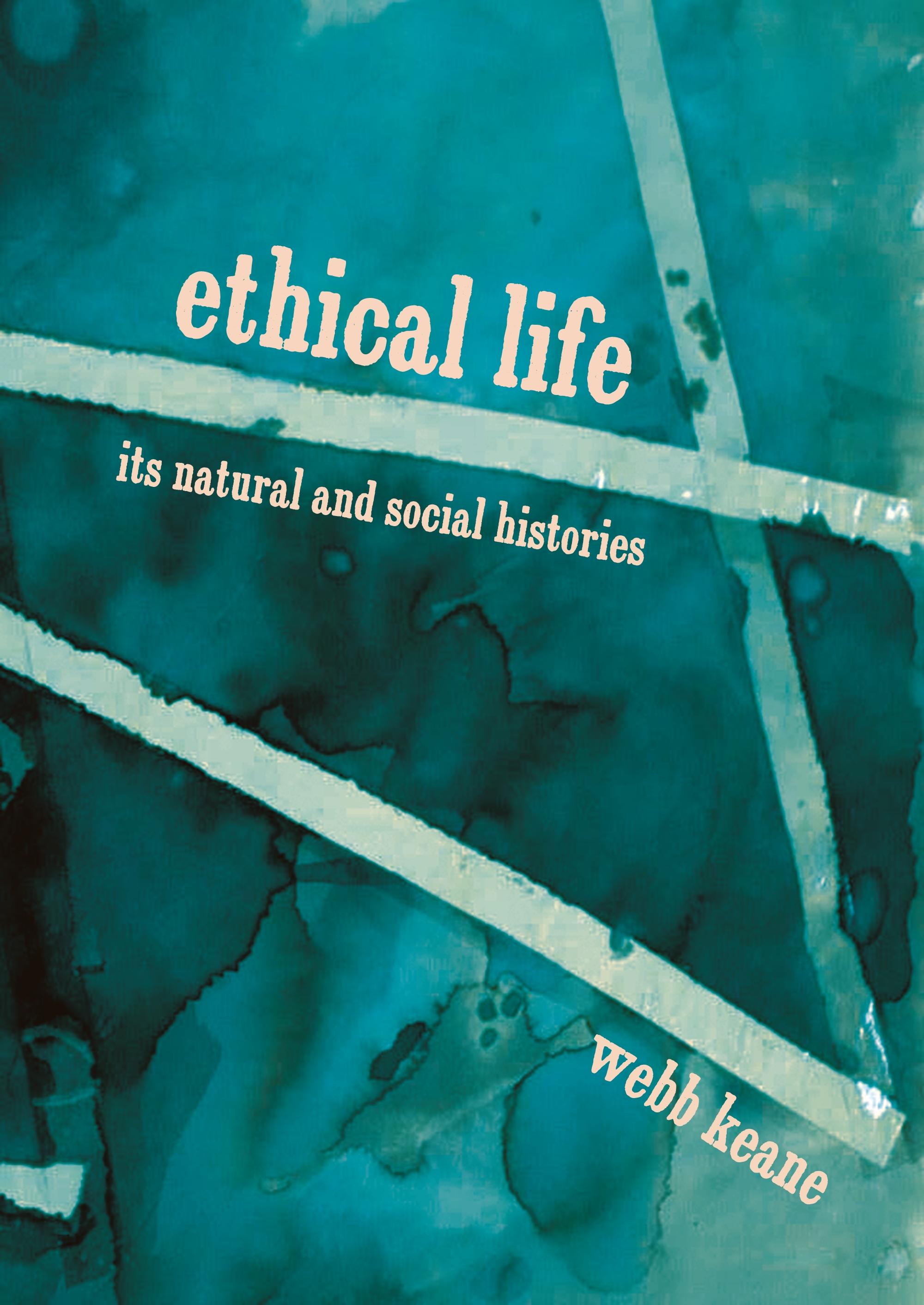
The human propensity to take an ethical stance toward oneself and others is found in every known society, yet we also know that values taken for granted in one society can contradict those in another. Does ethical life arise from human nature itself? Is it a universal human trait? Or is it a product of one's cultural and historical context? Webb Keane offers a new approach to the empirical study of ethical life that reconciles these questions, showing how ethics arise at the intersection of human biology and social dynamics.
Drawing on the latest findings in psychology, conversational interaction, ethnography, and history, Ethical Life takes readers from inner city America to Samoa and the Inuit Arctic to reveal how we are creatures of our biology as well as our history—and how our ethical lives are contingent on both. Keane looks at Melanesian theories of mind and the training of Buddhist monks, and discusses important social causes such as the British abolitionist movement and American feminism. He explores how styles of child rearing, notions of the person, and moral codes in different communities elaborate on certain basic human tendencies while suppressing or ignoring others.
Certain to provoke debate, Ethical Life presents an entirely new way of thinking about ethics, morals, and the factors that shape them.
Betal nemt med kort, Klarna, Apple Pay eller Google Pay. Ikke tilfreds? Du har altid 14 dages fortrydelsesret. Læs mere i vores vilkår. Har du spørgsmål, så send os en mail på hello@memmo.org.
Memmo gør det nemmere at studere – uanset hvor du er i verden. Hos os samler du dine kursusbøger og smarte studieværktøjer ét sted: resuméer, quizzer, podcasts og flashcards. Og så er der Ted, din studieven, der svarer på alt, du undrer dig over. Over 50 000 studerende studerer allerede her – bygget til at hjælpe dig med at lære hurtigere og stresse mindre.