
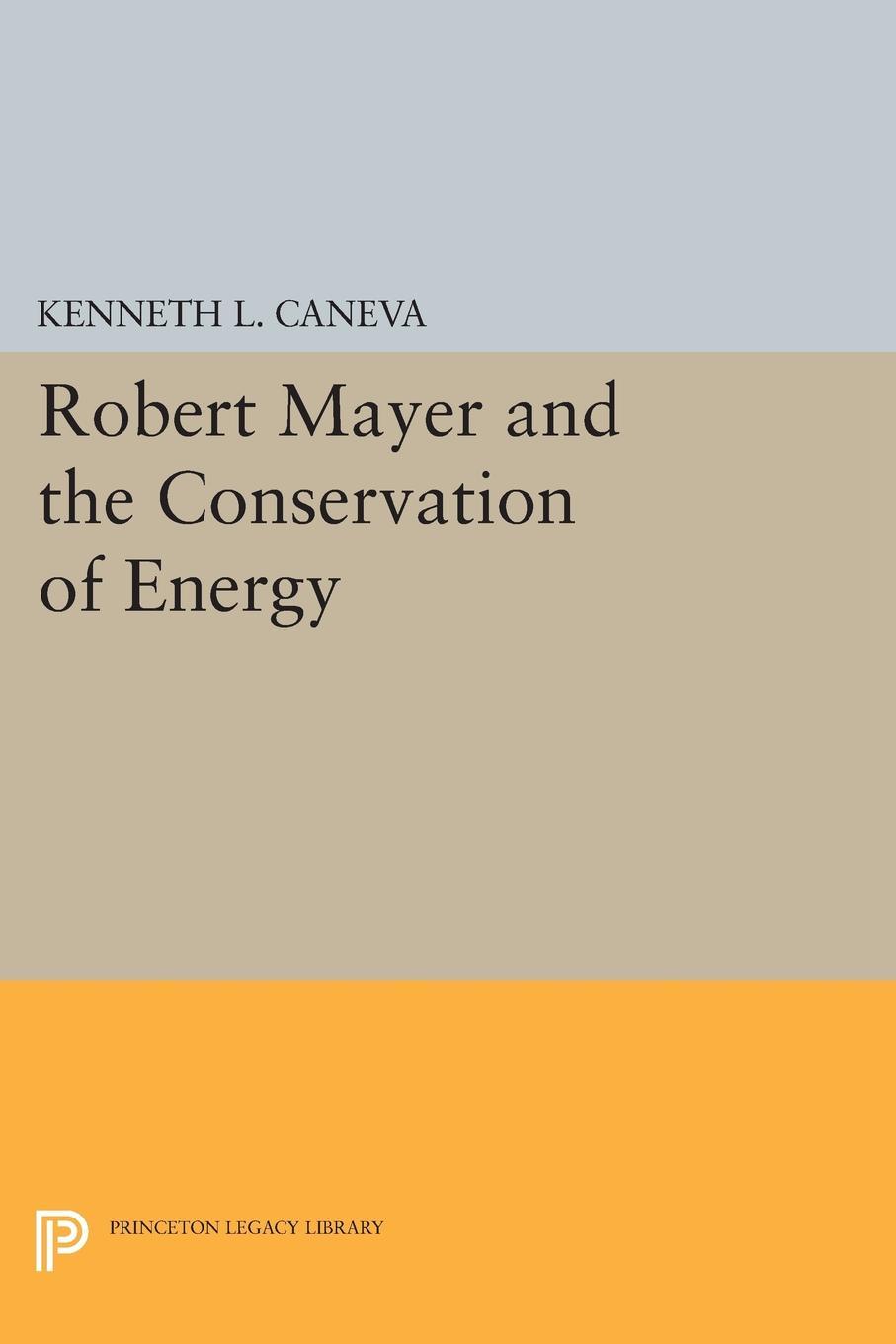
The principle of the conservation of energy was among the most important developments of nineteenth-century physics, and Robert Mayer, a physician from a small city in Germany, was one of its codiscoverers. As ship's doctor on a voyage to the Dutch East Indies in 1840, Mayer noticed that the venous blood he let from a European seaman was lighter than he expected. This observation set off a train of reflections that led him first to conclude that there must be a quantitative relationship between heat and "motion" and then, over several years, to believe in the indestructibility and uncreatability of "force." Rejecting the commonly invoked influence of Naturphilosophie, Kenneth Caneva provides a rich historical context for the problems and issues that concerned Mayer and for the ways in which he gradually came to understand what became known as the conservation of energy.
Demonstrating that the development of Mayer's thinking was fostered by a constant search for analogies, Caneva also analyzes the transformation of the life sciences in mid-century Germany and offers a major reevaluation of the status of the "vital force" during that period. The intellectual environment treated here embraces medicine, physiology, physics, chemistry, religion, and spiritualism.
Kenneth L. Caneva is Associate Professor of History at the University of North Carolina, Greensboro.
Originally published in 1993.
The Princeton Legacy Library uses the latest print-on-demand technology to again make available previously out-of-print books from the distinguished backlist of Princeton University Press. These editions preserve the original texts of these important books while presenting them in durable paperback and hardcover editions. The goal of the Princeton Legacy Library is to vastly increase access to the rich scholarly heritage found in the thousands of books published by Princeton University Press since its founding in 1905.
Betal nemt med kort, Klarna, Apple Pay eller Google Pay. Ikke tilfreds? Du har altid 14 dages fortrydelsesret. Læs mere i vores vilkår. Har du spørgsmål, så send os en mail på hello@memmo.org.
Memmo gør det nemmere at studere – uanset hvor du er i verden. Hos os samler du dine kursusbøger og smarte studieværktøjer ét sted: resuméer, quizzer, podcasts og flashcards. Og så er der Ted, din studieven, der svarer på alt, du undrer dig over. Over 50 000 studerende studerer allerede her – bygget til at hjælpe dig med at lære hurtigere og stresse mindre.