
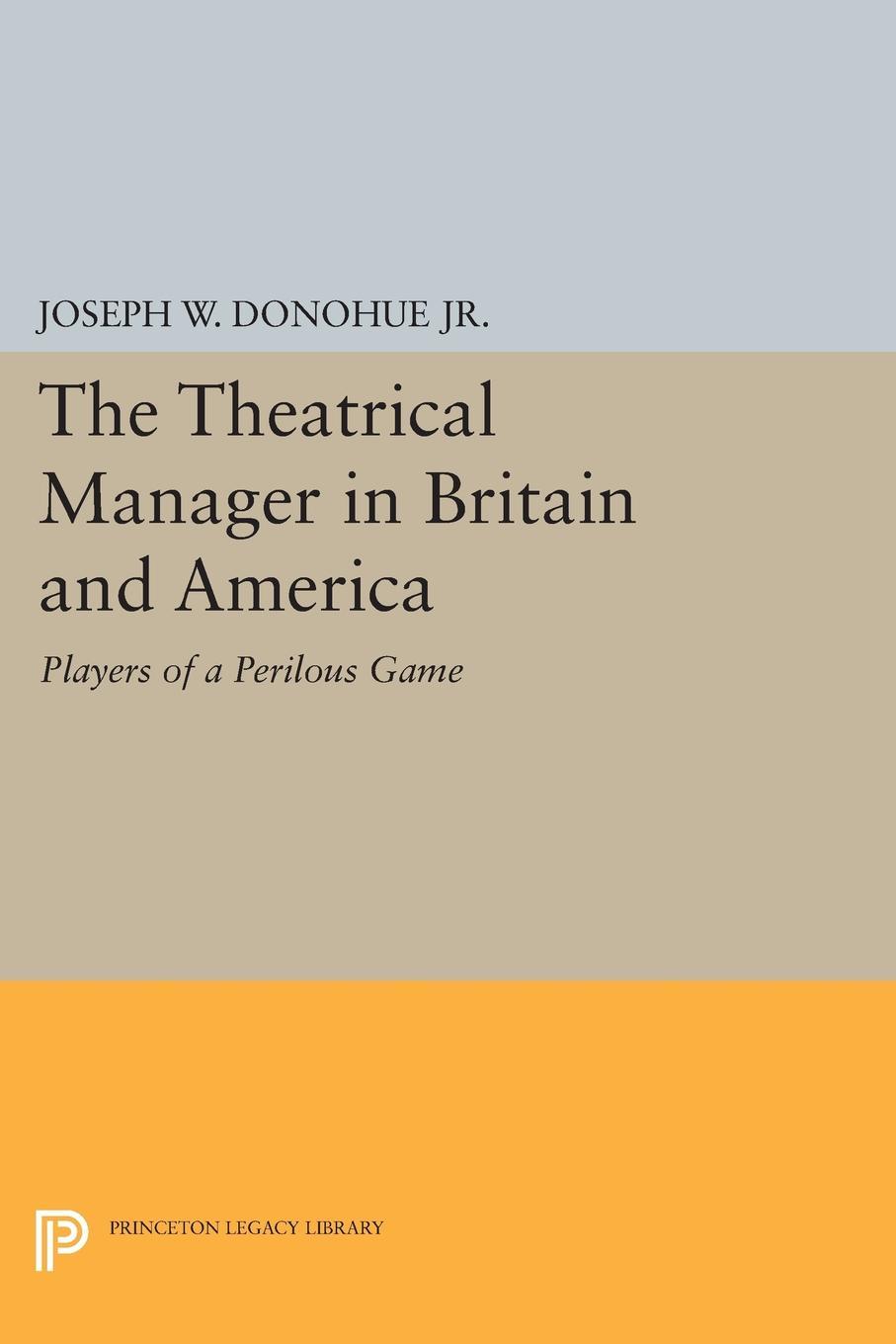
From Philip Henslowe to David Merrick, the producer or theatre manager has generally been seen as a combination of Shylock and Simon Legree, usurer and slavedriver, wholly concerned with profit and loss, indifferent to art and artists. Yet no single person has greater responsibility in what George Henry Lewes called the "perilous game" of play production. The essays in this volume examine five English and American theatrical managers, from the Elizabethan period to the twentieth century: Philip Henslowe, Tate Wilkinson, Stephen Price, Edwin Booth, and Charles Wyndham. The contributors, who evaluate the relationship of each manager to the drama of his time, include Bernard Beckerman, Charles Beecher Hogan, Benard Hewitt, Charles Shattuck, and George Rowell. Joseph Donohue's essay, "The Theatrical Manager and the Uses of Theatrical Research," introduces the volume.
Originally published in 1971.
The Princeton Legacy Library uses the latest print-on-demand technology to again make available previously out-of-print books from the distinguished backlist of Princeton University Press. These editions preserve the original texts of these important books while presenting them in durable paperback and hardcover editions. The goal of the Princeton Legacy Library is to vastly increase access to the rich scholarly heritage found in the thousands of books published by Princeton University Press since its founding in 1905.
Betal nemt med kort, Klarna, Apple Pay eller Google Pay. Ikke tilfreds? Du har altid 14 dages fortrydelsesret. Læs mere i vores vilkår. Har du spørgsmål, så send os en mail på hello@memmo.org.
Memmo gør det nemmere at studere – uanset hvor du er i verden. Hos os samler du dine kursusbøger og smarte studieværktøjer ét sted: resuméer, quizzer, podcasts og flashcards. Og så er der Ted, din studieven, der svarer på alt, du undrer dig over. Over 50 000 studerende studerer allerede her – bygget til at hjælpe dig med at lære hurtigere og stresse mindre.