
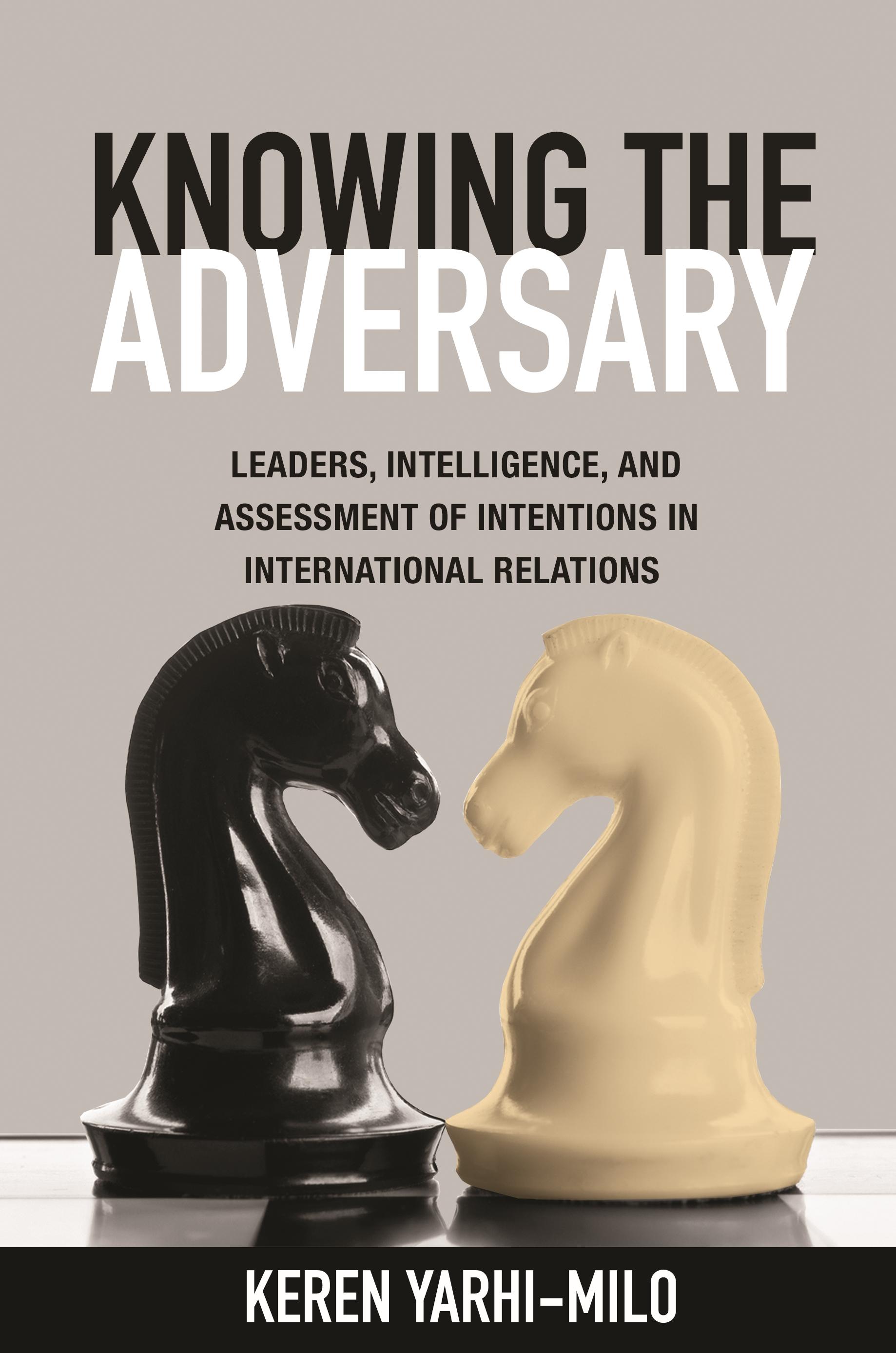
States are more likely to engage in risky and destabilizing actions such as military buildups and preemptive strikes if they believe their adversaries pose a tangible threat. Yet despite the crucial importance of this issue, we don't know enough about how states and their leaders draw inferences about their adversaries' long-term intentions. Knowing the Adversary draws on a wealth of historical archival evidence to shed new light on how world leaders and intelligence organizations actually make these assessments.
Keren Yarhi-Milo examines three cases: Britain's assessments of Nazi Germany's intentions in the 1930s, America's assessments of the Soviet Union's intentions during the Carter administration, and the Reagan administration's assessments of Soviet intentions near the end of the Cold War. She advances a new theoretical framework—called selective attention—that emphasizes organizational dynamics, personal diplomatic interactions, and cognitive and affective factors. Yarhi-Milo finds that decision makers don't pay as much attention to those aspects of state behavior that major theories of international politics claim they do. Instead, they tend to determine the intentions of adversaries on the basis of preexisting beliefs, theories, and personal impressions. Yarhi-Milo also shows how intelligence organizations rely on very different indicators than decision makers, focusing more on changes in the military capabilities of adversaries.
Knowing the Adversary provides a clearer picture of the historical validity of existing theories, and broadens our understanding of the important role that diplomacy plays in international security.
Betal nemt med kort, Klarna, Apple Pay eller Google Pay. Ikke tilfreds? Du har altid 14 dages fortrydelsesret. Læs mere i vores vilkår. Har du spørgsmål, så send os en mail på hello@memmo.org.
Memmo gør det nemmere at studere – uanset hvor du er i verden. Hos os samler du dine kursusbøger og smarte studieværktøjer ét sted: resuméer, quizzer, podcasts og flashcards. Og så er der Ted, din studieven, der svarer på alt, du undrer dig over. Over 50 000 studerende studerer allerede her – bygget til at hjælpe dig med at lære hurtigere og stresse mindre.