
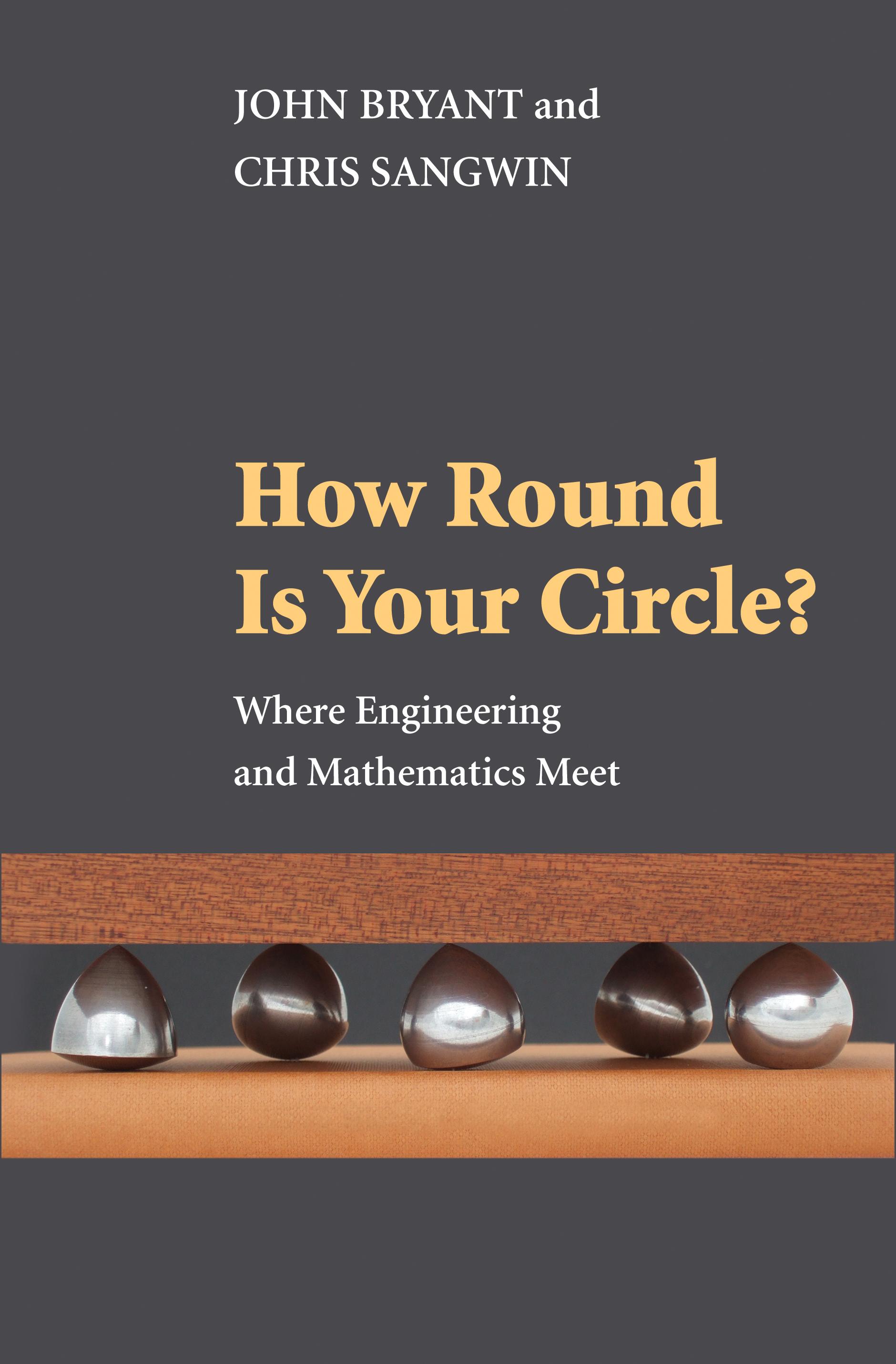
How do you draw a straight line? How do you determine if a circle is really round? These may sound like simple or even trivial mathematical problems, but to an engineer the answers can mean the difference between success and failure. How Round Is Your Circle? invites readers to explore many of the same fundamental questions that working engineers deal with every day--it's challenging, hands-on, and fun.
John Bryant and Chris Sangwin illustrate how physical models are created from abstract mathematical ones. Using elementary geometry and trigonometry, they guide readers through paper-and-pencil reconstructions of mathematical problems and show them how to construct actual physical models themselves--directions included. It's an effective and entertaining way to explain how applied mathematics and engineering work together to solve problems, everything from keeping a piston aligned in its cylinder to ensuring that automotive driveshafts rotate smoothly. Intriguingly, checking the roundness of a manufactured object is trickier than one might think. When does the width of a saw blade affect an engineer's calculations--or, for that matter, the width of a physical line? When does a measurement need to be exact and when will an approximation suffice? Bryant and Sangwin tackle questions like these and enliven their discussions with many fascinating highlights from engineering history. Generously illustrated, How Round Is Your Circle? reveals some of the hidden complexities in everyday things.
Betal nemt med kort, Klarna, Apple Pay eller Google Pay. Ikke tilfreds? Du har altid 14 dages fortrydelsesret. Læs mere i vores vilkår. Har du spørgsmål, så send os en mail på hello@memmo.org.
Memmo gør det nemmere at studere – uanset hvor du er i verden. Hos os samler du dine kursusbøger og smarte studieværktøjer ét sted: resuméer, quizzer, podcasts og flashcards. Og så er der Ted, din studieven, der svarer på alt, du undrer dig over. Over 50 000 studerende studerer allerede her – bygget til at hjælpe dig med at lære hurtigere og stresse mindre.