
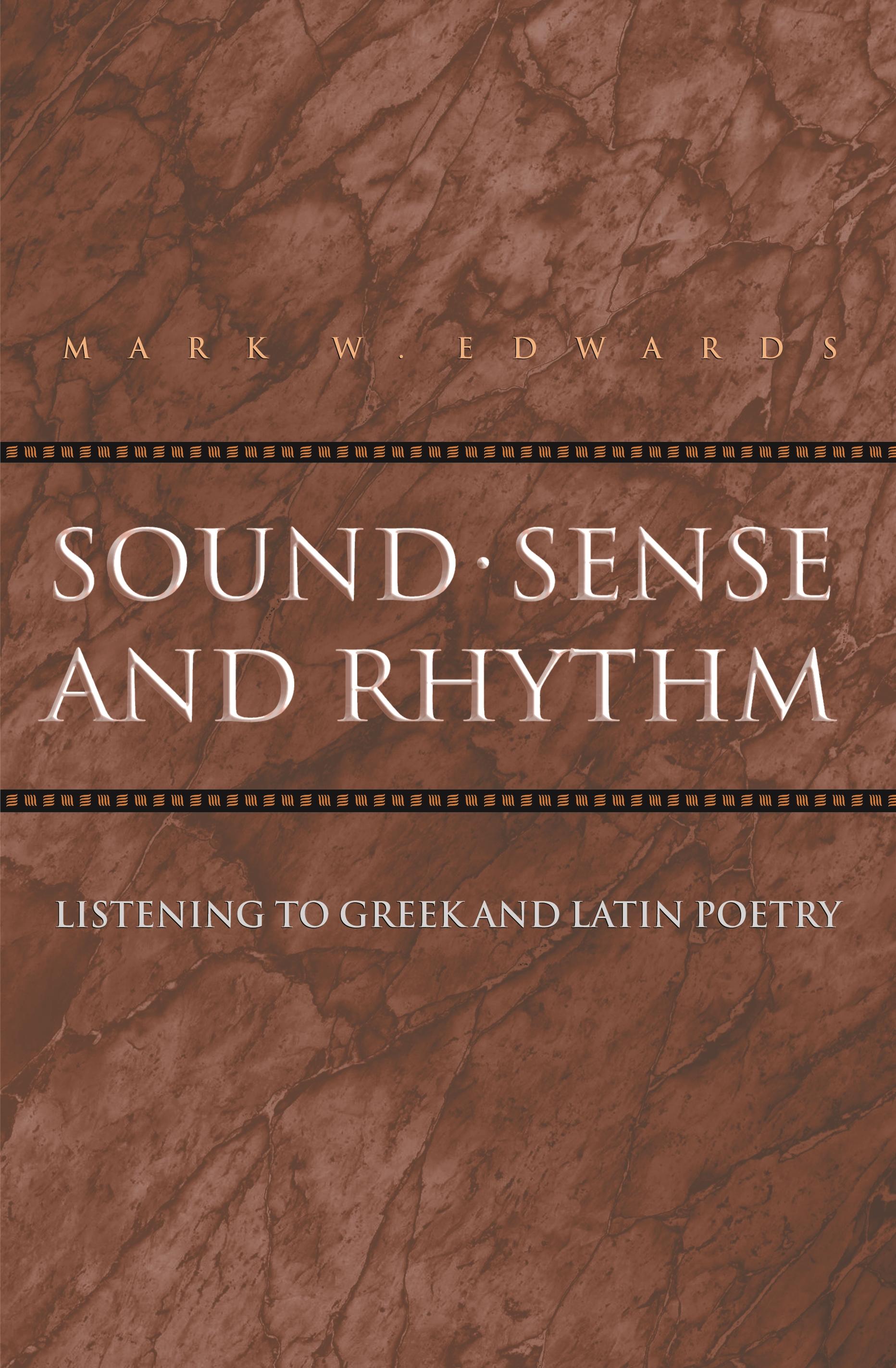
This book concerns the way we read--or rather, imagine we are listening to--ancient Greek and Latin poetry. Through clear and penetrating analysis Mark Edwards shows how an understanding of the effects of word order and meter is vital for appreciating the meaning of classical poetry, composed for listening audiences.
The first of four chapters examines Homer's emphasis of certain words by their positioning; a passage from the Iliad is analyzed, and a poem of Tennyson illustrates English parallels. The second considers Homer's techniques of disguising the break in the narrative when changing a scene's location or characters, to maintain his audience's attention. In the third we learn, partly through an English translation matching the rhythm, how Aeschylus chose and adapted meters to arouse listeners' emotions. The final chapter examines how Latin poets, particularly Propertius, infused their language with ambiguities and multiple meanings. An appendix examines the use of classical meters by twentieth-century American and English poets.
Based on the author's Martin Classical Lectures at Oberlin College in 1998, this book will enrich the appreciation of classicists and their students for the immense possibilities of the languages they read, translate, and teach. Since the Greek and Latin quotations are translated into English, it will also be welcomed by non-classicists as an aid to understanding the enormous influence of ancient Greek and Latin poetry on modern Western literature.
Betal nemt med kort, Klarna, Apple Pay eller Google Pay. Ikke tilfreds? Du har altid 14 dages fortrydelsesret. Læs mere i vores vilkår. Har du spørgsmål, så send os en mail på hello@memmo.org.
Memmo gør det nemmere at studere – uanset hvor du er i verden. Hos os samler du dine kursusbøger og smarte studieværktøjer ét sted: resuméer, quizzer, podcasts og flashcards. Og så er der Ted, din studieven, der svarer på alt, du undrer dig over. Over 50 000 studerende studerer allerede her – bygget til at hjælpe dig med at lære hurtigere og stresse mindre.