
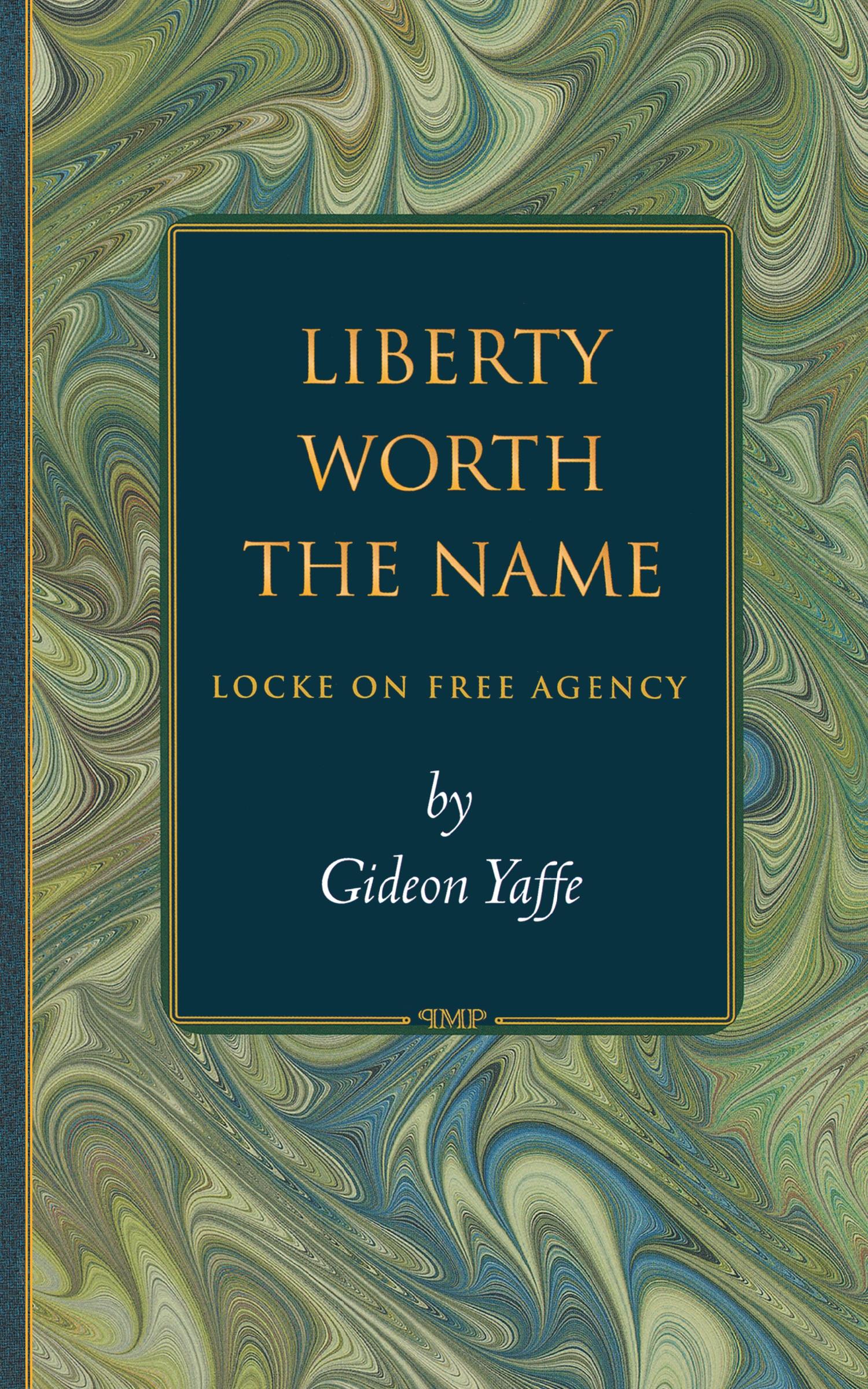
This is the first comprehensive interpretation of John Locke's solution to one of philosophy's most enduring problems: free will and the nature of human agency. Many assume that Locke defines freedom as merely the dependency of conduct on our wills. And much contemporary philosophical literature on free agency regards freedom as a form of self-expression in action. Here, Gideon Yaffe shows us that Locke conceived free agency not just as the freedom to express oneself, but as including also the freedom to transcend oneself and act in accordance with "the good." For Locke, exercising liberty involves making choices guided by what is good, valuable, and important. Thus, Locke's view is part of a tradition that finds freedom in the imitation of God's agency. Locke's free agent is the ideal agent.
Yaffe also examines Locke's understanding of volition and voluntary action. For Locke, choices always involve self-consciousness. The kind of self-consciousness to which Locke appeals is intertwined with his conception of personal identity. And it is precisely this connection between the will and personal identity that reveals the special sense in which our voluntary actions can be attributed to us and the special sense in which we are active with respect to them. Deftly written and tightly focused, Liberty Worth the Name will find readers far beyond Locke studies and early modern British philosophy, including scholars interested in free will, action theory, and ethics.
Betal nemt med kort, Klarna, Apple Pay eller Google Pay. Ikke tilfreds? Du har altid 14 dages fortrydelsesret. Læs mere i vores vilkår. Har du spørgsmål, så send os en mail på hello@memmo.org.
Memmo gør det nemmere at studere – uanset hvor du er i verden. Hos os samler du dine kursusbøger og smarte studieværktøjer ét sted: resuméer, quizzer, podcasts og flashcards. Og så er der Ted, din studieven, der svarer på alt, du undrer dig over. Over 50 000 studerende studerer allerede her – bygget til at hjælpe dig med at lære hurtigere og stresse mindre.