
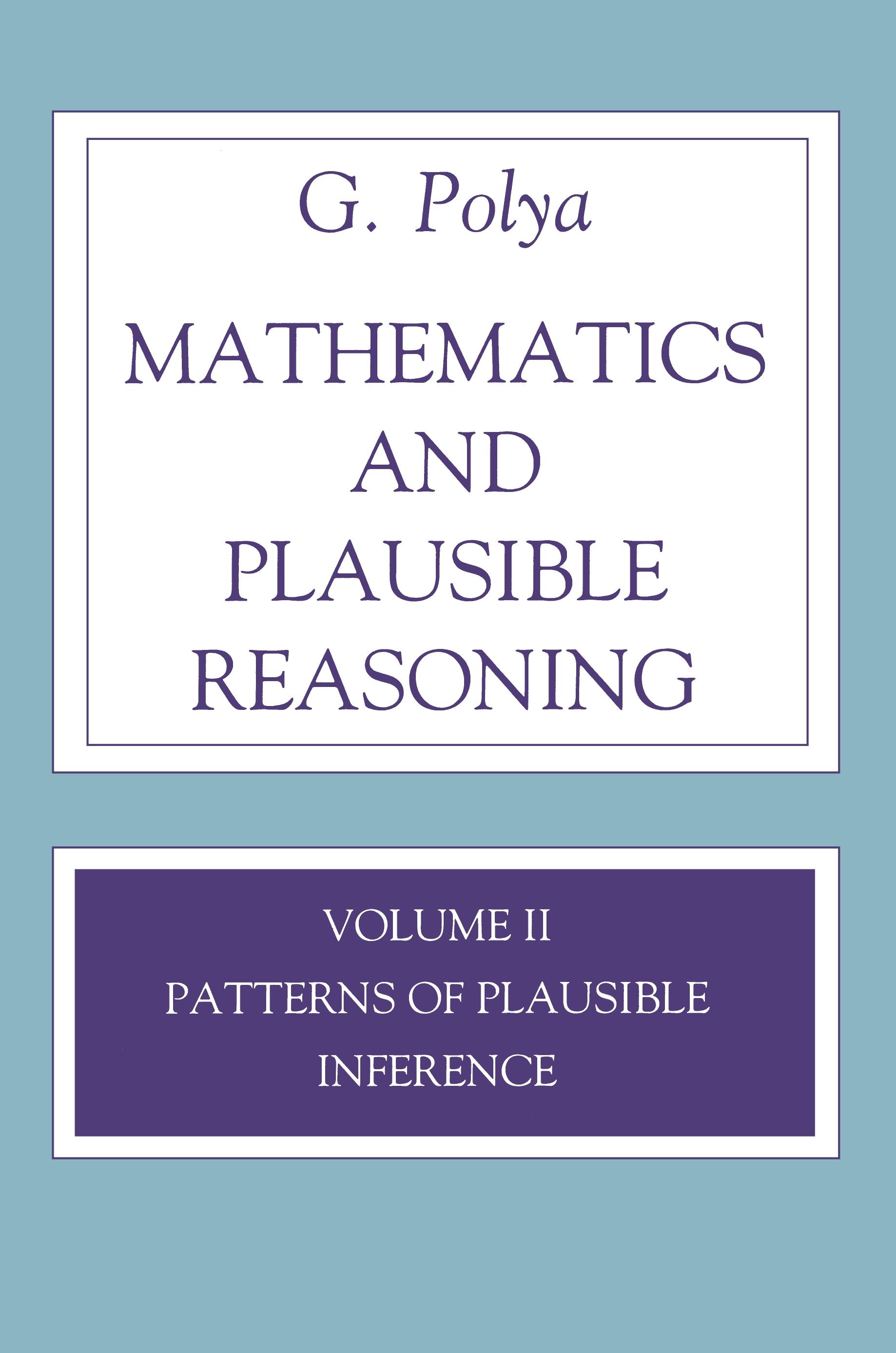
A guide to the practical art of plausible reasoning, this book has relevance in every field of intellectual activity. Professor Polya, a world-famous mathematician from Stanford University, uses mathematics to show how hunches and guesses play an important part in even the most rigorously deductive science. He explains how solutions to problems can be guessed at; good guessing is often more important than rigorous deduction in finding correct solutions. Vol. II, on Patterns of Plausible Inference, attempts to develop a logic of plausibility. What makes some evidence stronger and some weaker? How does one seek evidence that will make a suspected truth more probable? These questions involve philosophy and psychology as well as mathematics.
Betal nemt med kort, Klarna, Apple Pay eller Google Pay. Ikke tilfreds? Du har altid 14 dages fortrydelsesret. Læs mere i vores vilkår. Har du spørgsmål, så send os en mail på hello@memmo.org.
Memmo gør det nemmere at studere – uanset hvor du er i verden. Hos os samler du dine kursusbøger og smarte studieværktøjer ét sted: resuméer, quizzer, podcasts og flashcards. Og så er der Ted, din studieven, der svarer på alt, du undrer dig over. Over 50 000 studerende studerer allerede her – bygget til at hjælpe dig med at lære hurtigere og stresse mindre.