
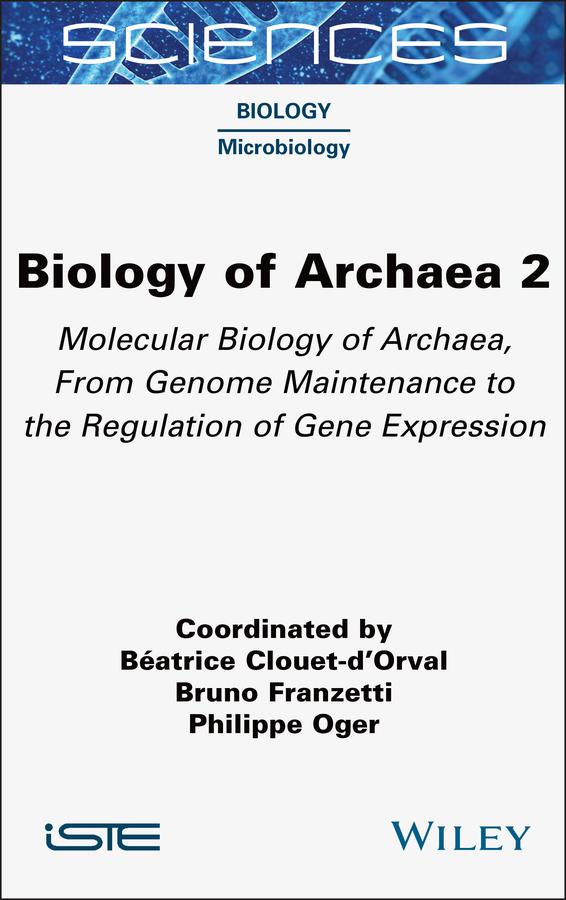
Archaea constitute a new branch of life alongside bacteria and eukaryotes. These microorganisms are unique in their cellular and molecular aspects. They have evolutionary links with the first eukaryotic cells and are now being used to elucidate fundamental biological questions.
Champions of extremophilicity, archaea are helping to lift the veil on the limits of life on Earth. Biology of Archaea 2 presents the diverse molecular mechanisms involved in the fundamental processes of genome maintenance and regulation of gene expression in archaeal cells.
This book analyzes the complex machinery involved in chromosome replication, DNA repair, RNA synthesis (transcription) and protein synthesis (translation), and explores the different classes of RNAs and enzymes involved in RNA maturation and degradation. These regulate the stability of messenger and regulatory non-coding RNAs, and contribute to the formation of the mature forms of ribosomal RNAs and transfer RNAs. These molecular mechanisms are closely related to those of eukaryotes.
Betal nemt med kort, Klarna, Apple Pay eller Google Pay. Ikke tilfreds? Du har altid 14 dages fortrydelsesret. Læs mere i vores vilkår. Har du spørgsmål, så send os en mail på hello@memmo.org.
Memmo gør det nemmere at studere – uanset hvor du er i verden. Hos os samler du dine kursusbøger og smarte studieværktøjer ét sted: resuméer, quizzer, podcasts og flashcards. Og så er der Ted, din studieven, der svarer på alt, du undrer dig over. Over 50 000 studerende studerer allerede her – bygget til at hjælpe dig med at lære hurtigere og stresse mindre.