
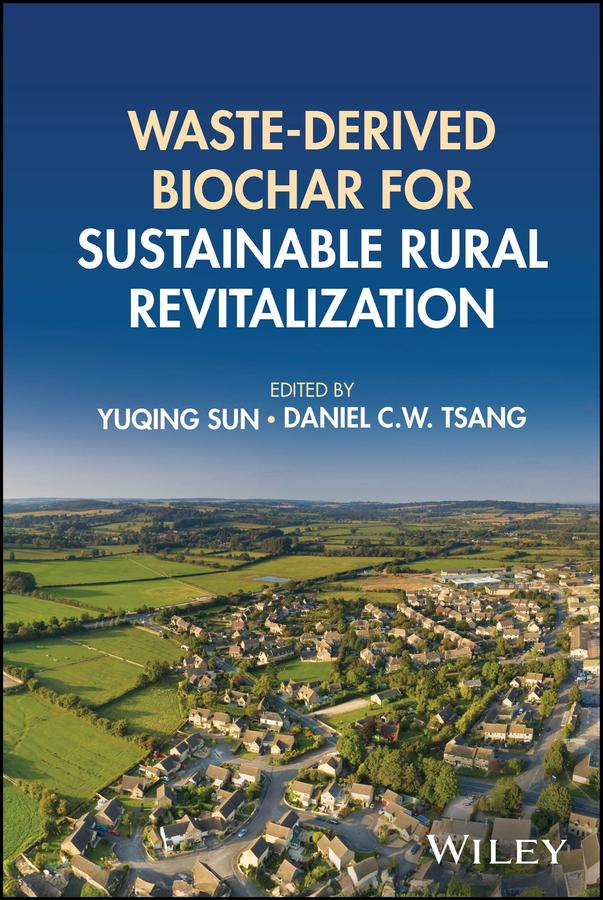
Comprehensive reference summarizing different technologies for application-oriented biochar production from waste biomass resources in rural areas
Waste-derived Biochar for Sustainable Rural Revitalization summarizes recent research developments, introduces state-of-the-art knowledge, incorporates case studies, offers scientific insights, highlights current challenges, and shows the way forward for biochar technologies as a novel, cost-effective, and environmentally friendly solution for sustainable rural revitalization. This book succinctly summarizes different technologies for application-oriented biochar production from waste biomass resources (e.g., crop residues, pruning of fruit trees, animal waste, food waste, and domestic sludge) in rural areas, with an emphasis on tailored selection of pyrolytic and pre/post-treatment conditions.
Readers will find information on renewable biofuels, clean compost conditioner, organic seeding substrate, slow-release fertilizers, green pesticides, targeting plant disease suppressors, farmland soil conditioner/amendment, adsorbent/catalyst for agriculture wastewater treatment, farmland carbon sequestration, and low-carbon construction materials. This book also evaluates these technologies through Technical and Economic Analysis (TEA) and Environmental, Social, and Governance (ESG) frameworks and discusses potential environmental risks.
Written by a team of highly qualified authors, Waste-derived Biochar for Sustainable Rural Revitalization explores sample topics including:
- Slow, fast, microwave, and flash pyrolysis, physical and chemical modification of biochars, and commonly used biochar raw materials
- Technologies and key influencing factors in biochar preparation, types and characteristics of carbonation reactors, and migration of alkali metals during biochar combustion
- Waste-derived biochar as organic seeding substrate, discussing the growing media of compost, humic acid, and activated carbon
- Improvement of soil physical, chemical, and biological properties by waste-derived biochar, covering effects on soil pH, organic matter, and cation exchange quantity
Waste-derived Biochar for Sustainable Rural Revitalization serves as an invaluable reference for engineers, scientists, researchers, and graduate students in waste recycling and management, sustainable rural development, environmental engineering, civil engineering, chemical engineering, and related fields.
Betal nemt med kort, Klarna, Apple Pay eller Google Pay. Ikke tilfreds? Du har altid 14 dages fortrydelsesret. Læs mere i vores vilkår. Har du spørgsmål, så send os en mail på hello@memmo.org.
Memmo gør det nemmere at studere – uanset hvor du er i verden. Hos os samler du dine kursusbøger og smarte studieværktøjer ét sted: resuméer, quizzer, podcasts og flashcards. Og så er der Ted, din studieven, der svarer på alt, du undrer dig over. Over 50 000 studerende studerer allerede her – bygget til at hjælpe dig med at lære hurtigere og stresse mindre.