
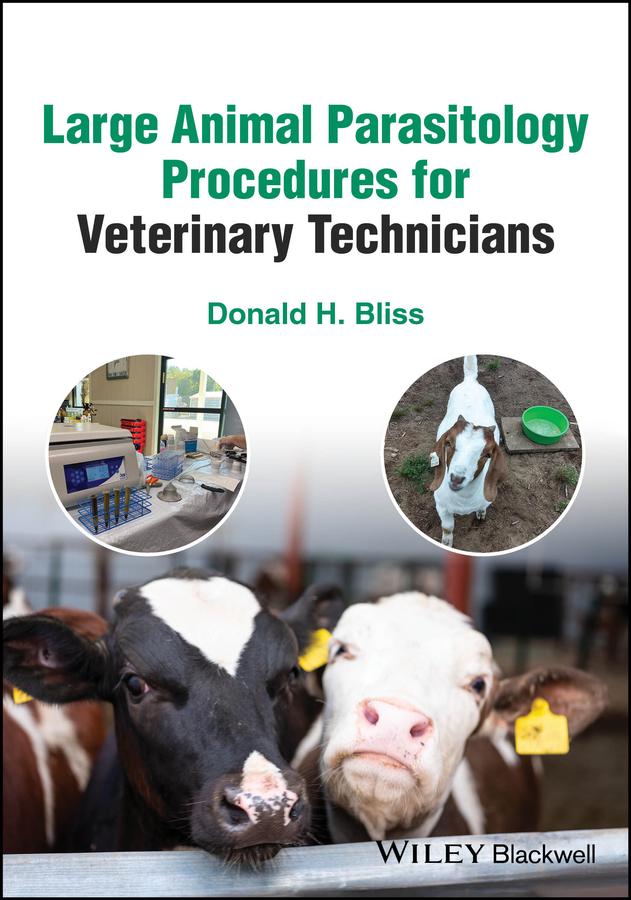
Comprehensive illustrated reference on parasitic nematodes, cestodes, coccidian oocysts and trematode egg recoveries, identification, and enumeration with treatment strategies for five separate categories of animal patients
Large Animal Parasitology Procedures for Veterinary Technicians illustrates, in detail, the most sensitive diagnostic procedure for internal parasites of domestic animals using the Modified Wisconsin Sugar Flotation Method. With step-by-step pictures and bullet-point instructions, this text discusses sample collection and storage techniques, as well as the strengths and weaknesses inherent to other commonly used tests. Potential sources for infection, the seasonality of the infection, possible environmental recontamination, and control strategies are all covered in detail, with suggestions to prevent reoccurrences.
Parasites of the equine, large and small ruminants (including alpaca), swine, poultry and hoofed wildlife patients are included, with full color images for quick identification, an assessment of life cycle stage, and discussion of zoonotic potential. Each species section is heavily illustrated with comparative images to aid the technician in quickly identifying the parasite and life cycle stage.
In Large Animal Parasitology Procedures for Veterinary Technicians, readers can find information on:
- The definition and economic importance of parasitisms, details on the epidemiology of parasitic enteritis, including basics of protozoology, helminthology, and overall applied veterinary parasitology
- Sample collection and shipment of specimens, including collection, storage, examinations, and interpretations
- Fecal examination using the Modified Wisconsin Sugar Flotation method, compared with gross examination, smear, sedimentation, and other flotation techniques, plus a fluke egg recovery technique and the Baermann technique for lungworm larvae recovery
- Internal parasite diagnosis and worm egg recoveries, descriptions and pictures of nematode parasite eggs (as well as coccidia oocysts), plus tapeworm eggs and fluke egg descriptions and photos for a variety of host animals
Illustrating commonly used diagnostic tests in veterinary parasitology, with step-by-step instructions for accuracy, Large Animal Parasitology Procedures for Veterinary Technicians is an essential reference for veterinary technicians and veterinary technician students dealing with domestic animals, including horses, ruminants, swine, poultry, and hoofed wildlife.
Betal nemt med kort, Klarna, Apple Pay eller Google Pay. Ikke tilfreds? Du har altid 14 dages fortrydelsesret. Læs mere i vores vilkår. Har du spørgsmål, så send os en mail på hello@memmo.org.
Memmo gør det nemmere at studere – uanset hvor du er i verden. Hos os samler du dine kursusbøger og smarte studieværktøjer ét sted: resuméer, quizzer, podcasts og flashcards. Og så er der Ted, din studieven, der svarer på alt, du undrer dig over. Over 50 000 studerende studerer allerede her – bygget til at hjælpe dig med at lære hurtigere og stresse mindre.