
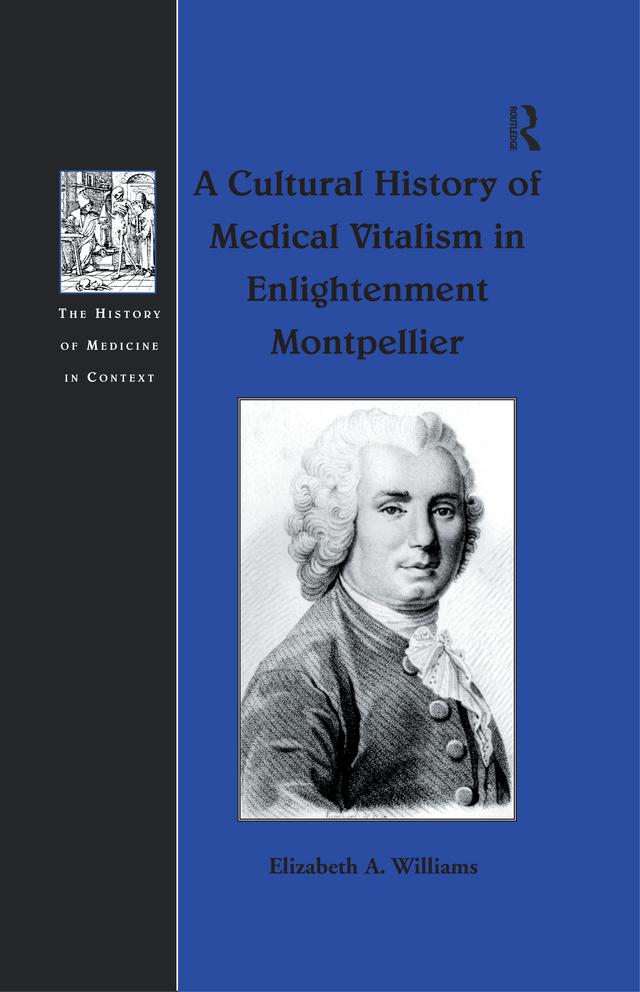
One of the key themes of the Enlightenment was the search for universal laws and truths that would help illuminate the workings of the universe. It is in such attitudes that we trace the origins of modern science and medicine. However, not all eighteenth century scientists and physicians believed that such universal laws could be found, particularly in relation to the differences between living and inanimate matter. From the 1740s physicians working in the University of Medicine of Montpellier began to contest Descartes's dualist concept of the body-machine that was being championed by leading Parisian medical 'mechanists'. In place of the body-machine perspective that sought laws universally valid for all phenomena, the vitalists postulated a distinction being living and other matter, offering a holistic understanding of the physical-moral relation in place of mind-body dualism. Their medicine was not based on mathematics and the unity of the sciences, but on observation of the individual patient and the harmonious activities of the 'body-economy'. Vitalists believed that Illness was a result of disharmony in this 'body-economy' which could only be remedied on an individual level depending on the patient's own 'natural' limitations. The limitations were established by a myriad of factors such as sex, class, age, temperament, region, and race, which negated the use of a single universal treatment for a particular ailment. Ultimately Montpelier medicine was eclipsed by that of Paris, a development linked to the dynamics of the Enlightenment as a movement bent on cultural centralisation, acquiring a reputation as a kind of anti-science of the exotic and the mad. Given the long-standing Paris-centrism of French cultural history, Montpellier vitalism has never been accorded the attention it deserves by historians. This study repairs that neglect.
Betal nemt med kort, Klarna, Apple Pay eller Google Pay. Ikke tilfreds? Du har altid 14 dages fortrydelsesret. Læs mere i vores vilkår. Har du spørgsmål, så send os en mail på hello@memmo.org.
Memmo gør det nemmere at studere – uanset hvor du er i verden. Hos os samler du dine kursusbøger og smarte studieværktøjer ét sted: resuméer, quizzer, podcasts og flashcards. Og så er der Ted, din studieven, der svarer på alt, du undrer dig over. Over 50 000 studerende studerer allerede her – bygget til at hjælpe dig med at lære hurtigere og stresse mindre.
Du kan måske også lide
Køb bogen0