
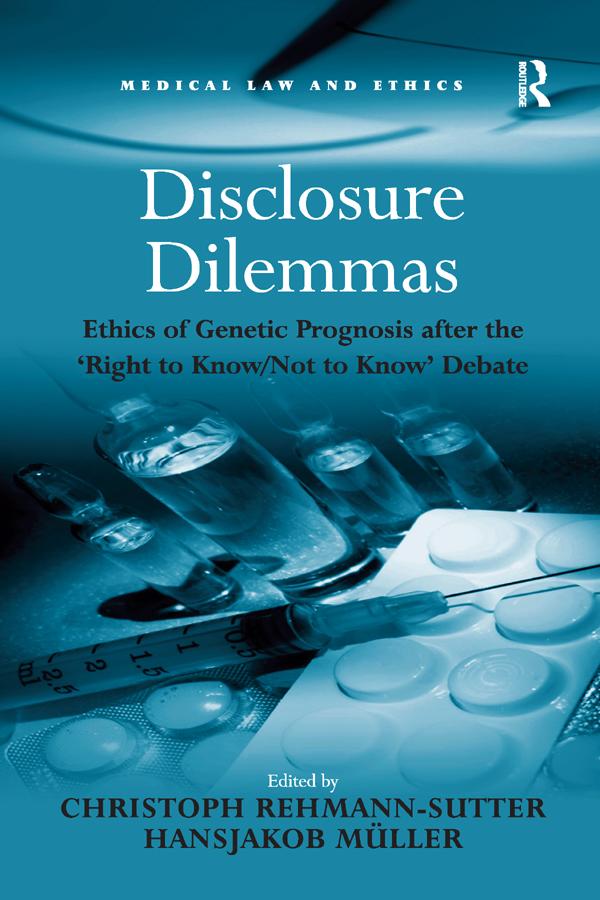
There exists today a fast growing availability of personal genetic information. Its prognostic impact and value for an individual or family member's health is sometimes unclear, whilst at other times it is clear-cut. The issue of whether to disclose genetic information does however have wide ranging implications. Avoiding the rhetoric of 'genetic exceptionalism', and drawing on an expanded field of bioethical, sociological and anthropological research, this book sets a new agenda for discussing the ethics surrounding the disclosure of prognostic genetic information. A hermeneutical approach reconsiders the ethics of disclosure in a variety of contexts in which genetic information is generated, requested, interpreted or communicated - from the provider perspective, but also from the moral perspectives of clients and their families. It is in situations of disclosure, in these different contexts, that genetic information meets morality. Providers and recipients can become vulnerable to the revelation or concealment of information, and the forms in which it may be provided. Disclosure Dilemmas invites readers to explore these contexts from an ethical viewpoint and will be a valuable resource for anyone with an interest in biomedical ethics.
Betal nemt med kort, Klarna, Apple Pay eller Google Pay. Ikke tilfreds? Du har altid 14 dages fortrydelsesret. Læs mere i vores vilkår. Har du spørgsmål, så send os en mail på hello@memmo.org.
Memmo gør det nemmere at studere – uanset hvor du er i verden. Hos os samler du dine kursusbøger og smarte studieværktøjer ét sted: resuméer, quizzer, podcasts og flashcards. Og så er der Ted, din studieven, der svarer på alt, du undrer dig over. Over 50 000 studerende studerer allerede her – bygget til at hjælpe dig med at lære hurtigere og stresse mindre.
Du kan måske også lide
Køb bogen0