
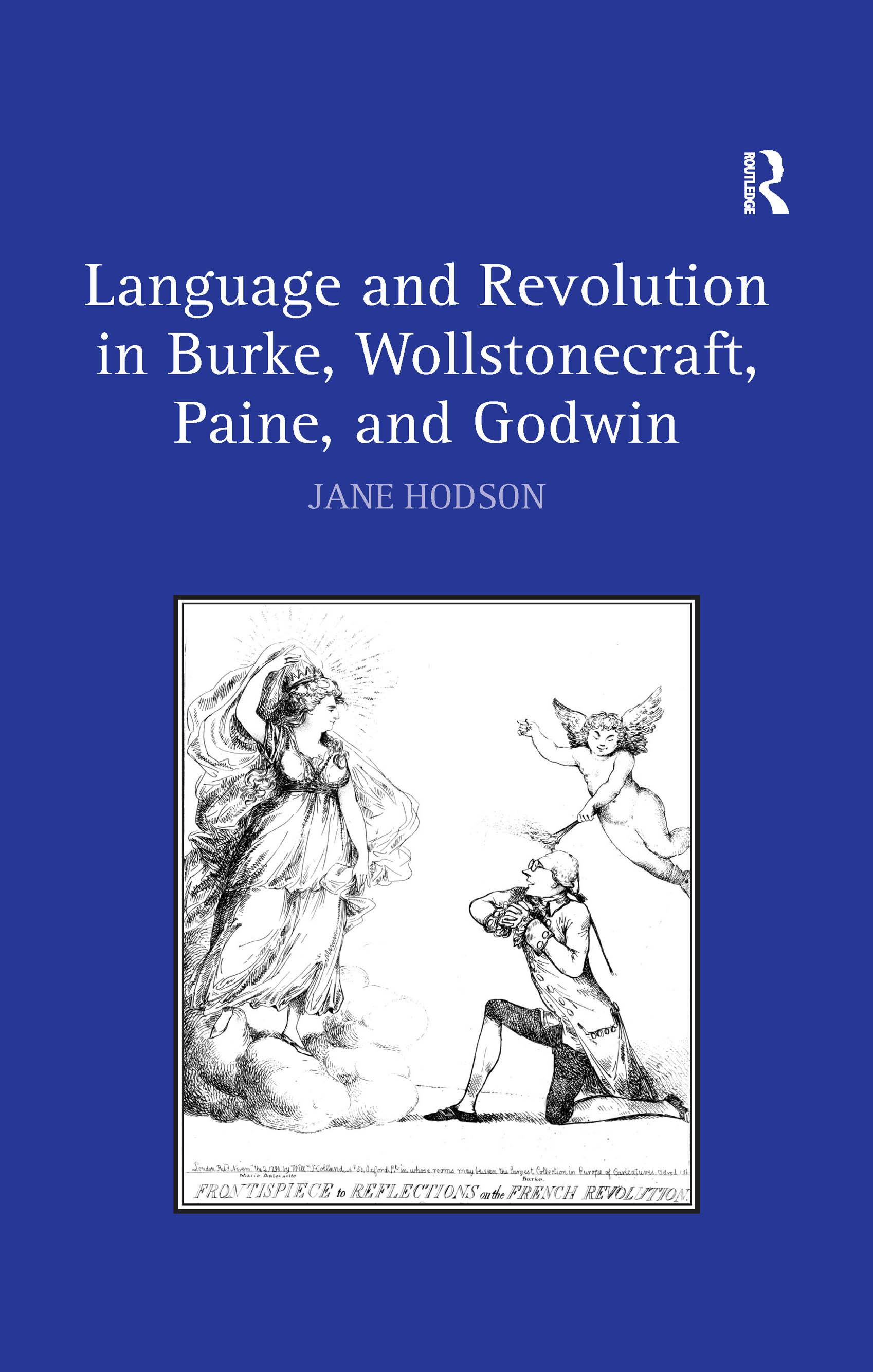
The Revolution in France of 1789 provoked a major 'pamphlet war' in Britain as writers debated what exactly had happened, why it had happened, and where events were now headed. Jane Hodson's book explores the relationship between political persuasion, literary style, and linguistic theory in this war of words, focusing on four key texts: Edmund Burke's Reflections on the Revolution in France, Mary Wollstonecraft's A Vindication of the Rights of Men, Thomas Paine's Rights of Man, and William Godwin's Enquiry Concerning Political Justice. While these texts form the core of Hodson's project, she ranges far beyond them to survey other works by the same authors; more than 50 contemporaneous books on language; and pamphlets, novels, and letters by other writers. The scope of her study permits her to challenge earlier accounts of the relationship between language and politics that lack historical nuance. Rather than seeing the Revolution debate as a straightforward conflict between radical and conservative linguistic practices, Hodson argues that there is no direct correlation between a particular style or linguistic concept and the political affiliation of the writer. Instead, she shows how each writer attempts to mobilize contemporary linguistic ideas to lend their texts greater authority. Her book will appeal to literature scholars and to historians of language and linguistics working in the Enlightenment and Romantic eras.
Betal nemt med kort, Klarna, Apple Pay eller Google Pay. Ikke tilfreds? Du har altid 14 dages fortrydelsesret. Læs mere i vores vilkår. Har du spørgsmål, så send os en mail på hello@memmo.org.
Memmo gør det nemmere at studere – uanset hvor du er i verden. Hos os samler du dine kursusbøger og smarte studieværktøjer ét sted: resuméer, quizzer, podcasts og flashcards. Og så er der Ted, din studieven, der svarer på alt, du undrer dig over. Over 50 000 studerende studerer allerede her – bygget til at hjælpe dig med at lære hurtigere og stresse mindre.
Du kan måske også lide
Køb bogen0