
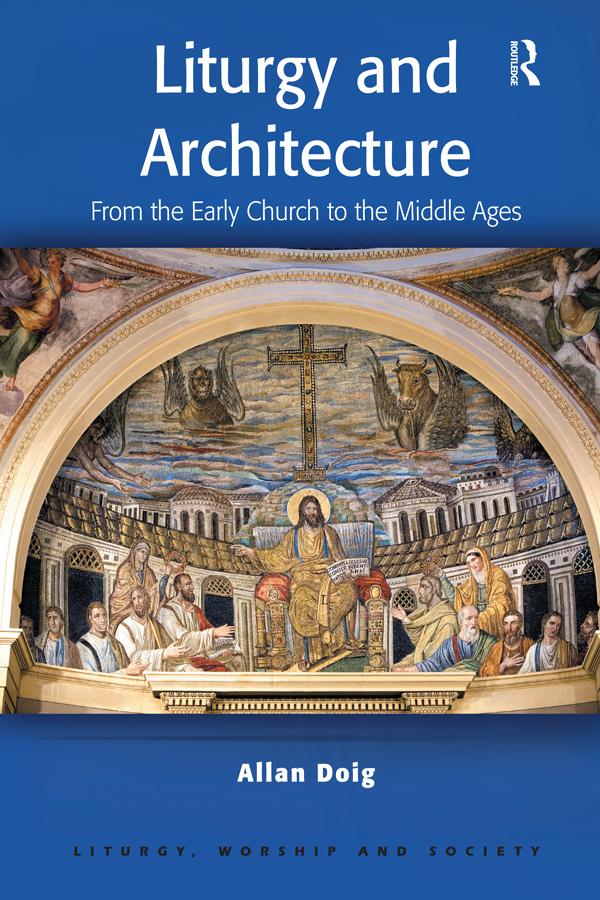
In this book Allan Doig explores the interrelationship of liturgy and architecture from the Early Church to the close of the Middle Ages, taking into account social, economic, technical, theological and artistic factors. These are crucial to a proper understanding of ecclesiastical architecture of all periods, and together their study illuminates the study of liturgy. Buildings and their archaeology are standing indices of human activity, and the whole matrix of meaning they present is highly revealing of the larger meaning of ritual performance within, and movement through, their space. The excavation of the mid-third-century church at Dura Europos in the Syrian desert, the grandeur of Constantine's Imperial basilicas, the influence of the great pilgrimage sites, and the marvels of soaring Gothic cathedrals, all come alive in a new way when the space is animated by the liturgy for which they were built. Reviewing the most recent research in the area, and moving the debate forward, this study will be useful to liturgists, clergy, theologians, art and architectural historians, and those interested in the conservation of ecclesiastical structures built for the liturgy.
Betal nemt med kort, Klarna, Apple Pay eller Google Pay. Ikke tilfreds? Du har altid 14 dages fortrydelsesret. Læs mere i vores vilkår. Har du spørgsmål, så send os en mail på hello@memmo.org.
Memmo gør det nemmere at studere – uanset hvor du er i verden. Hos os samler du dine kursusbøger og smarte studieværktøjer ét sted: resuméer, quizzer, podcasts og flashcards. Og så er der Ted, din studieven, der svarer på alt, du undrer dig over. Over 50 000 studerende studerer allerede her – bygget til at hjælpe dig med at lære hurtigere og stresse mindre.
Du kan måske også lide
Køb bogen0